Thermodynamic study of direct amination of isobutylene to tert-butylamine
Tert-butylamine is an important compound which is widely used as an intermediate in applications including pharmaceuticals, agricultural chemicals, and rubber chemicals [1]. However, so far, the hydrolysis of tert-butylurea, hydrocyanic acid process and other production methods of tert-butylamine encounter many problems, such as using a strong acid and alkali, and massive emission of waste and highly toxic materials [2-4]. In contrast, the direct amination of isobutylene to tert-butylamine is an atomically economic and green chemical process. Deeba and Ford [5] reported that the performance of solid acid catalysts for the amination of isobutylene was related to the number of strong acid sites. However, the reaction was performed under the reaction conditions of 0.15 MPa, 493 K and n(NH3)/n(i-C4H8) = 2 [5], which were far from those of industrial use (generally high pressure, as discussed in Section 3.2.5.). BASF first industrialized the isobutylene amination process over a β zeolite catalyst, but the condition was rather harsh due to the fact that the reaction pressure was as high to 28 MPa [6], which was not conducive to the manufacture of the reactor and related equipment, as well as process energy consumption.
Also, in previous studies, little was discussed about the thermodynamics of the direct amination of isobutylene, especially the equilibrium conversion of isobutylene and its variation under the relative mild reaction conditions available for future industrial use. In the present work, thermodynamic data, namely, ΔrH, ΔrG, Kp, of the direct amination of isobutylene to tert-butylamine were calculated on basis of thermodynamic empirical equations. The equilibrium conversion of isobutylene and its variation with the temperature, pressure and n(NH3)/n(i-C4H8) ratio under relative mild reaction conditions (total pressure < 10 MPa) that would be used in future industrial use were calculated and discussed. The results provide guidance for the optimization of the reaction conditions and for developing a highly active amination catalyst.
The amination was carried out over several zeolite catalysts with different topologies. The results suggested that the catalyst was the key for the process of direct amination of isobutylene to tert-butylamine. The highest conversion of isobutylene, 14.2% (52.2% of the thermodynamic value), was obtained over a ZSM-11 catalyst. The effect of the reaction conditions on the performance of the ZSM-11 catalyst in an amination system under relatively mild reaction conditions was investigated. The results agreed with the thermodynamic calculation, providing guidance for further catalyst development and the reaction condition optimization of isobutylene amination.
2.1 Thermodynamic analysis
The enthalpy change (∆H) and Gibbs free energy change (∆G) are important in the analysis of chemical reactions. The thermodynamic data were obtained from the relevant thermodynamic manual. The correlation for the enthalpy of formation of the ideal gas is a series expansion in temperature [7].
∆fH(T) = A + B×T + C×T2 (2.1)
∆fH = Enthalpy of formation of ideal gas, kJ/mol; A, B, and C = Regression coefficient for the chemical compound; T = Temperature, K. The correlation for the Gibbs energy of formation is a series expansion in temperature [7].
∆fG(T) = A + B×T + C×T2 (2.2)
∆fG = Gibbs energy of formation of ideal gas, kJ/mol; A, B, and C = Regression coefficient for chemical compound; T = Temperature, K. The equilibrium constant of the reaction is obtained by Eq. (2.3):
Kp = exp[-(∆rG(T)×1000)/(R×T)] (2.3)
∆rG = Gibbs free energy of the chemical reaction, kJ/mol; T = Temperature, K; R = Molar gas constant, 8.314 J/(mol·K). ∆fH, ∆fG and Kp of isobutylene amination to tert-butylamine at different reaction temperatures can be calculated by Eqs. (2.1)-(2.3). The thermodynamic data of the related substances of isobutylene amination are given in Table 1.
表 1
(Table 1)
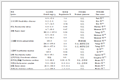
Table 1 Thermodynamic data of related substances of the isobutylene amination reaction [7].
|
Substance
|
Molecular Eq.
|
∆fH = a + bT + cT2(kJ/mol)
|
∆fG = a + bT + cT2(kJ/mol)
|
|
a
|
b
|
c
|
a
|
b
|
c
|
|
Isobutylene
|
C4H8
|
4.13E + 00
|
-8.16E-02
|
3.66E-05
|
-1.83E + 01
|
2.46E-01
|
3.09E-05
|
|
Tert-butylamine
|
C4H11N
|
-9.08E + 01
|
-1.17E-01
|
6.18E-05
|
-1.23E + 02
|
4.98E-01
|
3.41E-05
|
|
Ammonia [8]
|
NH3
|
∆fH = -4E-09T3+ 2E-05T2- 0.034T - 37.515
|
∆fG = 6E-06T2+ 0.1039T - 48.292
|
|
Table 1
Thermodynamic data of related substances of the isobutylene amination reaction [7].
|
2.2 Catalyst preparation, characterization and testing
2.2.1 Catalyst preparation
All proton-exchanged zeolites of the ZSM-11, MOR, ZSM-5 and SAPO-11 provided by Division of Fossil Energy Conversion of DNL were prepared by three repeated ion exchanges in NH4NO3 solution 1.0 mol/L at 353 K for 2 h, dried and calcinated at 773 K for 4 h. The exchange level of the protons in each zeolite was about 100%. Then the zeolite power was crushed to 20-40 mesh for the amination catalytic performance test.
2.2.2 Catalyst characterization
Ammonia temperature programmed desorption (NH3-TPD) was performed in a U-shaped quartz glass microreactor (i.d. = 4 mm) with He as the carrier gas. The effluent was monitored by an online gas chromatograph (Shimadzu GC-8A) equipped with a TCD detector. Typically, the sample (0.14 g) was pretreated at 878 K for 0.5 h, then cooled down to 423 K and saturated with NH3. After a stable baseline was obtained, the sample was heated from 423 to 878 K at a ramp rate of 19.8 K/min.
Brönsted and Lewis acid sites of the samples were determined by pyridine adsorption followed by infrared (Py-IR) measurement on a VERTEX70 IR spectrometer. The sample was pressed into a self-supporting wafer followed by evacuation at 723 K for 1 h (1 × 10⁻² Pa) in the IR cell. After the sample was cooled down to 313 K, a spectrum was recorded as the background. Subsequently, the wafer was exposed to pyridine vapor for 5 min at 313 K and then outgassed at 423 K for 30 min. The spectra were collected at 313 K. The amount of Brönsted and Lewis acid sites per gram catalyst were calculated by a method described by Emeis [9].
The direct amination of isobutylene to tert-butylamine was carried out in a stainless steel fixed bed reactor in which the mode of operation was down-flow. The sample was pressed, crushed and sieved into 0.38-0.85 mm particles before loading into the reactor. 5 g of catalyst was loaded at the center of the reactor and pretreated at 773 K for 1 h in N2. The pressure was maintained with N2. After the reactor was cooled down to reaction temperature (493-573 K), liquid ammonia was pumped in to fully fill the reactor before isobutylene was introduced because this feeding sequence favored the reaction [10, 11]. The products were analyzed after 2 h time on-stream by an Agilent 7980B gas chromatograph equipped with a flame ionization detector (FID) and a PONA capillary column.
3.1 Thermodynamic calculation results
3.1.1 Changes of ∆rH of isobutylene amination
The enthalpy as a function of temperature is an important thermodynamic quantity in thermodynamic modeling [12-14]. The enthalpy of formation for the individual compounds in the chemical reaction is required to determine the heat of reaction, reaction enthalpy (∆rH), and associated heating and cooling requirements [7]. ∆rH was calculated by Eq. (3.1).
∆rH = ∑(ν∆fH)products - ∑(ν∆fH)reactants (3.1)
ν = Chemical reaction coefficient.
Since acidic zeolites afford (90-99)% selectivity to C2-C4 primary amines (Markovnikov addition) and the selectivity of tert-butylamine was more than 99% in the present study, tert-butylamine was considered as the only product in isobutylene amination for the thermodynamics data calculation [15-17]. The reaction equation is i-C4H8 (IBE) + NH3 = C4H11N (TBA).
The values of ∆rH in the isobutylene amination reaction at different temperatures are illustrated in Fig. 1. From Fig. 1, we can see that the reaction of isobutylene and ammonia to produce tert-butylamine is a moderately exothermic reaction with the value of ∆rH = -56 kJ/mol in the investigated temperature range. ∆rH varied only slightly from -56.3 to -55.7 kJ/mol with the temperature increase from 473 to 573 K. The results suggested that a high temperature is not conducive to the amination reaction from the thermodynamics. The design of a good isobutylene amination catalyst that can work at a low temperature is very important [18]. Also, the ∆rH value of isobutylene amination indicated that heat removal is needed to maintain a stable reaction temperature when the reaction is carried out in a fixed bed flow reactor because the reaction is highly temperature-sensitive as discussed below.
3.1.2 Changes of ∆rG and Kp of isobutylene amination
The Gibbs energy of formation is significant in the analysis of a chemical reaction. The values for the reactants and products are required to determine the change in the Gibbs energy for the reaction. The chemical equilibrium for a reaction is associated with the change in Gibbs free energy (∆rG) for the reaction [7]. ∆rG was calculated by Eq. (3.2).
∆rG = ∑(ν∆fG)products - ∑(ν∆fG)reactants (3.2)
ν = Chemical reaction coefficient.
The changes in the Gibbs energy for a reaction can be used to infer whether the reaction is thermodynamically favorable at given temperature. For quick screening of a chemical reaction, the following rough criteria are useful [6].
∆rG < 0 kJ/mol (reaction favorable)
0 < ∆rG < 50 kJ/mol (reaction possibly favorable)
∆rG > 50 kJ/mol (reaction not favorable)
The values of ∆rG of the isobutylene amination reaction at different temperatures are illustrated in Fig. 2. As shown in Fig. 2, ∆rG of isobutylene amination increased linearly with the reaction temperature. When the reaction temperature increased from 473 to 573 K, the value of ∆rG increased from 13.0 to 27.5 kJ/mol, indicating that a high temperature is unfavorable for the amination reaction. The reaction cannot be carried out completely with 100% isobutylene conversion (namely, the reaction can be carried out only to a limited extent) in the above temperature range.
Kp of isobutylene amination was calculated by Eq. (2.3). The result is shown in Fig. 3. The value of Kp was < 0.04, which means that isobutylene amination is a reversible process and the forward reaction is thermodynamically unfavorable. Moreover, at a higher temperature, Kp is smaller. With the increase of the reaction temperature from 473 to 523 K, the value of Kp decreased from 36.7×10⁻³ to 9.5×10⁻³. The value of Kp changed little in the temperature range of 523-573 K. The Kp of isobutylene amination is highly sensitive to the temperature, especially in the range of 473 to 523 K, further indicating a low temperature is beneficial for the amination reaction.
3.2 Variation of isobutylene equilibrium conversion with
different reaction conditions
The thermodynamic equilibrium conversion of isobutylene, which is influenced by a set of parameters, including reaction temperature, pressure and n(NH3)/n(i-C4H8) ratio, was calculated by the equilibrium constant shown in Eq. (3.4). At a given temperature, the relationship between the equilibrium conversion of isobutylene and parameters, including isobutylene pressure and reactant molar ratio, can be described by Eq. (3.3) and (3.4) [19].
Kp = (ptert-butylamine/p°)/[(pisobutylene/p°)×(pammonia/p°)] (3.3)
Kp = [Xisobutylene×(n + 1 - Xisobutylene)]/[(1 - Xisobutylene)×
(n - Xisobutylene)×(ptotal/p°)] (3.4)
ptert-butylamine = Partial pressure of the tert-butylamine, Pa; piosbutene = Partial pressure of the isobutylene, Pa; pammonia = Partial pressure of the ammonia, Pa; p° = Standard atmospheric pressure, Pa; ptotal = Total pressure of reaction system; Xisobutylene = Percentage of isobutylene conversion; n = Value of n(NH3)/n(i-C4H8) ratio.
3.2.1 Influence of the reaction temperature
Fig. 4 gives the influence of temperature on the equilibrium conversion of isobutylene under different pressure in the amination reaction in the temperature range of 473-573 K. We can see that at a higher temperature, the equilibrium conversion is lower. The isobutylene conversion decreased with the reaction temperature under all pressure and n(NH3)/n(i-C4H8) = 1. For example, under 5 MPa and n(NH3)/n(i-C4H8) = 1, the equilibrium conversion of isobutylene dropped from 40.6% to 6.9% when the temperature increased from 473 to 573 K, indicating that the reaction is highly temperature sensitive. In other words, from the thermodynamics, the amination of isobutylene to tert-butylamine is favored at a lower reaction temperature due to its exothermic nature, as discussed in Section 3.1.1.
For a chemical reaction, the reaction occurs more rapidly at a higher temperature than at lower temperatures, and the use of a proper higher reaction temperature is indispensable. The rise in temperature leads to both more activated molecules and more effective collisions. As a result, the reaction rate is accelerated with increasing reaction temperature. This is the same for the present amination reaction.
The opposing effect of temperature on the thermodynamics and kinetics results in that there must be an optimum temperature for the transformation of isobutylene and ammonia under the given reaction conditions. The above results indicated that a highly active catalyst used at a lower temperature is desired for the isobutylene amination process.
3.2.2 Influence of reaction pressure
Fig. 5 gives the influence of pressure on isobutylene equilibrium conversion in the amination reaction in the reaction pressure range of 2-10 MPa under different reaction temperatures and n(NH3)/n(i-C4H8) = 1. From Fig. 5, we can see that the equilibrium conversion of isobutylene increased with increasing pressure. For example, the equilibrium conversion of isobutylene increased from 8.3% to 28.3% with the pressure from 2 to 10 MPa at 523 K and n(NH3)/n(i-C4H8) = 1.
For a synthesis reaction, like the isobutylene amination reaction, with two reactants producing one compound, increasing the pressure favors moving the chemical equilibrium to the product and increases the equilibrium conversion of the reactants in the thermodynamics. Moreover, for the kinetics, increasing the reaction pressure increase the concentration of the reactant molecules and the contact time of raw materials and catalysts, which promote the transformation of isobutylene and ammonia to tert-butylamine. A high reaction pressure is beneficial for the process of isobutylene amination both from thermodynamics and kinetics. However, too high a pressure is not conducive to the manufacture of the reactor and related equipment, as well as process energy consumption. It is desired to develop a catalyst with high amination activity under a relative low pressure.
3.2.3 Influence of n(NH3)/n(i-C4H8) ratio
Fig. 6 gives the influence of the n(NH3)/n(i-C4H8) ratio on the isobutylene equilibrium conversion under 523 K and 5 MPa in the amination reaction. It can be seen that the equilibrium conversion of isobutylene increased markedly from 17.6% to 27.2% with the increase of n(NH3)/n(i-C4H8) from 1 to 4, and then the conversion increased slowly with further increase in the n(NH3)/n(i-C4H8) ratio. For a synthesis reaction of two reactants, increasing the concentration of either of the two reactants will promote the transformation of the other. A relative lower n(NH3)/n(i-C4H8) ratio (such as 1-4) is preferred from the point of view of future industrial use to reduce the operating cost and energy consumption. Here, Section 3.2.4 used the conditions of 5 MPa, 523 K, n(NH3)/n(i-C4H8) = 4 and WHSV = 0.5 h-1 to evaluate the amination activity. Under the conditions, the equilibrium conversion of isobutylene in amination is 27.2%.
From the kinetics, besides the use of a rise in temperature, reactant concentration (pressure) and n(NH3)/n(i-C4H8) ratio to speed up the transformation of isobutylene to tert-butylamine, a highly efficient catalyst is another choice to accelerate the reaction rate, by which use the activation energy can be lowered and this raises the number and percentage of the activated molecules and promote effective collisions of activated reactant molecules. Developing a high activity catalyst under mild conditions (low temperature and pressure) is the key and is preferred for isobutylene amination.
3.2.4 Isobutylene amination on several zeolite catalysts with different topologies
To further show the guidance of the thermodynamics data above and seek an appropriate catalyst, the amination of isobutylene was carried out on several zeolite catalysts with different topologies. The textural and acid properties of the zeolite catalysts are listed in Table 2.
表 2
(Table 2)
Table 2 SiO2/Al2O3 ratio and acid sites distribution of the zeolite catalysts.
|
Catalyst
|
SiO2/Al2O3 ratio a
|
Total
(mmol/g) b
|
Weak
(mmol/g)
|
Strong
(mmol/g)
|
Brönsted
(mmol/g) d
|
|
ZSM-11
|
48
|
0.48
|
0.18 (523) c
|
0.30 (723) c
|
0.23
|
|
ZSM-5
|
50
|
0.53
|
0.20 (523)
|
0.33 (723)
|
0.16
|
|
ZSM-5
|
412
|
0.07
|
0.06 (493)
|
0.01 (673)
|
0.01
|
|
MOR
|
10
|
1.19
|
0.55 (523)
|
0.64 (823)
|
0.16
|
|
SAPO-11
|
*
|
0.22
|
0.18 (563)
|
0.04 (723)
|
0
|
| a SiO2/Al2O3 molar ratio was measured by XRF. |
| b Total acid concentration determined from NH3-TPD. |
| c Date presented in parentheses was the peak temperature (K) in NH3-TPD. |
| d Medium and strong acid concentration determined by Py-IR at 573 K. |
| * Mole composition of SAPO-11, 1.6Al2O3:1.0SiO2:1.4P2O5, measured by XRF. |
|
Table 2
SiO2/Al2O3 ratio and acid sites distribution of the zeolite catalysts.
|
The NH3-TPD profiles for the zeolite catalysts with different topologies are given in Fig. 7. ZSM-11 and ZSM-5 (R = 50) showed two desorption peaks at 523 and 723 K, indicating the existence of acid sites with different acid strength [20]. The high temperature (HT) peak of ammonia was attributed to desorption of ammonia bound to strong acid sites. The low temperature (LT) peak corresponded to the desorption of ammonia bound to weak acid sites [21]. It can be seen that ZSM-11 and ZSM-5 (R = 50) with a similar SiO2/Al2O3 molar ratio exhibited similar acid amount and acid strength. The ZSM-5 (R = 412) catalyst showed just one small HT peak due to its rather low aluminum content [22]. The Brönsted acid concentrations of ZSM-11, ZSM-5 (R = 50) and ZSM-5 (R = 412) were 0.23, 0.16 and 0.01 mmol/g, respectively, determined by the Py-IR technique at 573 K, as shown in Table 2.
The TPD profiles of MOR also showed two desorption peaks. However, its HT peak centered at 823 K, was higher than those of ZSM-5 (R = 50) and ZSM-11. Moreover, the concentrations of the strong acid sites and weak acid sites of MOR were much higher than those of the ZSM-5 (R = 50) and ZSM-11, due to its high aluminum content nature, indicated by the NH3-TPD data shown in Fig. 7 and Table 2. This was consistent with result of Ref. [23]. NH3-TPD indicated a large amount of strong acid sites in MOR, whereas a smaller Brönsted acid concentration in MOR was characterized by Py-IR. This may be due to that pyridine was selectively adsorbed on the acidic sites located in the 12-member ring (12-MR) channels of MOR, while the narrow diameter of the 8-MR channels exclude the entrance of pyridine molecules into the 8-MR channels of it [24]. The same situation may partially occur in SAPO-11 with 10-MR channels (0.40 nm × 0.65 nm), the size of which are smaller than the kinetic diameter of pyridine [25]. On the other hand, as shown in Fig. 7, the acid strength of SAPO-11 was weak and few pyridine molecules were adsorbed on its acidic sites after desorption of pyridine at 573 K.
As discussed in Section 3.1.1, in the isobutylene amination reaction, the selectivity to tert-butylamine was > 99% (> 99.8%) under the conditions used. Only very little oligomerization and isomerization products were detected in our study. The catalytic activities of the several zeolite catalysts with different topologies are listed in Table 3. Besides the samples listed in Table 3, the amination reaction of isobutylene was first performed in a blank test under the same reaction conditions used in Table 3. No conversion of isobutylene was observed, which further verified the necessity of developing a highly efficient catalyst for the amination reaction.
表 3
(Table 3)
Table 3 Catalytic activities of the catalysts for the amination of isobutylene into tert-butylamine a.
|
Catalyst
|
Conversion b (%)
|
Selectivity to tert-butylamine c (%)
|
|
ZSM-11
|
14.2
|
99.8
|
|
ZSM-5 (50)
|
13.9
|
99.8
|
|
ZSM-5 (412)
|
6.4
|
99.8
|
|
MOR
|
2.9
|
99.8
|
| a Reaction conditions: T = 523 K, p = 5 MPa, n(NH3)/n(i-C4H8) = 4, WHSV = 0.5 h-1. |
| b Isobutylene reacted (mol)/isobutylene introduced (mol). |
| c Tert-butylamine formed (mol)/total products (mol). |
|
Table 3
Catalytic activities of the catalysts for the amination of isobutylene into tert-butylamine a.
|
Zeolites with a similar pore diameter and SiO2/Al2O3 ratio, ZSM-5 (R = 50) and ZSM-11 (R = 48), exhibited similar amination activity under 5 MPa, 523 K, n(NH3)/n(i-C4H8) = 4 and WHSV = 0.5 h-1. The isobutylene conversion over the two samples was 13.9% and 14.2%, which was 52.2% of the thermodynamic limit (isobutylene equilibrium conversion). With ZSM-5 (R = 412), with only 0.01 mmol/g Brönsted acid concentration (strong acid sites), a relatively high isobutylene conversion of 6.4% was obtained.
On SAPO-11, there was no isobutylene transformation to tert-butylamine, which can be ascribed to its low concentration of mid-strong acid sites and narrow pore diameter, inhibiting the conversion of isobutylene. Besides the samples listed in Table 2 and Table 3, the reaction was carried out with a γ-Al2O3 sample possessing mainly Lewis acid sites [26]. The amination reaction of isobutylene did not occur and no tert-butylamine was observed.
Interestingly, although MOR zeolite possessed a large amount of acid sites with high acid strength as shown in Fig. 6 and Table 2, the isobutylene conversion on it was only 2.9%, even lower than the value on the high silica ZSM-5 with SiO2/Al2O3 ratio of 412. One reason was that most of the strong acid sites were located in the narrow 8-MR (0.28 nm × 0.57 nm) channels of the MOR zeolite [27, 28], restricting the formation and diffusion of tert-butylamine. The other reason may be that the acid strength of the acid sites in the 12 MR of MOR was excessively strong [29, 30]. As indicated by the NH3-TPD result, the acid sites with super strong acid strength in the 12 MR of MOR adsorb the alkaline ammonia molecules tightly and prevented the adsorption of isobutylene, suppressing the formation of tert-butylamine. Moreover, the super strong acidity of MOR was not conducive to desorption of the product. All the above resulted in the low conversion of isobutylene on MOR.
The performance of the zeolites with different topologies and alumina in the isobutylene amination reaction suggested that a zeolite with a suitable pore diameter and proper acidity (including acid types, acid strength, and acid concentration) can catalyzed the amination process effectively, further elucidating the importance role of the catalyst in the reaction. Among the catalyst studied, ZSM-11 zeolite exhibited the best performance in the amination process, so it was chosen as the catalyst to study the effect of reaction conditions on the process. Then the results were compared with those of the predictions from thermodynamics and kinetics in Section 3.2.
3.2.5 Variation of amination performance of ZSM-11 with the reaction conditions and comparison with the thermodynamics
We investigated the catalytic of performance of ZSM-11 in the amination reaction with temperature, pressure and n(NH3)/n(i-C4H8) ratio under the mild reaction conditions expected for future industrial use. The results were compared with those of the prediction from thermodynamics and kinetics. The selectivity to tert-butylamine in the process was > 99.5% on ZSM-11 under the reaction conditions studied and therefore the performance of the catalyst focused on isobutylene conversion in its amination reaction.
Fig. 8 gives the effect of temperature on isobutylene conversion over ZSM-11 zeolite in isobutylene amination. As can be seen, the isobutylene conversion increased from 5.1% to 14.2% as the temperature rose from 493 to 523 K under 5 MPa, n(NH3)/n(i-C4H8)= 4 and WHSV = 0.5 h-1. However, the conversion decreased markedly at the high reaction temperature. At 573 K, the isobutylene conversion was only 7.9%. In the range of 473 to 523 K, a high temperature led to both a larger amount of activated reactant molecules and more effective collisions between the activated isobutylene and ammonia molecules, which enhanced the isobutylene amination to tert-butylamine. However, due to the exothermic and highly temperature-sensitive nature of the amination reaction, as illustrated in Fig. 4, the further rise in temperature above 523 K made the reaction thermodynamically unfavorable, in agreement with the thermodynamics and dynamics results in Section 3.2.1.
Fig. 9 shows the effect of reaction pressure on isobutylene conversion over ZSM-11 zeolite in isobutylene amination under 523 K, n(NH3)/n(i-C4H8) = 4 and WHSV = 0.5 h-1 of isobutylene. As can be seen, the isobutylene conversion increased almost linearly with the increase of reaction pressure under the investigated conditions. Under the pressure of 3.0 and 7.0 MPa, the value of isobutylene conversions was 10.1% and 16.3%, respectively. The following parameters, namely, the concentrations of isobutylene and ammonia in the reaction system, effective collisions of activated isobutylene and ammonia molecules, as well as the contact time of the reactants with the ZSM-11 catalyst all increased with the reaction pressure, accelerating the reaction rate of isobutylene amination. Moreover, the equilibrium conversion of isobutylene in amination was also increased with the increase of reaction pressure as illustrated in Section 3.2.2. The above results further verified that a high reaction pressure was beneficial to the process of isobutylene amination, both by thermodynamics and kinetics.
The isobutylene amination reaction under different n(NH3)/n(i-C4H8) molar ratios (i.e. 1.5, 2, 3, 4, 5, 6, 8) was conducted to learn its effect on the catalytic performance of the ZSM-11 catalyst. As shown in Fig. 10, isobutylene conversion increased from 11.4% to 14.8% when the n(NH3)/n(i-C4H8) ratio increased from 1.5 to 5 at 523 K, 5 MPa, WHSV = 0.5 h-1 of isobutylene. With further raising of the n(NH3)/n(i-C4H8) ratio, the conversion of isobutylene decreased gradually. For example, when the n(NH3)/n(i-C4H8) = 8, isobutylene conversion even dropped to 12.3%.
According to Le Chatelier's principle, as discussed in Section 3.2.3, increasing the concentration of ammonia would promote the transformation of isobutylene. When the n(NH3)/n(i-C4H8) ratio was lower than 5, the rise of the n(NH3)/n(i-C4H8) ratio (rise in the concentration of ammonia) in the reactants would enhance the transformation of isobutylene to tert-butylamine. However, under the above conditions, too high a n(NH3)/n(i-C4H8) ratio meant reducing the partial pressure (concentration) of isobutylene and the contact time between the reactants and the catalyst, resulting in the drop of isobutylene conversion with further increasing the value of n(NH3)/n(i-C4H8) ratio above 5.
The influence of the WHSV of isobutylene on the performance of ZSM-11 is shown in Fig. 11. Under the conditions of 523 K, 5 MPa, n(NH3)/n(i-C4H8) = 4, the selectivity to tert-butylamine slightly decreased but was still > 99% with the WHSV reduction from 1.2 to 0.3 h-1. At the same time, the conversion of isobutylene increased from 11.0% to 14.9% due to the prolonged contact time of the reactant molecules with the catalyst.
According to above results, the mild conditions of 523 K, 5-7 MPa, n(NH3)/n(i-C4H8) ratio of 3-5 and WHSV of isobutylene 0.3-0.8 h-1 were preferred to enhance the high efficiency and atomically economic transformation of isobutylene to tert-butylamine on a ZSM-11 zeolite catalyst.
The direct amination of isobutylene to tert-butylamine is an atomically economic and green chemical process. Based on thermodynamic empirical equations, thermodynamic data, esp. the equilibrium conversion of isobutylene and its variation with the reaction conditions, were calculated and discussed. The reaction is moderately exothermic and thermodynamically unfavorable, which was verified by that the isobutylene equilibrium conversion decreased with temperature. The increase of reaction pressure and n(NH3)/n(i-C4H8) ratio was beneficial to the amination reaction due to the thermodynamics. To enhance the transformation of isobutylene to tert-butylamine, developing a highly efficient catalyst that can perform under mild reaction conditions is desired for future industrial application. A zeolite with a suitable pore diameter and proper acidity can catalyzed the amination process effectively under mild conditions. Among the tested samples, ZSM-11 exhibited the best performance with 14.2% isobutylene conversion (52.2% of the equilibrium conversion) and > 99.0% tert-butylamine selectivity. The effect of the reaction conditions on the performance of ZSM-11 catalyst in an amination system agreed with the thermodynamic results. There is a maximum isobutylene conversion at a moderate reaction temperature, and a high pressure with appropriate high n(NH3)/n(i-C4H8) ratio. The results provide guidance for further catalyst design and reaction condition optimization in the isobutylene amination process.
| [1] |
J C. Zhou, X S. Wang, Chem. Ind. Eng. Progr.,1998 (4):20–23. |
| [2] |
V E. Antipanova, V T. Gilmkhanova, L V. Voronkova, I B Proshkin, Khimst (Moscow),1988, 12 :720–722. |
| [3] |
M V. Twigg, EP 0211552,1987 :. |
| [4] |
H S. Fales, J O. H. Peterson, EP 0039918,1981 :. |
| [5] |
M Deeba, M E. Ford, J. Org. Chem.,1988, 53 :4594–4596. DOI:10.1021/jo00254a039 |
| [6] |
U. Dingerdissen, R. Kummer, P. Stops, U. Müller, J. Herrmann, K. D. Eller, US Patent 6143934, 2000.
|
| [7] |
C. L. Yaws, Chemical Properties Handbook, 1st ed., McGraw-Hill, New York, 1999, 288-339.
|
| [8] |
M. L. Williams, Handbook of Chemistry and Physics, 76th ed., CRC Press, Boca Raton, 1995, 61-84.
|
| [9] |
C A. Emeis, J. Catal.,1993, 141 :347–354. DOI:10.1006/jcat.1993.1145 |
| [10] |
Y F. Ma, X M. Jin, S Z. Guo, X T. Shu, Y Shu, Petrochem Technol,2006, 35 :720–724. |
| [11] |
M. Bergfeld, M. Nywlt, US Patent 5648546, 1997.
|
| [12] |
W Huang, Y A. Chang, Intermetallics,1998, 6 :487–498. DOI:10.1016/S0966-9795(97)00099-X |
| [13] |
W Huang, Y A. Chang, Intermetallics,1999, 7 :863–874. DOI:10.1016/S0966-9795(98)00138-1 |
| [14] |
I Ansara, N Dupin, H L. Lukas, B Sundman, J. Alloys Compd.,1997, 247 :20–30. DOI:10.1016/S0925-8388(96)02652-7 |
| [15] |
J. O. H. Peterson, H. S. Fales, US Patent 4375002, 1983.
|
| [16] |
W F. Hölderich, H van Bekkum, Stud. Surf. Sci. Catal.,1991, 58 :631–726. DOI:10.1016/S0167-2991(08)63614-9 |
| [17] |
D. W. Blackburn, Catalysis of Organic Reaction, 12th ed., Marcel Dekker Inc., New York, 1989, 40, 241-242.
|
| [18] |
O Jimenez, T E. Müller, C Sievers, A Spirkl, J A. Lercher, Chem Commun.,2006, 2974 :. |
| [19] |
X. C. Fu, W. X. Shen, T. Y. Yao, W. H. Hou, Physical Chemistry, 5th ed., Higher Education Press, Beijing, 2005, 352-355.
|
| [20] |
N Katada, H Igi, J H. Kim, M Niwa, J. Phys. Chem. B,1997, 101 :5969–5977. |
| [21] |
G. Öhlmann, H. Pfeifer, R. Fricke, Catalysis and Adsorption by Zeo-lites, Elsevier, Amsterdam, 1991, 133-156.
|
| [22] |
M H. W. Sonnemans, C D. Heijer, M Crocker, J. Phys. Chem.,1993, 97 :440–445. DOI:10.1021/j100104a028 |
| [23] |
S M. K. Aboul-Fotouh, N A. K. Aboul-Gheit, M M. I. Hassan, Chin. J. Catal.,2011, 32 :412–417. DOI:10.1016/S1872-2067(10)60187-8 |
| [24] |
J L. Liu, H F. Xue, X M. Huang, P H. Wu, S J. Huang, S B. Liu, W J. Shen, Chin. J. Catal.,2010, 31 :729–738. DOI:10.1016/S1872-2067(09)60081-4 |
| [25] |
B Li, P Tian, Y Qi, L Zhang, S T. Xu, X Su, D Fan, Z M. Liu, Chin. J. Catal.,2013, 34 :593–603. DOI:10.1016/S1872-2067(12)60542-7 |
| [26] |
M Nagai, K Koizumi, S Omi, Catal. Today,1997, 35 :393–405. DOI:10.1016/S0920-5861(96)00214-3 |
| [27] |
T Sano, S Wakabayashi, Y Oumi, T Uozumi, Microporous Meso-porous Mater.,2001, 46 :67–74. DOI:10.1016/S1387-1811(01)00285-2 |
| [28] |
A Bhan, A D. Allian, G J. Sunley, D J. Law, E Iglesia, J. Am. Chem. Soc.,2007, 129 :4919–4924. DOI:10.1021/ja070094d |
| [29] |
M Kato, K Itabashi, A Matsumoto, K Tsutsumi, J. Phys. Chem. B,2003, 107 :1788–1797. |
| [30] |
P Bodart, J B. Nagy, G Debras, Z Gabelica, P A. Jacobs, J. Phys. Chem.,1986, 90 :5183–5190. DOI:10.1021/j100412a058 |
 2017,
Vol. 38
2017,
Vol. 38  PDF
PDF