
色谱 ›› 2026, Vol. 44 ›› Issue (9): 1038-1047.DOI: 10.3724/SP.J.1123.2025.03019
陈茜, 马智超, 李要南*( )
)
收稿日期:2025-03-24
出版日期:2026-09-08
发布日期:2026-09-17
通讯作者:
*E-mail:569780957@qq.com.
基金资助:
CHEN Qian, MA Zhichao, LI Yaonan*()
Received:2025-03-24
Online:2026-09-08
Published:2026-09-17
Supported by:摘要:
利用离子液体(IL)作为氢键受体(HBA)合成了离子液体基低共熔溶剂(DES),配合涡旋辅助液-液微萃取(VALLME),结合超高效液相色谱-三重四极杆质谱法(UHPLC-MS/MS),开发了一种简单快速、绿色高效的预处理方法,用于提取和高灵敏检测马尿样中的胰腺兴奋剂。选择N-丁基甲基吗啉双三氟甲磺酰亚胺盐和五氟苯酚,以1∶4的物质的量之比合成IL-DES,测定了其共熔点,并对合成原料以及IL-DES进行了核磁分析和红外分析。优化后的萃取条件仅消耗100 μL萃取剂、1 mL尿样和6 min时间。随后采用外标法进行测定,醋磺己脲的线性范围为0.2~20 000 ng/mL,检出限(LOD)和定量限(LOQ)分别为0.1 ng/mL和0.2 ng/mL,氯磺丙脲的线性范围为0.5~20 000 ng/mL,决定系数(r2)均大于0.999,LOD和LOQ分别为0.2 ng/mL和0.5 ng/mL,基质效应的绝对值均小于20%,影响较弱,日内和日间相对标准偏差(RSD)≤6.6%,加标回收率为90.2%~110.4%,稳健性考察的RSD小于5.7%,残留影响均小于20%。与传统生物基质预处理方法相比,IL-DES-VALLME方法具有快速、简单、高效、低毒、低成本等优点,适用于马尿样品中胰腺兴奋剂的提取,在兴奋剂检测方面具有广阔的前景。
中图分类号:
陈茜, 马智超, 李要南. 基于离子液体基低共熔溶剂的液液微萃取-超高效液相色谱-串联质谱法测定马尿中2种胰腺兴奋剂[J]. 色谱, 2026, 44(9): 1038-1047.
CHEN Qian, MA Zhichao, LI Yaonan. Determination of two pancreatic stimulants in equine urine using ionic liquid-based deep eutectic solvent-assisted liquid-liquid microextraction and ultra-high performance liquid chromatography-tandem mass spectrometry[J]. Chinese Journal of Chromatography, 2026, 44(9): 1038-1047.
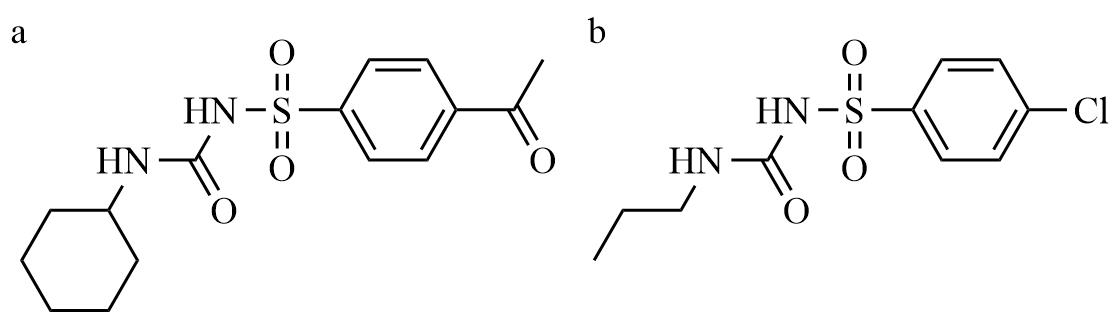
图1 (a)AH和(b)CP的结构式
Fig. 1 Chemical structures of (a) acetohexamide (AH) and (b) chlorpropamide (CP)
| Analyte | tR/min | Precursor (m/z) | Products (m/z) | CEs/V | RF lens/V |
|---|---|---|---|---|---|
| AH | 6.92 | 324.9 | 199.4*, 243.8 | 17.76, 23.98 | 53 |
| CP | 6.83 | 276.8 | 110.9*, 175.1 | 31.33, 17.59 | 41 |
表1 AH和CP的保留时间和质谱数据
Table 1 Retention times and MS data of AH and CP
| Analyte | tR/min | Precursor (m/z) | Products (m/z) | CEs/V | RF lens/V |
|---|---|---|---|---|---|
| AH | 6.92 | 324.9 | 199.4*, 243.8 | 17.76, 23.98 | 53 |
| CP | 6.83 | 276.8 | 110.9*, 175.1 | 31.33, 17.59 | 41 |
| DES | HBA | HBD | Molar ratio | State at room temperature |
|---|---|---|---|---|
| DES 1 | tetrabutylphosphonium hexafluorophosphate (B4PPF6) | PFP | 1∶2 | solid |
| DES 2 | tetrabutylphosphonium bis((trifluoromethyl)sulfonyl)imide (B4PNTF2) | PFP | 1∶2 | solid |
| DES 3 | N-butyl-pyridinium hexafluorophosphate (BpyPF6) | PFP | 1∶2 | solid |
| DES 4 | N-butyl-pyridinium bis((trifluoromethyl)sulfonyl)imide (BpyNTF2) | PFP | 1∶2 | liquid |
| DES 5 | tetrabutylammonium hexafluorophosphate (N4444PF6) | PFP | 1∶2 | solid |
| DES 6 | tetrabutylammonium bis((trifluoromethyl)sulfonyl)imide (N4444NTF2) | PFP | 1∶2 | solid |
| DES 7 | N-butyl-N-methylpyrrolidinium hexafluorophosphate (PP14PF6) | PFP | 1∶2 | liquid |
| DES 8 | N-butyl-N-methylpyrrolidinium bis((trifluoromethyl)sulfonyl)imide (PP14NTF2) | PFP | 1∶2 | liquid |
| DES 9 | N-butyl-N-methylpiperidinium hexafluorophosphate (P14PF6) | PFP | 1∶2 | liquid |
| DES 10 | N-butyl-N-methylpiperidinium bis((trifluoromethyl)sulfonyl)imide (P14NTF2) | PFP | 1∶2 | liquid |
| DES 11 | 1-butyl-3-methylimidazolium hexafluorophosphate (BMIMPF6) | PFP | 1∶2 | liquid |
| DES 12 | 1-butyl-3-methylimidazolium bis((trifluoromethyl)sulfonyl)imide (BMIMNTF2) | PFP | 1∶2 | liquid |
| DES 13 | N-butyl-N-methylmorpholinium hexafluorophosphate (EMMPPF6) | PFP | 1∶2 | solid |
| DES 14 | N-butyl-N-methylmorpholinium bis((trifluoromethyl)sulfonyl)imide (EMMPNTF2) | PFP | 1∶2 | liquid |
表2 14种IL-DES的组成成分、物质的量之比和室温下的状态
Table 2 Components, molar ratios and states at room temperature of 14 ionic liquid-based deep eutectic solvents (IL-DES)
| DES | HBA | HBD | Molar ratio | State at room temperature |
|---|---|---|---|---|
| DES 1 | tetrabutylphosphonium hexafluorophosphate (B4PPF6) | PFP | 1∶2 | solid |
| DES 2 | tetrabutylphosphonium bis((trifluoromethyl)sulfonyl)imide (B4PNTF2) | PFP | 1∶2 | solid |
| DES 3 | N-butyl-pyridinium hexafluorophosphate (BpyPF6) | PFP | 1∶2 | solid |
| DES 4 | N-butyl-pyridinium bis((trifluoromethyl)sulfonyl)imide (BpyNTF2) | PFP | 1∶2 | liquid |
| DES 5 | tetrabutylammonium hexafluorophosphate (N4444PF6) | PFP | 1∶2 | solid |
| DES 6 | tetrabutylammonium bis((trifluoromethyl)sulfonyl)imide (N4444NTF2) | PFP | 1∶2 | solid |
| DES 7 | N-butyl-N-methylpyrrolidinium hexafluorophosphate (PP14PF6) | PFP | 1∶2 | liquid |
| DES 8 | N-butyl-N-methylpyrrolidinium bis((trifluoromethyl)sulfonyl)imide (PP14NTF2) | PFP | 1∶2 | liquid |
| DES 9 | N-butyl-N-methylpiperidinium hexafluorophosphate (P14PF6) | PFP | 1∶2 | liquid |
| DES 10 | N-butyl-N-methylpiperidinium bis((trifluoromethyl)sulfonyl)imide (P14NTF2) | PFP | 1∶2 | liquid |
| DES 11 | 1-butyl-3-methylimidazolium hexafluorophosphate (BMIMPF6) | PFP | 1∶2 | liquid |
| DES 12 | 1-butyl-3-methylimidazolium bis((trifluoromethyl)sulfonyl)imide (BMIMNTF2) | PFP | 1∶2 | liquid |
| DES 13 | N-butyl-N-methylmorpholinium hexafluorophosphate (EMMPPF6) | PFP | 1∶2 | solid |
| DES 14 | N-butyl-N-methylmorpholinium bis((trifluoromethyl)sulfonyl)imide (EMMPNTF2) | PFP | 1∶2 | liquid |
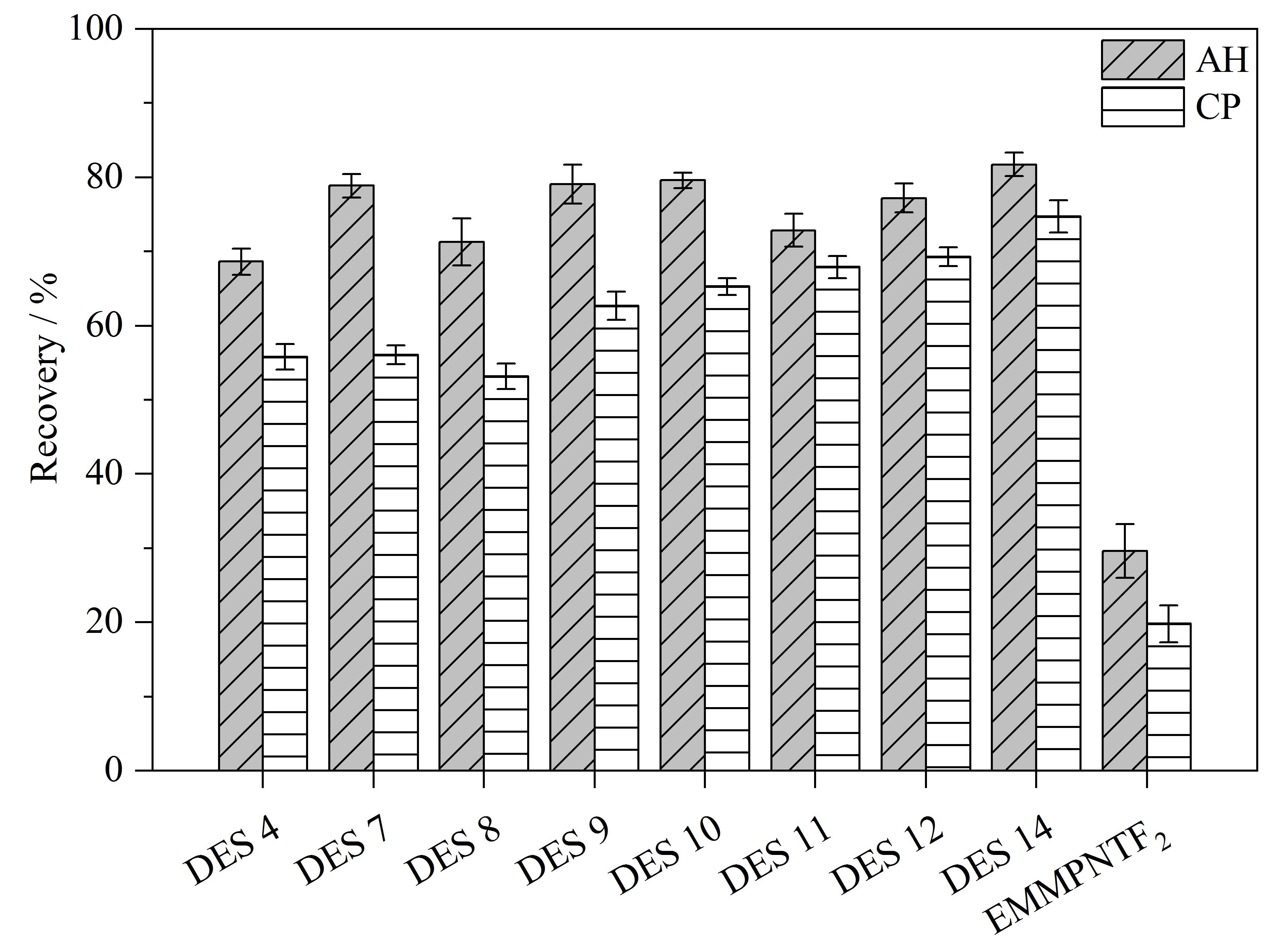
图2 8种IL-DES和EMMPNTF2对马尿中AH和CP萃取率的影响(n=3)
Fig. 2 Effect of eight IL-DES and EMMPNTF2 on the extraction recoveries of AH and CP from equine urine (n=3)
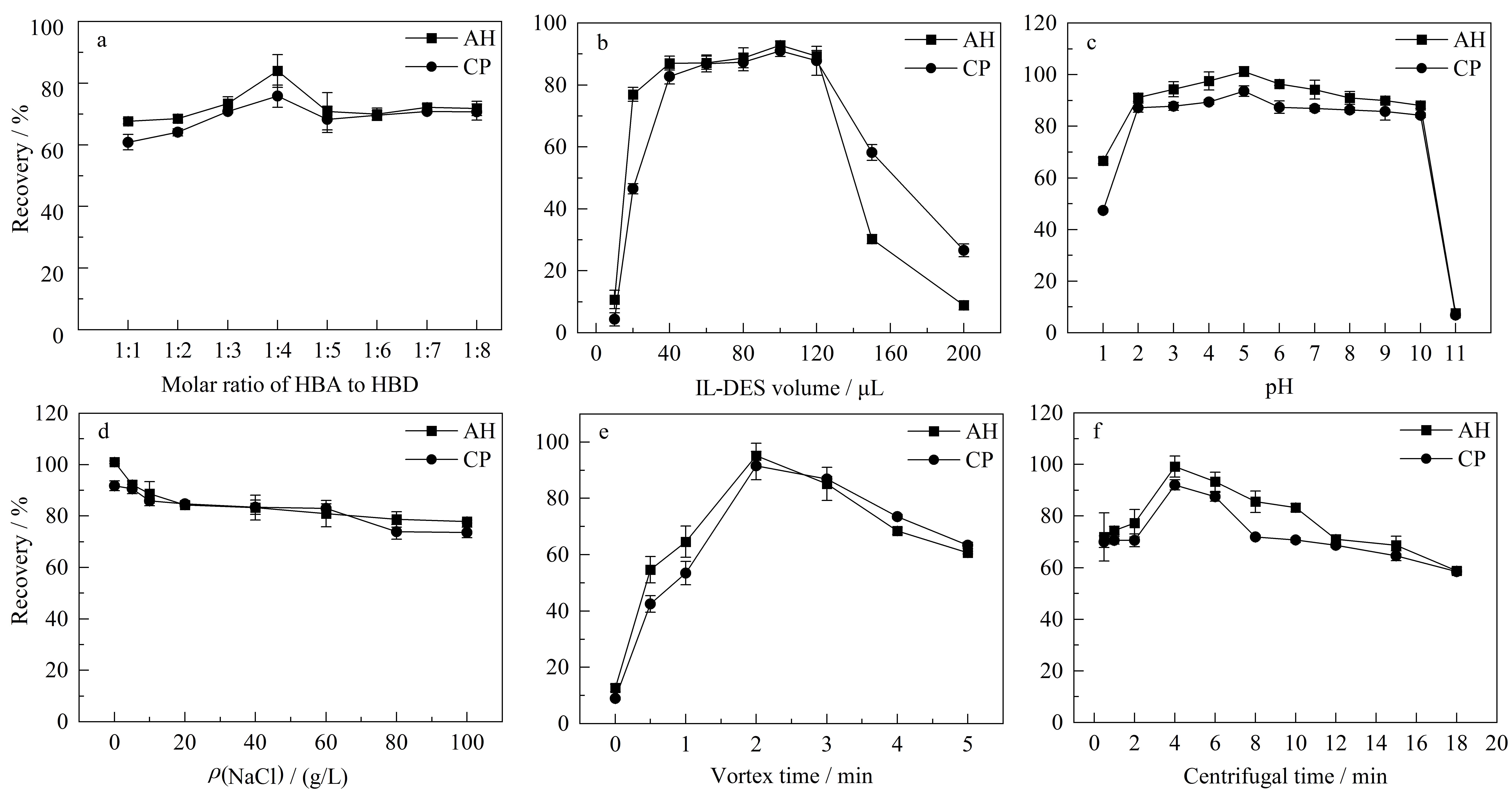
图3 (a)HBA与HBD物质的量之比、(b)IL-DES用量、(c)pH、(d)NaCl质量浓度、(e)涡旋时间和(f)离心时间对马尿中AH和CP萃取率的影响(n=3)
Fig. 3 Effect of (a) molar ratio of HBA to HBD, (b) IL-DES volume, (c) pH, (d) concentration of NaCl, (e) vortex time and (f) centrifugal time on the extraction recoveries of AH and CP from equine urine (n=3)
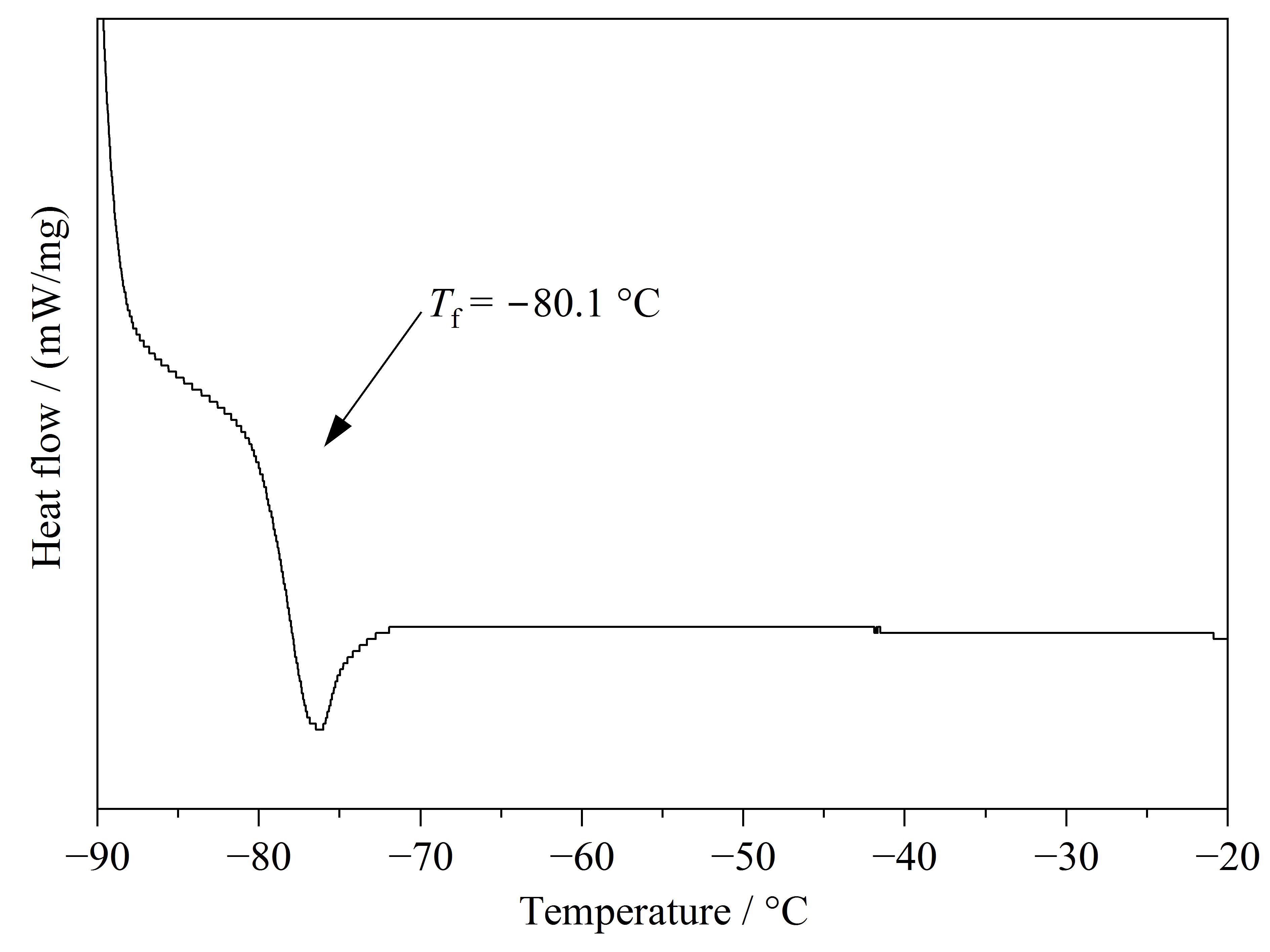
图4 IL-DES(DES 14,下同)的差示扫描量热图
Fig. 4 Differential scanning calorimetry (DSC) curve of the IL-DES (DES 14, the same below)
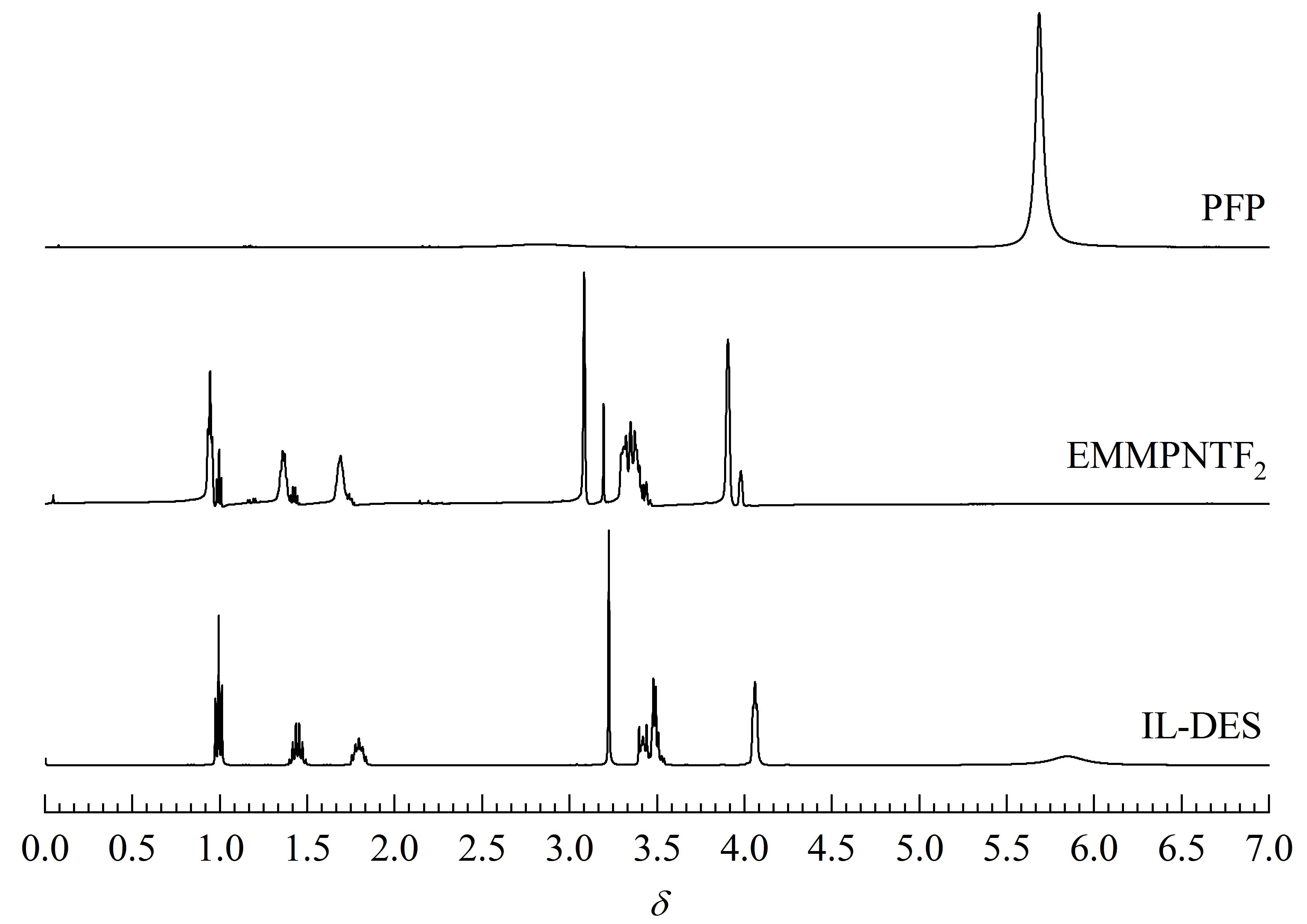
图5 PFP,EMMPNTF2和IL-DES的核磁共振氢谱图
Fig. 5 1HNMR spectra of PFP, EMMPNTF2 and IL-DES
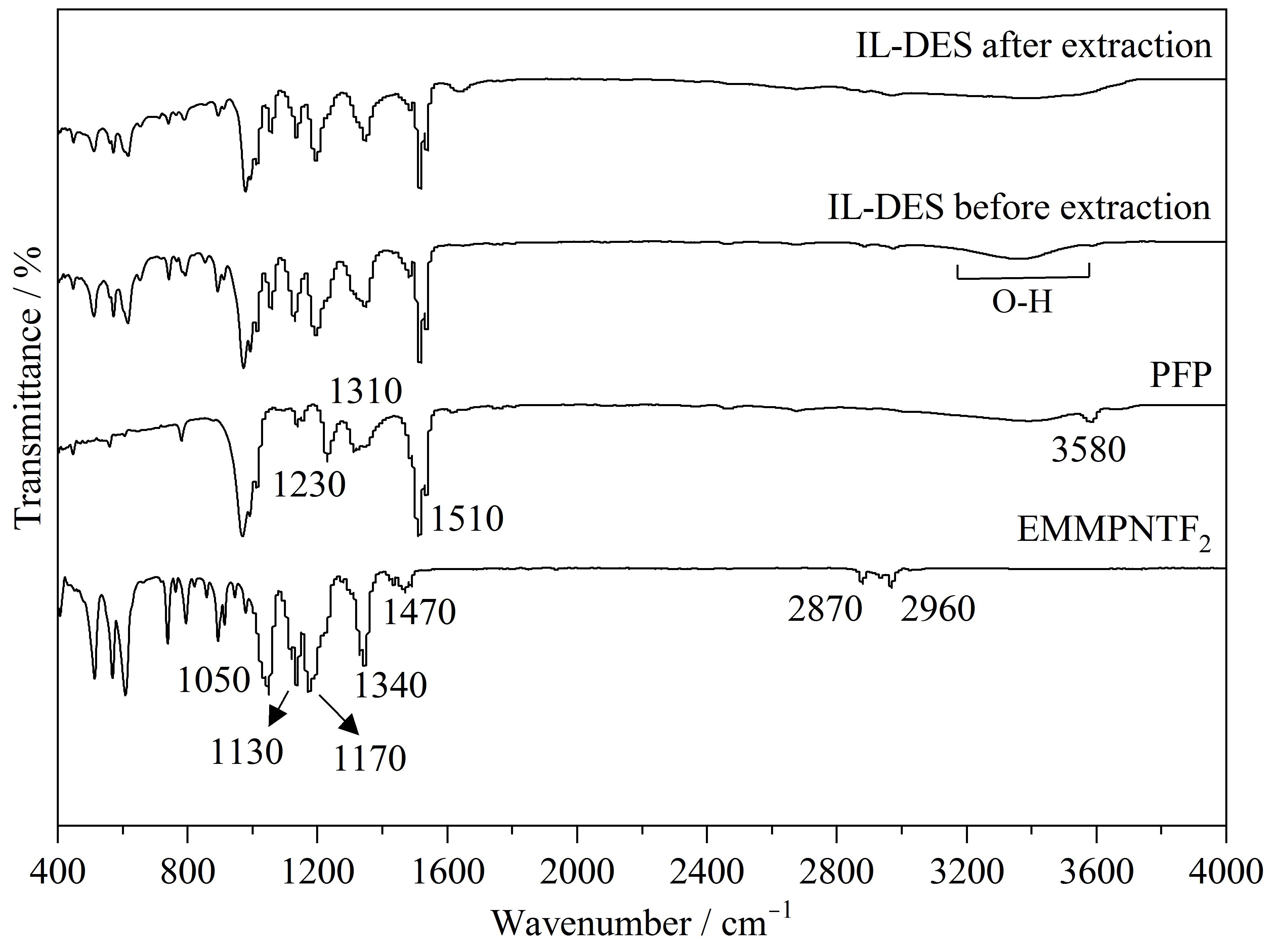
图6 萃取后IL-DES、萃取前IL-DES、PFP和EMMPNTF2的红外光谱图
Fig. 6 FT-IR spectra of IL-DES after extraction, IL-DES before extraction, PFP and EMMPNTF2
| Analyte | Linear range/(ng/mL) | Regression equation | Point numbera | LOD/(ng/mL) | LOQ/(ng/mL) | r2 |
|---|---|---|---|---|---|---|
| AH | 0.2-20000 | y=37.1x+994.9 | 16 | 0.1 | 0.2 | 0.9999 |
| CP | 0.5-20000 | y=1005.7x+43854.5 | 15 | 0.2 | 0.5 | 0.9995 |
表3 AH和CP的线性范围、回归方程、检出限和定量限(n=3)
Table 3 Linear ranges, regression equations, LODs and LOQs of AH and CP (n=3)
| Analyte | Linear range/(ng/mL) | Regression equation | Point numbera | LOD/(ng/mL) | LOQ/(ng/mL) | r2 |
|---|---|---|---|---|---|---|
| AH | 0.2-20000 | y=37.1x+994.9 | 16 | 0.1 | 0.2 | 0.9999 |
| CP | 0.5-20000 | y=1005.7x+43854.5 | 15 | 0.2 | 0.5 | 0.9995 |
| Analyte | Added/(ng/mL) | Intra-day (n=5) | Inter-day (n=3) | ||
|---|---|---|---|---|---|
| Recovery/% | RSD/% | Recovery/% | RSD/% | ||
| AH | 0.2 | 96.1 | 1.6 | 93.0 | 5.5 |
| 0.5 | 97.2 | 3.1 | 97.1 | 0.7 | |
| 1 | 97.6 | 4.6 | 99.0 | 6.6 | |
| 10 | 95.7 | 4.9 | 98.5 | 2.7 | |
| 100 | 97.4 | 2.9 | 97.7 | 3.3 | |
| 1000 | 97.0 | 1.2 | 96.8 | 1.8 | |
| 10000 | 107.4 | 3.7 | 106.4 | 2.1 | |
| 20000 | 108.4 | 5.2 | 103.7 | 2.6 | |
| CP | 0.5 | 97.1 | 4.9 | 103.4 | 1.2 |
| 1 | 101.1 | 5.8 | 105.1 | 3.5 | |
| 10 | 104.3 | 2.4 | 105.1 | 3.2 | |
| 100 | 90.4 | 0.8 | 90.2 | 1.0 | |
| 1000 | 105.4 | 1.9 | 106.1 | 2.4 | |
| 10000 | 110.4 | 1.6 | 109.7 | 2.1 | |
| 20000 | 90.6 | 0.6 | 104.8 | 1.4 | |
表4 不同水平下AH和CP在马尿中的加标回收率、日间和日内精密度
Table 4 Recoveries, intra-day and inter-day RSDs of AH and CP at different levels from equine urine
| Analyte | Added/(ng/mL) | Intra-day (n=5) | Inter-day (n=3) | ||
|---|---|---|---|---|---|
| Recovery/% | RSD/% | Recovery/% | RSD/% | ||
| AH | 0.2 | 96.1 | 1.6 | 93.0 | 5.5 |
| 0.5 | 97.2 | 3.1 | 97.1 | 0.7 | |
| 1 | 97.6 | 4.6 | 99.0 | 6.6 | |
| 10 | 95.7 | 4.9 | 98.5 | 2.7 | |
| 100 | 97.4 | 2.9 | 97.7 | 3.3 | |
| 1000 | 97.0 | 1.2 | 96.8 | 1.8 | |
| 10000 | 107.4 | 3.7 | 106.4 | 2.1 | |
| 20000 | 108.4 | 5.2 | 103.7 | 2.6 | |
| CP | 0.5 | 97.1 | 4.9 | 103.4 | 1.2 |
| 1 | 101.1 | 5.8 | 105.1 | 3.5 | |
| 10 | 104.3 | 2.4 | 105.1 | 3.2 | |
| 100 | 90.4 | 0.8 | 90.2 | 1.0 | |
| 1000 | 105.4 | 1.9 | 106.1 | 2.4 | |
| 10000 | 110.4 | 1.6 | 109.7 | 2.1 | |
| 20000 | 90.6 | 0.6 | 104.8 | 1.4 | |
| Analyte | Sample | Extraction method | Extraction solvent | Extraction time/min | Detection technique | Linear range/(ng/mL) | Recovery/% | RSD/% | LOD/(ng/mL) | Ref. |
|---|---|---|---|---|---|---|---|---|---|---|
| CP | human plasma | LPE | N-hexane (5 mL) | — | GC | 20000-100000 | 104-114 | 2.5-5.3 | — | [ |
AH CP | human urine | SPE | methylene chloride (15 mL) | — | MEKC | — | — | — | 50 | [ |
| AH | human plasma and urine | LPE | N-hexane (5 mL) | — | GC | 5000-40000 | plasma: 81-115 urine: 30-35 | plasma: 3.0-11.5 urine: 8.0-16.0 | — | [ |
| CP | human plasma | LLE | chloroform (5 mL) | 12 | GC | — | 94-100 | — | — | [ |
| CP | human plasma | LLE | ethyl acetate (6 mL) | >6 | GC-MS | 4000-44000 | — | — | — | [ |
| CP | human serum | LLE | toluene (1 mL) | >17 | HPLC | 2.5-300 | 78 | <2.7 | 0.5 | [ |
| CP | human serum | SPE | ENVI-18 cartridge | >2 | LC-ESI-MS | 25-400 | 96.5 | 8.2 | 2-3 | [ |
| CP | horse plasma | LLE | dichloromethane (16 mL) | 35 | HPLC | 0-300000 | >95 | 1.2-3.6 | 3.5 | [ |
AH CP | equine urine | IL-DES-VALLME | DES 14 (0.1 mL) | 6 | UHPLC-MS/MS | 0.2-20000 0.5-20000 | 93.0-108.4 90.4-110.4 | 0.7-6.6 0.8-5.8 | 0.1 0.2 | this work |
表5 本方法和其他方法在生物样品中检测AH和CP的对比
Table 5 Comparison of the proposed method with other methods for the determination of AH and CP in body fluids
| Analyte | Sample | Extraction method | Extraction solvent | Extraction time/min | Detection technique | Linear range/(ng/mL) | Recovery/% | RSD/% | LOD/(ng/mL) | Ref. |
|---|---|---|---|---|---|---|---|---|---|---|
| CP | human plasma | LPE | N-hexane (5 mL) | — | GC | 20000-100000 | 104-114 | 2.5-5.3 | — | [ |
AH CP | human urine | SPE | methylene chloride (15 mL) | — | MEKC | — | — | — | 50 | [ |
| AH | human plasma and urine | LPE | N-hexane (5 mL) | — | GC | 5000-40000 | plasma: 81-115 urine: 30-35 | plasma: 3.0-11.5 urine: 8.0-16.0 | — | [ |
| CP | human plasma | LLE | chloroform (5 mL) | 12 | GC | — | 94-100 | — | — | [ |
| CP | human plasma | LLE | ethyl acetate (6 mL) | >6 | GC-MS | 4000-44000 | — | — | — | [ |
| CP | human serum | LLE | toluene (1 mL) | >17 | HPLC | 2.5-300 | 78 | <2.7 | 0.5 | [ |
| CP | human serum | SPE | ENVI-18 cartridge | >2 | LC-ESI-MS | 25-400 | 96.5 | 8.2 | 2-3 | [ |
| CP | horse plasma | LLE | dichloromethane (16 mL) | 35 | HPLC | 0-300000 | >95 | 1.2-3.6 | 3.5 | [ |
AH CP | equine urine | IL-DES-VALLME | DES 14 (0.1 mL) | 6 | UHPLC-MS/MS | 0.2-20000 0.5-20000 | 93.0-108.4 90.4-110.4 | 0.7-6.6 0.8-5.8 | 0.1 0.2 | this work |
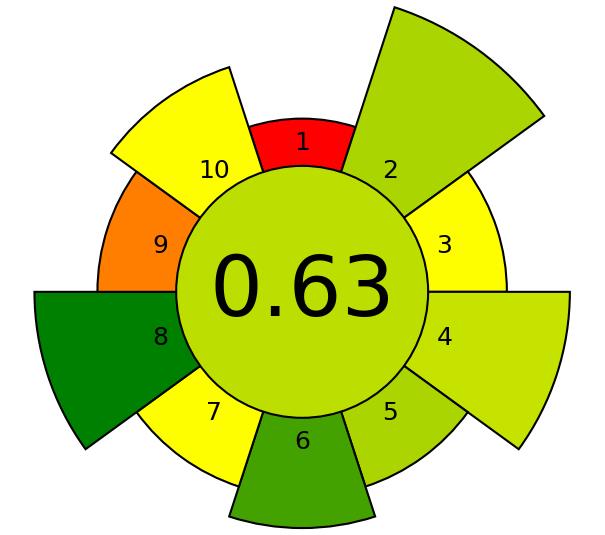
图7 本方法的绿色度分布图
Fig. 7 Greenness profile of the developed method
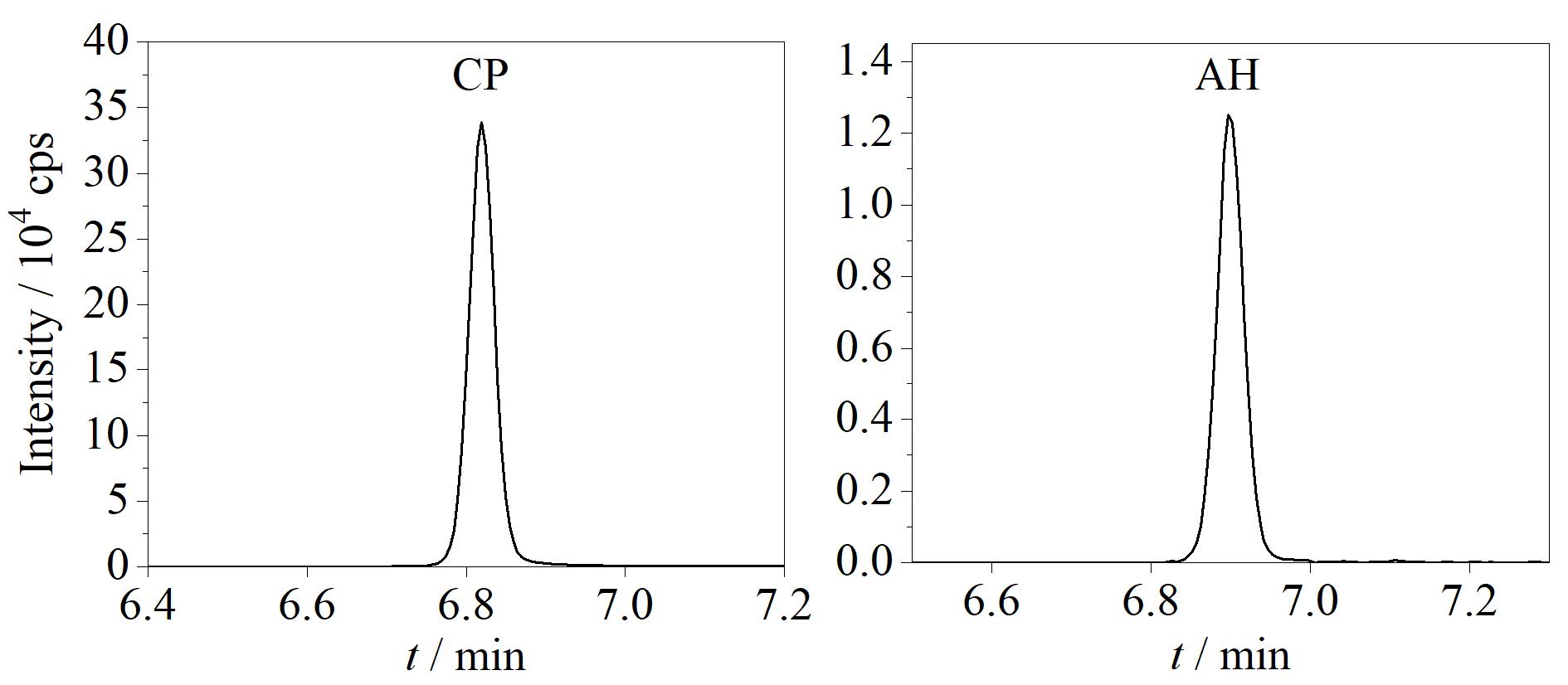
图8 阳性马尿样品中CP和AH的色谱图
Fig. 8 Chromatograms of CP and AH from a positive equine urine sample
|
| [1] | 张晓男, 马智超, 刘安, 黄渊, 闵雪红, 刘梅, 谢正齐, 魏岩松. QuEChERS-超高效液相色谱-串联质谱法测定马尿中33种非甾体抗炎药残留[J]. 色谱, 2026, 44(9): 1028-1037. |
| [2] | 廖晓磊, 林钦, 梅月, 窦红顺, 许晖, 何芸, 潘城, 江凤玲. 亲水柱分离-超高效液相色谱-串联质谱法测定食品中3种色胺类精神活性物质[J]. 色谱, 2026, 44(9): 1010-1018. |
| [3] | 毕瑞锋, 付世慧, 邓锁成, 付萌, 张伟伟, 宋玉华. 柱前衍生-超高效液相色谱-串联质谱法检测茶叶中草铵膦及其代谢物残留量[J]. 色谱, 2026, 44(9): 1019-1027. |
| [4] | 章慧, 吴慧敏, 何群, 秦天雪, 郭素英, 李雯静, 江蓉, 孙光映. 低共熔溶剂改性反相液相色谱法用于天然产物分离[J]. 色谱, 2026, 44(8): 946-959. |
| [5] | 张晓梅, 孟祥娟, 胡越, 刘晓东. 液液萃取结合超高效液相色谱-串联质谱同时测定尿中5种常见拟除虫菊酯代谢产物[J]. 色谱, 2026, 44(7): 777-784. |
| [6] | 刘真, 王玉梅, 潘建斌, 宗凌丽, 宋玉函, 孙小杰, 陈洪渊. QuEChERS净化结合超高效液相色谱-串联质谱法测定精油类化妆品中13种禁用生物碱[J]. 色谱, 2026, 44(6): 667-674. |
| [7] | 石飞云, 徐浩宇, 黎俊宏, 徐梦媛. 超高效液相色谱-串联质谱法测定人体全血中22种有机磷酸酯及其代谢物和11种邻苯二甲酸酯类代谢物[J]. 色谱, 2026, 44(6): 682-693. |
| [8] | 梁静, 冯家力, 曾栋, 周丽平, 钟旋, 李轶, 陈东洋. 全自动固相萃取-超高效液相色谱-串联质谱法同时测定饮用水中全氟化合物、抗生素和农药[J]. 色谱, 2026, 44(5): 547-554. |
| [9] | 任彩霞, 王晓敏, 盛万里, 韩祎陟, 张春艳, 郑书展. 固相支撑液液萃取结合超高效液相色谱-串联质谱快速检测牧草中10种麦角生物碱毒素[J]. 色谱, 2026, 44(4): 403-412. |
| [10] | 杨成, 祝伟霞, 刘亚风, 张鸿伟, 魏蔚, 胡锴. 超高效液相色谱-串联质谱法快速测定动物源性食品中卢巴贝隆残留[J]. 色谱, 2026, 44(4): 479-485. |
| [11] | 徐锐洺, 吴友谊, 顾智灏, 魏唯, 陆星宇, 夏紫菡. 基于低共熔溶剂和改进针式滤头的液膜微萃取结合高效液相色谱法测定牛奶中磺胺与氟喹诺酮残留[J]. 色谱, 2026, 44(4): 422-431. |
| [12] | 席彰, 叶懿, 李松璠, 康靖, 刘魏群, 张静, 李道霞. QuEChERS-超高效液相色谱-串联质谱法测定全血中65种合成大麻素[J]. 色谱, 2026, 44(4): 393-402. |
| [13] | 侯衍青, 迟翔宇, 杜庭沪, 燕增旗, 侯带迪, 胡春秀, 刘月星, 刘心昱, 许国旺. 基于知识导向的拟靶向分析方法建立及在糖尿病视网膜病变中的应用[J]. 色谱, 2026, 44(3): 312-328. |
| [14] | 肖雄, 李月, 胡锦芳, 万青, 彭洪薇. 超高效液相色谱-串联质谱法同时测定人血浆中的塞利尼索、维奈克拉、伏立康唑及泊沙康唑[J]. 色谱, 2026, 44(3): 349-356. |
| [15] | 朱颖, 马晓丽, 禹松林, 邱玲. 超高效液相色谱-串联质谱法快速测定血浆中维奈克拉药物[J]. 色谱, 2026, 44(3): 357-362. |
| 阅读次数 | ||||||
|
全文 |
|
|||||
|
摘要 |
|
|||||
