色谱 ›› 2026, Vol. 44 ›› Issue (4): 444-452.DOI: 10.3724/SP.J.1123.2025.02012

• 研究论文 • 上一篇    下一篇

基于机器学习的全氟及多氟化合物电离效率预测模型开发及其在半定量分析中的应用

孙沈正1,2, 李瑶瑶2, 高燕2,*(), 李康聪2, 陈智1,*(), 李秀琴2,*(), 张庆合2,*()   

  1. 1.中国计量大学材料与化学学院,浙江 杭州 310018
    2.中国计量科学研究院化学计量 与分析科学研究所,北京 100029
  • 收稿日期:2025-02-24 出版日期:2026-04-08 发布日期:2026-04-13
  • 通讯作者: * E-mail:gaoyan@nim.ac.cn(高燕); E-mail:zchen@cjlu.edu.cn(陈智); E-mail:zhangqh@nim.ac.cn(张庆合); E-mail:lixq@nim.ac.cn(李秀琴)
  • 基金资助:
    国家重点研发计划项目(2023YFF0612601);国家自然科学基金(22006145)

Development of a machine learning-based ionization efficiency prediction model for per- and polyfluoroalkyl substances and its application in semi-quantitative analysis

SUN Shenzheng1,2, LI Yaoyao2, GAO Yan2,*(), LI Kangcong2, CHEN Zhi1,*(), LI Xiuqin2,*(), ZHANG Qinghe2,*()   

  1. 1. China Jiliang University,College of Materials and Chemistry,Hangzhou 310018,China
    2. Division of Chemical Metrology and Analytical Science,National Institute of Metrology,China,Beijing 100029,China
  • Received:2025-02-24 Online:2026-04-08 Published:2026-04-13
  • Supported by:
    National Key Research and Development Program of China(2023YFF0612601);National Natural Science Foundation of China(22006145)

摘要:

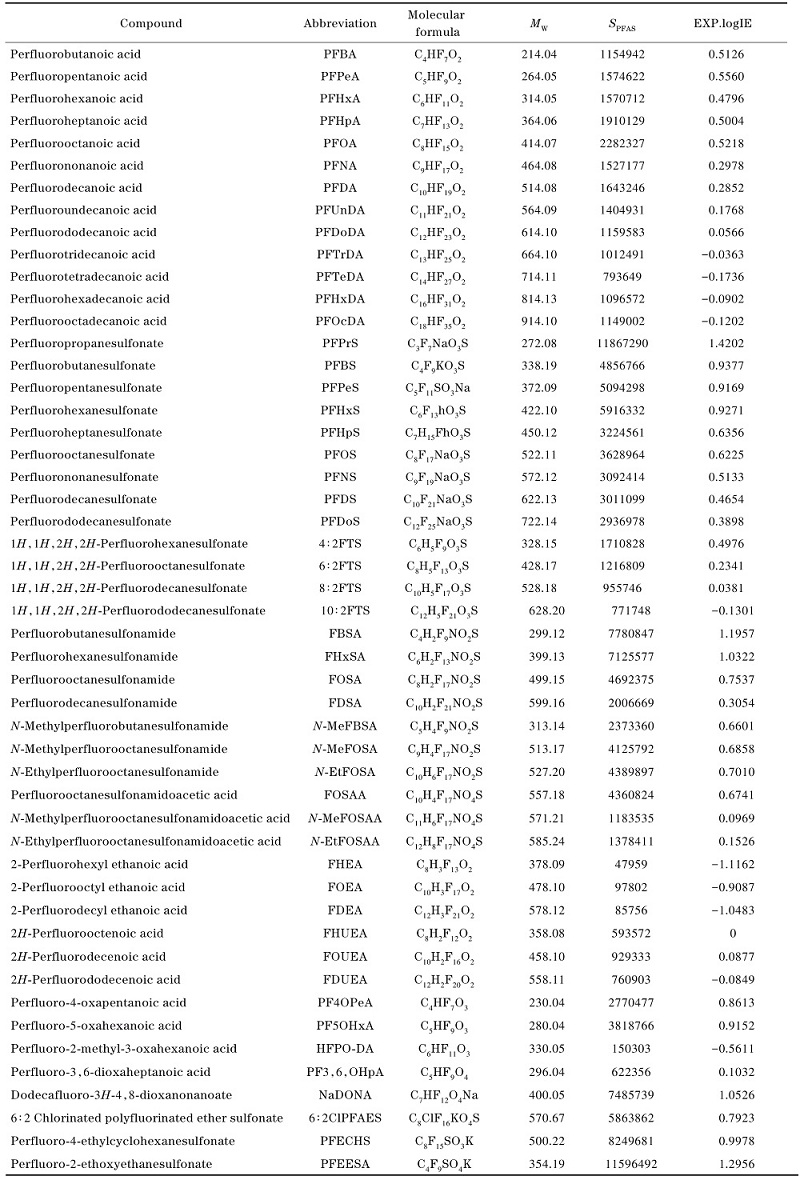
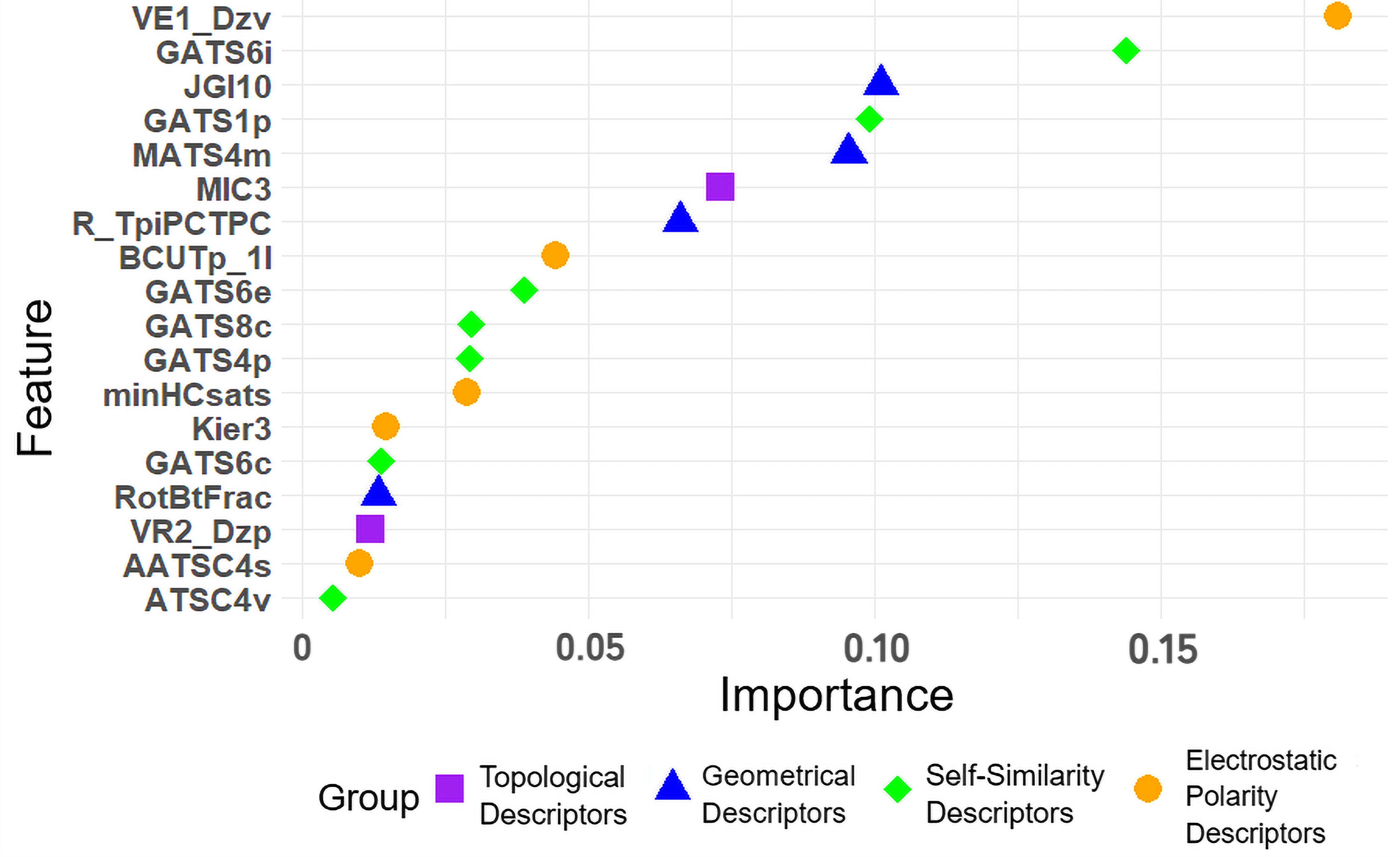
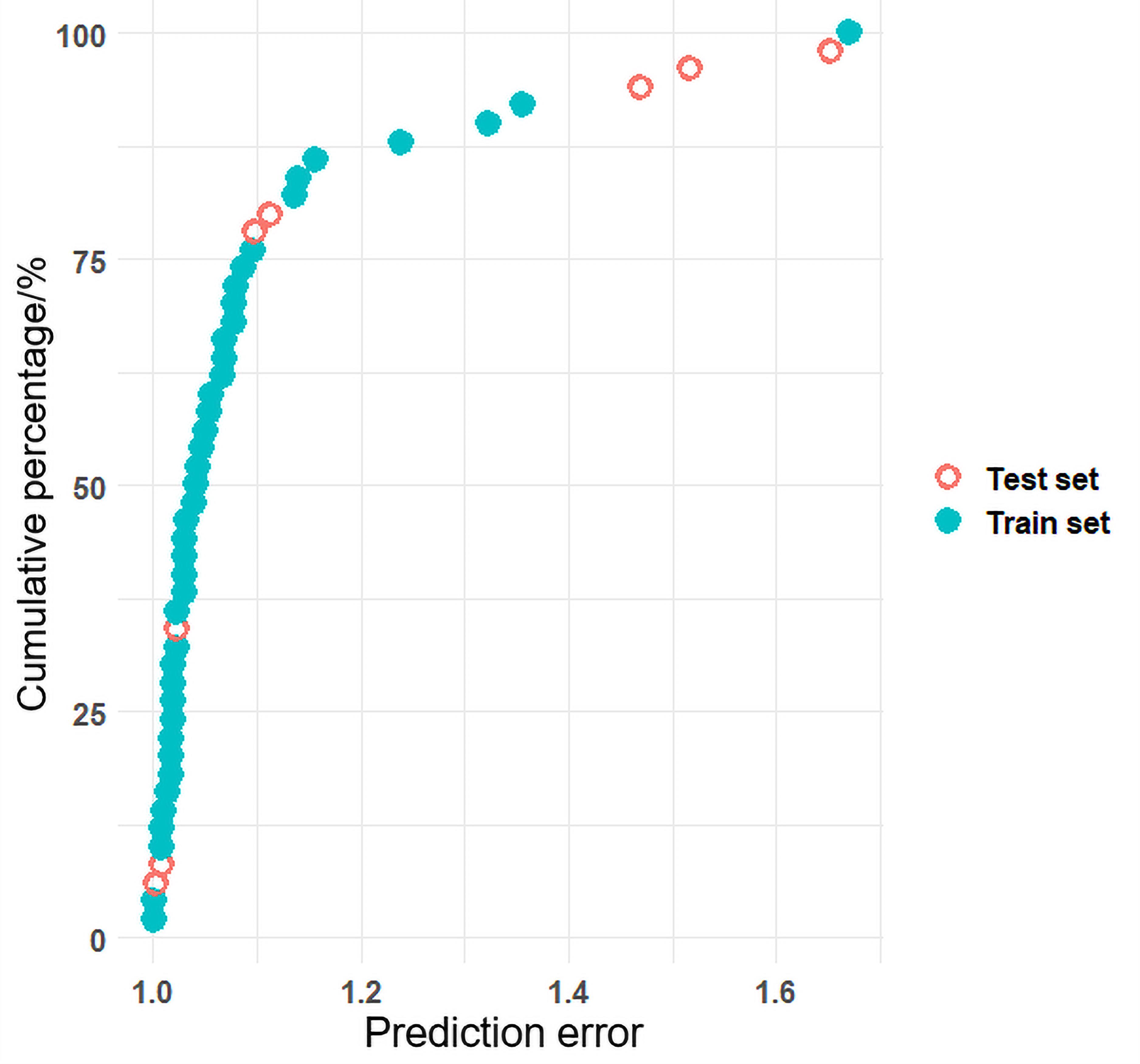
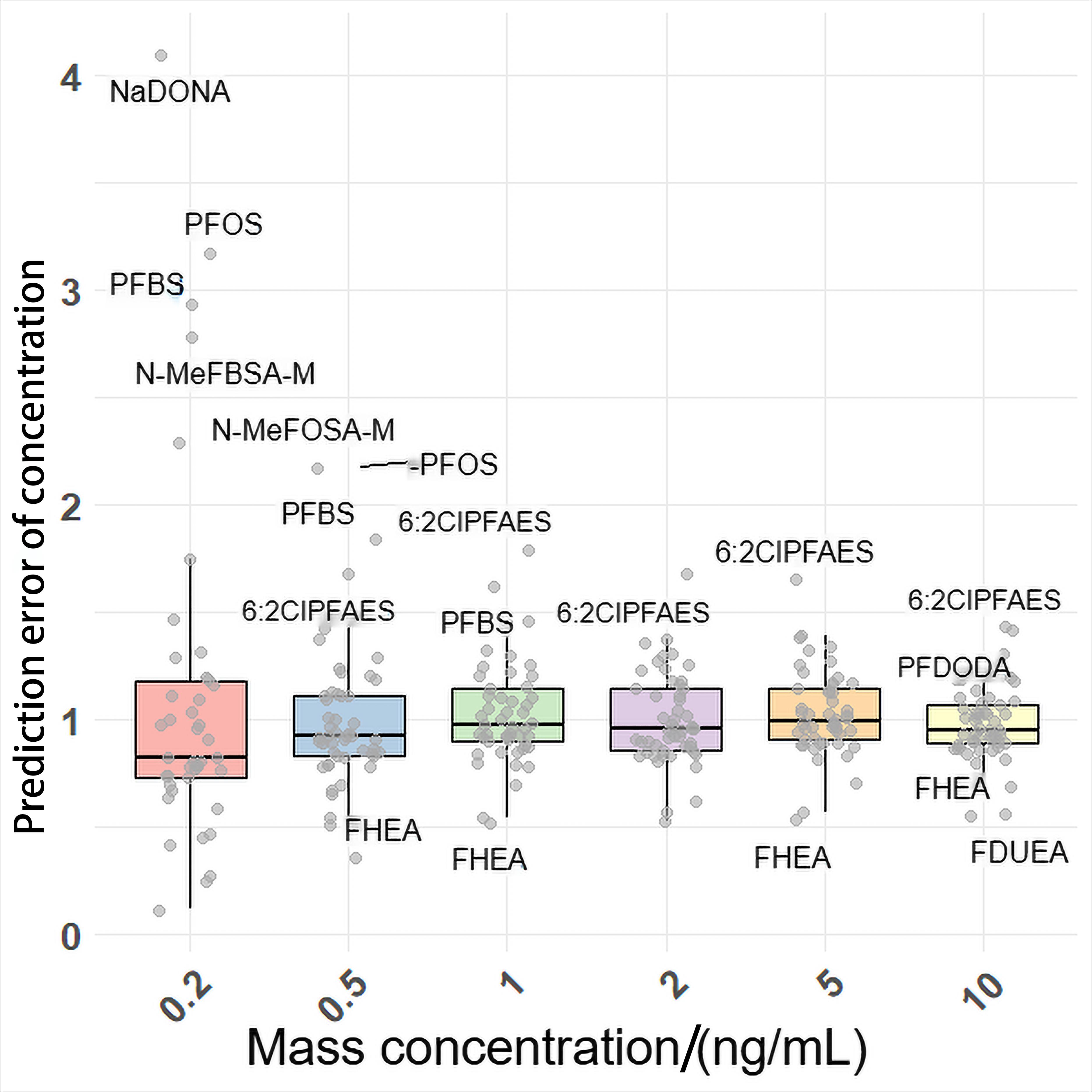
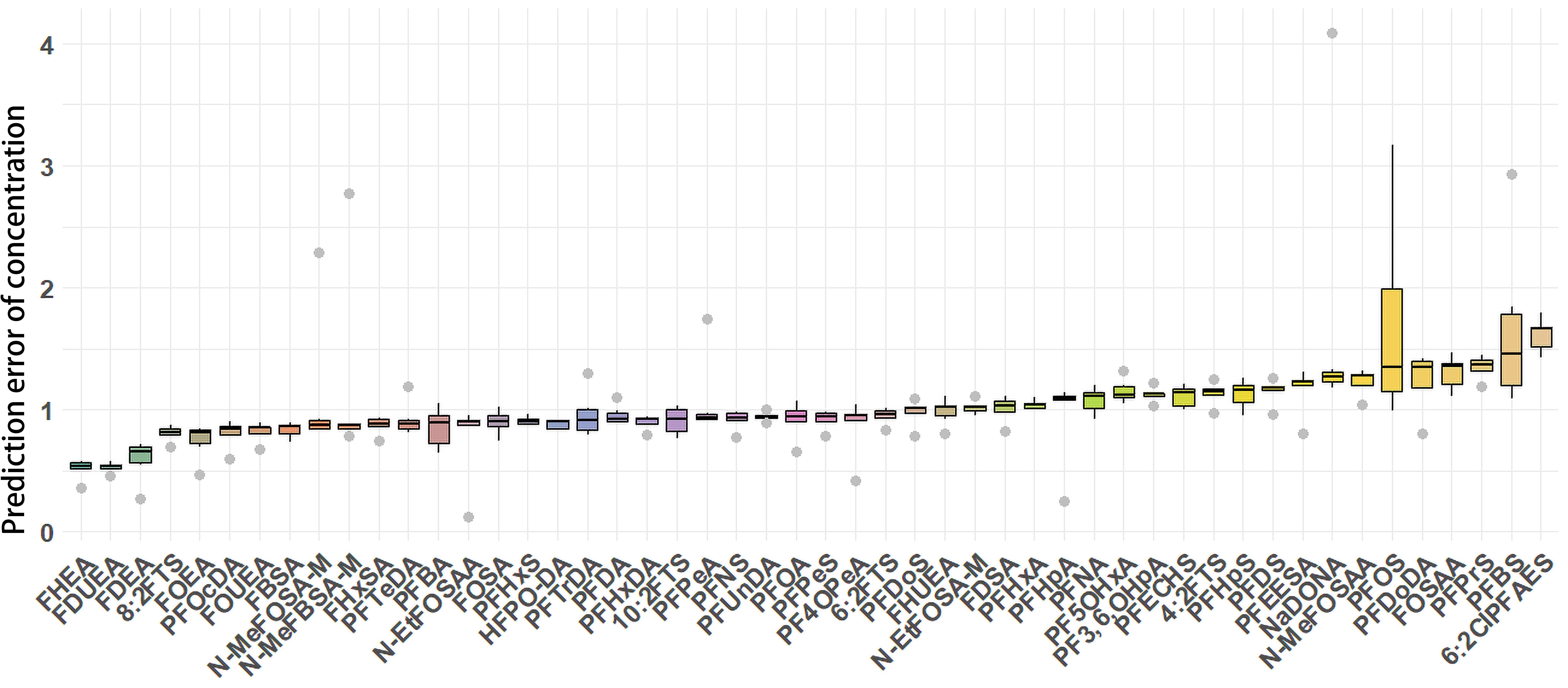
全氟和多氟烷基化合物(PFASs)具有持久性、生物累积性和潜在毒性,在环境科学和食品安全等领域备受关注。尽管基于高分辨率质谱(HRMS)的PFASs筛查方法发展迅速,但PFASs种类繁多,无标准品的PFASs定量困难。本研究对50种PFASs进行液相色谱-高分辨质谱分析,计算其电离效率(IE),并基于机器学习建立PaDEL分子描述符与PFASs电离效率的定量构效关系(QSAR)预测模型,该模型的构建能够预测无标准品PFASs的电离效率,通过预测的电离效率进行PFASs的半定量预测。研究采用递归特征消除(RFE),从1 444个PaDEL描述符中选取了18个特征变量;比较了弹性网络线性回归、随机森林和极致梯度提升(XGBoost)3种不同算法所建立的QSAR模型性能。结果表明,XGBoost模型性能最优,其训练集的均方根误差(RMSE)为0.052 1,决定系数(R2)为0.992 0;测试集的RMSE为0.118 4,R2为0.871 3。50种PFASs预测的IE误差在1.67倍以内,中位值为1.04倍,RMSE为1.06。采用预测的电离效率值对不同梯度浓度的PFASs标准溶液进行半定量预测来验证模型性能,浓度预测误差倍数为0.12~4.90倍,中位值为0.96倍,RMSE为0.94;且随着溶液浓度升高,浓度半定量预测的准确度提高。将该电离效率预测模型应用于鱼肉中9种PFASs的半定量预测,预测误差倍数为0.79~1.81倍。该模型能够较为准确地进行PFASs的电离效率预测,在无标准品PFASs的可疑和非靶向筛查、风险评估中具有良好的应用前景。

关键词: 全氟及多氟烷基化合物, 定量构效关系, 机器学习, 半定量预测模型

Abstract:

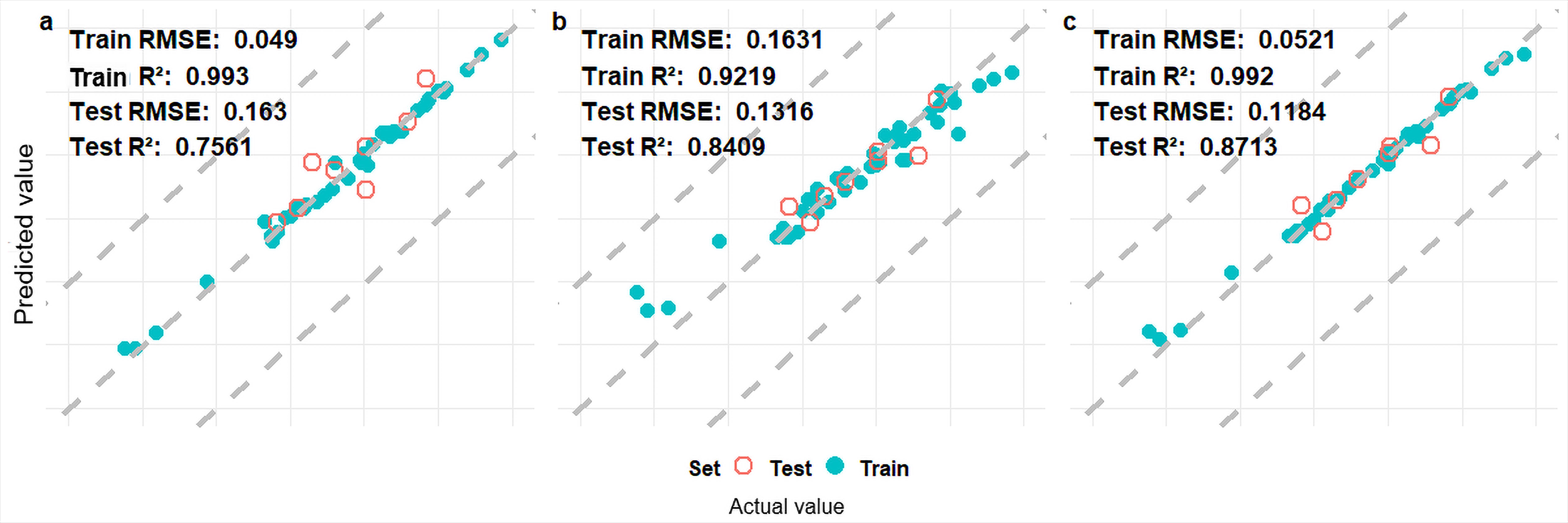
Per- and polyfluoroalkyl substances (PFASs) represent a category of emerging contaminants of global concern in fields such as environmental science and food safety, due to their persistence, bioaccumulative properties and potential toxicity. Although screening methods for PFASs using high resolution mass spectrometry (HRMS) have been developed rapidly, the diversity of PFASs and the absence of standards pose significant challenges for quantitative analysis. In this study, 50 PFASs were analyzed by HPLC-HRMS. The ionization efficiency (IE) was calculated as the slope of the calibration curve. A quantitative structure-activity relationship (QSAR) model was developed employing machine learning to predict the ionization efficiencies of PFASs using PaDEL molecular descriptors. The model enables semi-quantitative estimation of PFASs concentrations in the absence of reference standards by incorporating predicted IE values. Eighteen critical descriptors were selected from a total of 1 444 PaDEL descriptors through the application of recursive feature elimination (RFE). These selected descriptors encompassed topological descriptors, geometrical descriptors, autocorrelation descriptors, electrostatic and polarity descriptors. These individual descriptors including VE1_Dzv, GATS6i, JGI10, GATS1p and MATS4m were of great importance. Three algorithms including elastic net linear regression, random forest (RF), and XGBoost were evaluated for model performance. In the elastic net linear regression model, the root mean square error (RMSE) for the training dataset was 0.049 0, and the coefficient of determination (R²) was 0.993 0; for the test dataset, the RMSE was 0.163 0, with an R² of 0.756 1. In the RF model, the RMSE for the training dataset was 0.163 1, and the R² was 0.921 9; for the test dataset, the RMSE was 0.131 6, with an R² of 0.840 9. In the XGBoost model, the RMSE for the training dataset was 0.052 1, and the R² was 0.992 0; for the test dataset, the RMSE was 0.118 4, with an R² of 0.871 3. Nonlinear algorithms of random forest and XGBoost demonstrated superior predictive performance compared to the elastic net linear regression, with XGBoost exhibiting best performance. Random forest, a bagging-based approach, trains individual decision trees independently and aggregates predictions through averaging. In contrast, XGBoost employs gradient boosting methodology, iteratively optimizing the model by sequentially training new trees in order to address residuals from previous iterations. The independent training mechanism of random forest inherently lacks the iterative optimization framework that is characteristic of gradient boosting. Specifically, XGBoost systematically enhances predictive accuracy by generating new trees that target residual errors from preceding models, thereby progressively refining predictive performance. This fundamental difference in optimization strategy enables XGBoost to more effectively correct prediction errors compared to the ability of random forest. Based on the results of a comprehensive evaluation of the three models, the XGBoost algorithm was ultimately selected for its demonstrated performance advantages. The prediction errors of ionization efficiency (IE) for the 50 PFASs were within 1.67-fold, with a median value of 1.04-fold and RMSE of 1.06. The established XGBoost model was further applied for the semi-quantitative concentration prediction of 50 PFASs across concentration gradients, where the prediction errors ranged from 0.12 to 4.90-fold, with a median value of 0.96-fold and RMSE of 0.94. The accuracy of the prediction improved as the concentrations increased. Furthermore, the model was applied to predict concentrations of PFASs in fish tissue. After sample extraction and cleanup using solid-phase extraction, the samples were analyzed using HPLC-HRMS. The concentrations of PFASs were semi-quantified using the predicted IEs, yielding prediction errors ranging from 0.79-fold to 1.81-fold. These findings highlight the robustness of the IE prediction model for PFASs. Notably, the performance of the developed model was better than or comparable to the performance of previous studies. In conclusion, this study introduces a machine learning-based QSAR model for the prediction of ionization efficiency. This approach illustrates the ability to estimate the concentrations of PFASs in the absence of standards, thereby presenting considerable potential for the risk assessment of compounds lacking standards in suspect and non-targeted screening.

Key words: per- and polyfluoroalkyl substances (PFASs), quantitative structure-activity relationship (QSAR), machine learning, semi-quantitative predictive model

中图分类号: