色谱 ›› 2026, Vol. 44 ›› Issue (7): 806-811.DOI: 10.3724/SP.J.1123.2026.01005

• 研究论文 • 上一篇    下一篇

离子排斥色谱法同时测定复方氨基酸注射液(14AA)中甘油、醋酸及亚硫酸氢钠

谷永升1, 左利民2, 高晓黎1,3, 山广志2,*(), 赵军3,4,*()   

  1. 1.新疆医科大学药学院,新疆 乌鲁木齐 830017
    2.中国医学科学院医药生物技术研究所,北京 100050
    3.新疆及中亚特色医药资源教育部工程研究中心,新疆 乌鲁木齐 830054
    4.新疆医科大学第一附属医院药学部,新疆 乌鲁木齐 830011
  • 收稿日期:2026-01-13 出版日期:2026-07-08 发布日期:2026-07-09
  • 通讯作者: *E-mail:Tel:010-67011961,E-mail:shanguangzhi@imb.pumc.edu.cn(山广志). E-mail:zhaojun700326@163.com(赵军)
  • 基金资助:
    国家药典委员会2024年标准制修订课题(2024H05);新疆维吾尔自治区“天山英才”医药卫生高层次人才培养项目(TSYC202301A051)

Simultaneous determination of glycerol, acetic acid, and sodium bisulfite in compound amino acid injection (14AA) using ion exclusion chromatography

GU Yongsheng1, ZUO Limin2, GAO Xiaoli1,3, SHAN Guangzhi2,*(), ZHAO Jun3,4,*()   

  1. 1.College of Pharmacy,Xinjiang Medical University,Urumqi 830017,China
    2.Institute of Medicinal Biotechnology,Chinese Academy of Medical Sciences,Beijing 100050,China
    3.Engineering Research Center of Xinjiang and Central Asian Medicine Resources,Ministry of Education,Urumqi 830054,China
    4.Pharmacy Department of the First Affiliated Hospital of Xinjiang Medical University,Urumqi 830011,China
  • Received:2026-01-13 Online:2026-07-08 Published:2026-07-09
  • Supported by:
    2024 Standard Formulation and Revision Projects of the Chinese Pharmacopoeia Commission(2024H05);Xinjiang Uygur Autonomous Region “Tianshan Talent” High-Level Medical and Health Talent Cultivation Program(TSYC202301A051)

摘要:

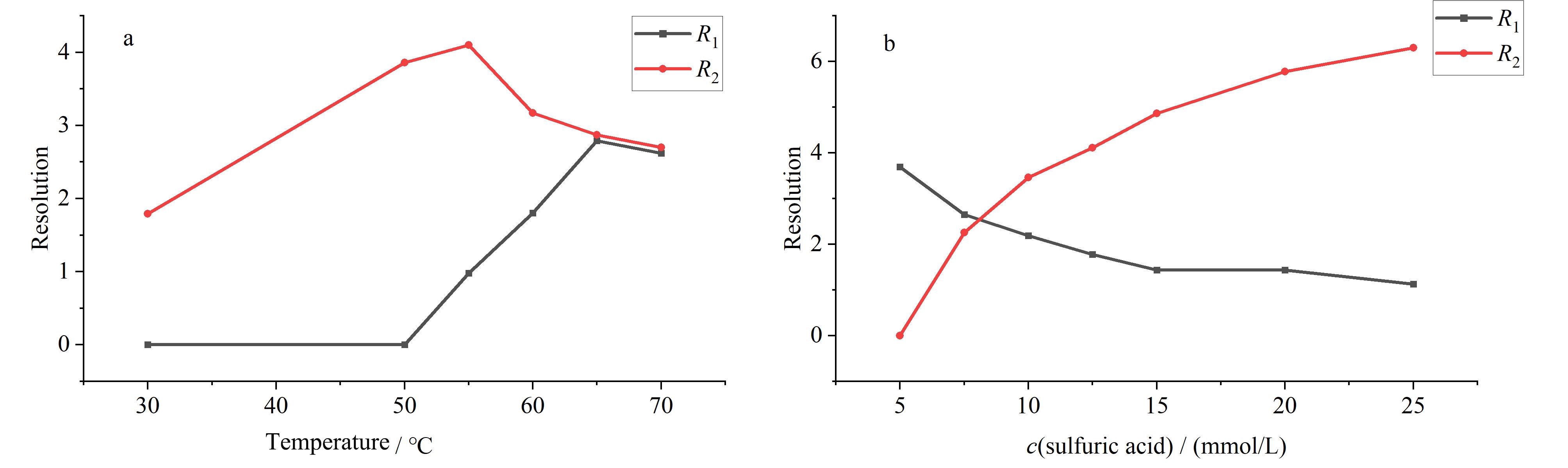
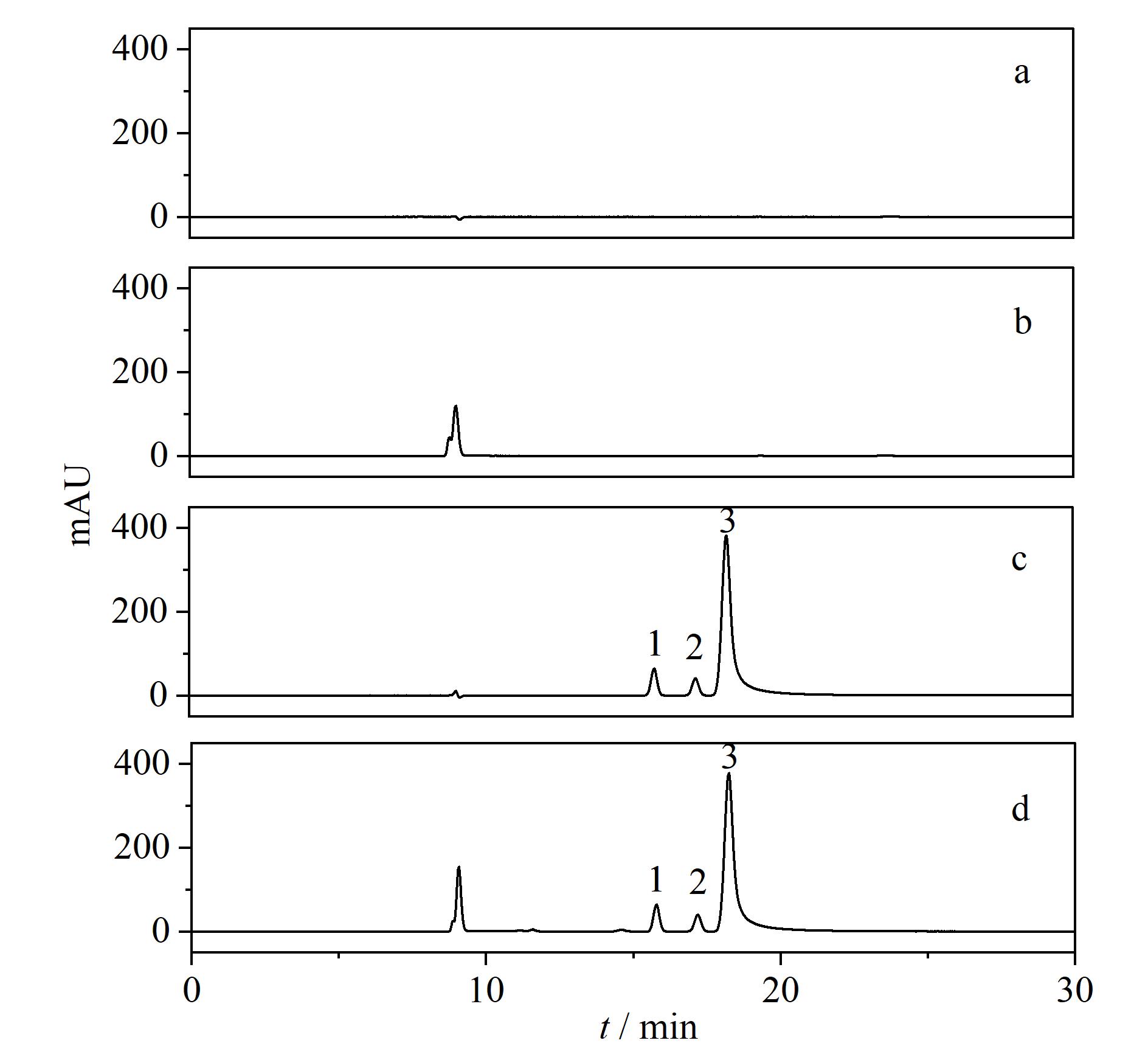
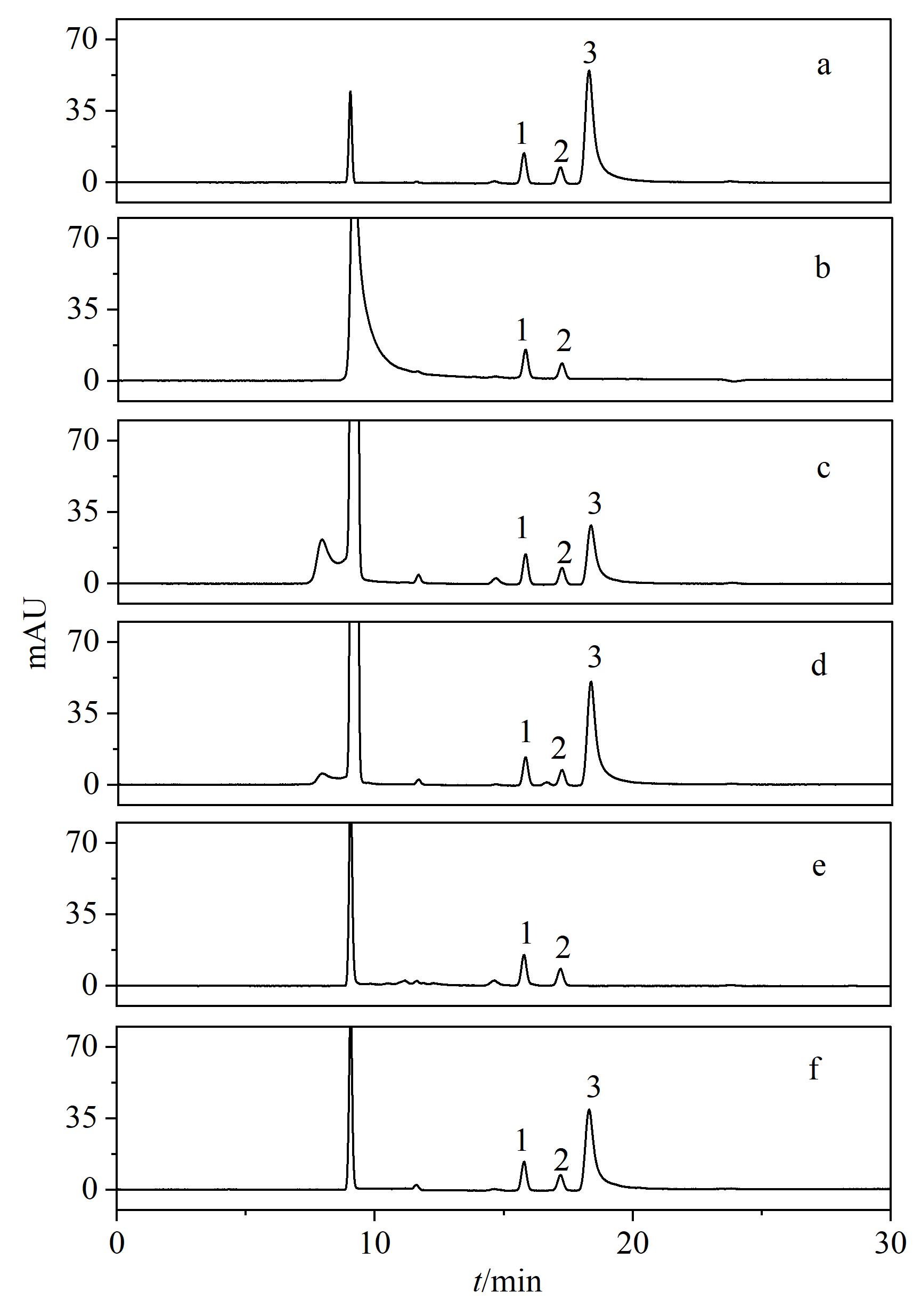
采用离子排斥色谱法,建立了同时测定复方氨基酸注射液(14AA)中甘油、醋酸及亚硫酸氢钠的方法。色谱柱采用Xtimate Sugar‐H柱(300 mm×7.8 mm,5 μm),流动相为7.5 mmol/L 硫酸溶液,等度洗脱,流速为0.5 mL/min,检测波长200 nm,柱温为65 ℃,进样量为10 μL。以紫外检测器进行检测,外标法定量。结果表明,本方法专属性良好,氨基酸成分不干扰甘油、醋酸及亚硫酸根测定,主峰与相邻色谱峰分离度良好,甘油、醋酸及亚硫酸根在一定范围内线性关系良好,相关系数(r)均>0.999 5。针对3种成分进行了低、中、高3个水平的加标回收试验,目标物的平均回收率为99.21%~102.6%,相对标准偏差(RSD,n=3)为0.09%~0.86%。该方法能够有效解决氨基酸成分的干扰,快速简便,专属性强,准确度高,可用于复方氨基酸注射液(14AA)中甘油、醋酸及亚硫酸氢钠的含量测定。

关键词: 离子排斥色谱法, 复方氨基酸注射液(14AA), 甘油, 醋酸, 亚硫酸氢钠

Abstract:

An ion exclusion chromatography method was established for the simultaneous determination of glycerol, acetic acid and sodium bisulfite in compound amino acid injection (14AA). No tedious sample pretreatment is required; the sample can be directly injected after filtration through a 0.22 μm membrane filter. Chromatographic separation was achieved using an Xtimate Sugar-H column (300 mm×7.8 mm, 5 μm) packed with a strong ion-exchange resin based on a rigid styrene/divinylbenzene matrix, which is specially designed for the separation of sugar alcohols and organic acids via the ion-exclusion mechanism. The mobile phase was 7.5 mmol/L sulfuric acid solution, which was selected as it can suppress the ionization of target analytes and enhance their retention on the stationary phase; the amino groups of amino acid components undergo strong ionization, leading to no retention. Isocratic elution was adopted to ensure stable separation efficiency and short analysis time, with the flow rate set at 0.5 mL/min. Based on the ultraviolet absorption characteristics of the target analytes, 200 nm was selected as the detection wavelength. The column temperature was set at 65 ℃ and the injection volume was optimized to 10 μL, which ensures the detection sensitivity while avoiding column overload. The external standard method was adopted for quantitative analysis, featuring simple operation and reliable results. The method exhibited excellent specificity: blank solvent and negative matrix solution tests verified that amino acids caused no interference with the determination of target analytes, and the target analytes achieved good resolution from adjacent peaks. For the linearity investigation, standard solutions were prepared with linear ranges set as follows: 1.197–59.87 mg/mL for glycerol, 0.036 08–1.804 mg/mL for acetic acid, and 0.000 791 6–0.633 3 mg/mL for sulfite. Within these mass concentration ranges, the linear correlation coefficients (r) of all components were greater than 0.999 5, indicating an excellent linear relationship of the method. The accuracy was verified by spiked recovery tests at three levels (80%, 100% and 120% of the labeled amount), with three parallel preparations for each level. The results showed that the average recoveries of the target analytes ranged from 99.21% to 102.6%, with relative standard deviations (RSDs) of 0.09% to 0.86% (n=3), demonstrating the high accuracy of this method. The ion exclusion chromatography method established in this study can effectively eliminate the interference of the amino acid matrix in compound amino acid injection (14AA), and has the advantages of rapid analysis, simple operation, strong specificity and high accuracy, making it suitable for the routine quality control of glycerol, acetic acid and sodium bisulfite in this preparation. This method provides a reliable analytical and testing tool for the quality assurance and safety control of compound amino acid injection (14AA) during production and storage.

Key words: ion exclusion chromatography, compound amino acid injection (14AA), glycerol, acetic acid, sodium bisulfite

中图分类号: