色谱 ›› 2026, Vol. 44 ›› Issue (5): 515-524.DOI: 10.3724/SP.J.1123.2025.04001

• 研究论文 • 上一篇    下一篇

细胞表面糖蛋白相互作用规模化解析新技术及应用

刘祎1,2, 吴慈3, 赵群2, 梁振2,*(), 张付云1,*(), 张丽华2   

  1. 1.大连海洋大学,辽宁 大连 116023
    2.医学蛋白质组全国重点实验室,中国科学院大连化学物理研究所,辽宁 大连 116023
    3.辽宁师范大学,辽宁 大连 116029
  • 收稿日期:2025-04-01 出版日期:2026-05-08 发布日期:2026-05-07
  • 通讯作者: Tel:0411-84379720,E-mail:liangzhen@dicp.ac.cn(梁振);Tel:0411-84762889,E-mail:zhangfuyun@dlou.edu.cn(张付云).
  • 作者简介:#共同第一作者.
  • 基金资助:
    国家重点研发计划项目(2022YFC3401204);医工联合创新基金(DMU-2&DICP UN202301)

Novel technologies for large-scale analysis of cell surface glycoprotein interactions and their applications

LIU Yi1,2, WU Ci3, ZHAO Qun2, LIANG Zhen2,*(), ZHANG Fuyun1,*(), ZHANG Lihua2   

  1. 1. Dalian Ocean University,Dalian 116023,China
    2. State Key Laboratory of Medical Proteomics,Dalian Institute of Chemical Physics,Chinese Academy of Sciences,Dalian 116023,China
    3. Liaoning Normal University,Dalian 116029,China
  • Received:2025-04-01 Online:2026-05-08 Published:2026-05-07
  • Supported by:
    National Key Research and Development Program of China(2022YFC3401204);Medical-Engineering Joint Innovation Fund(DMU-2&DICP UN202301)

摘要:

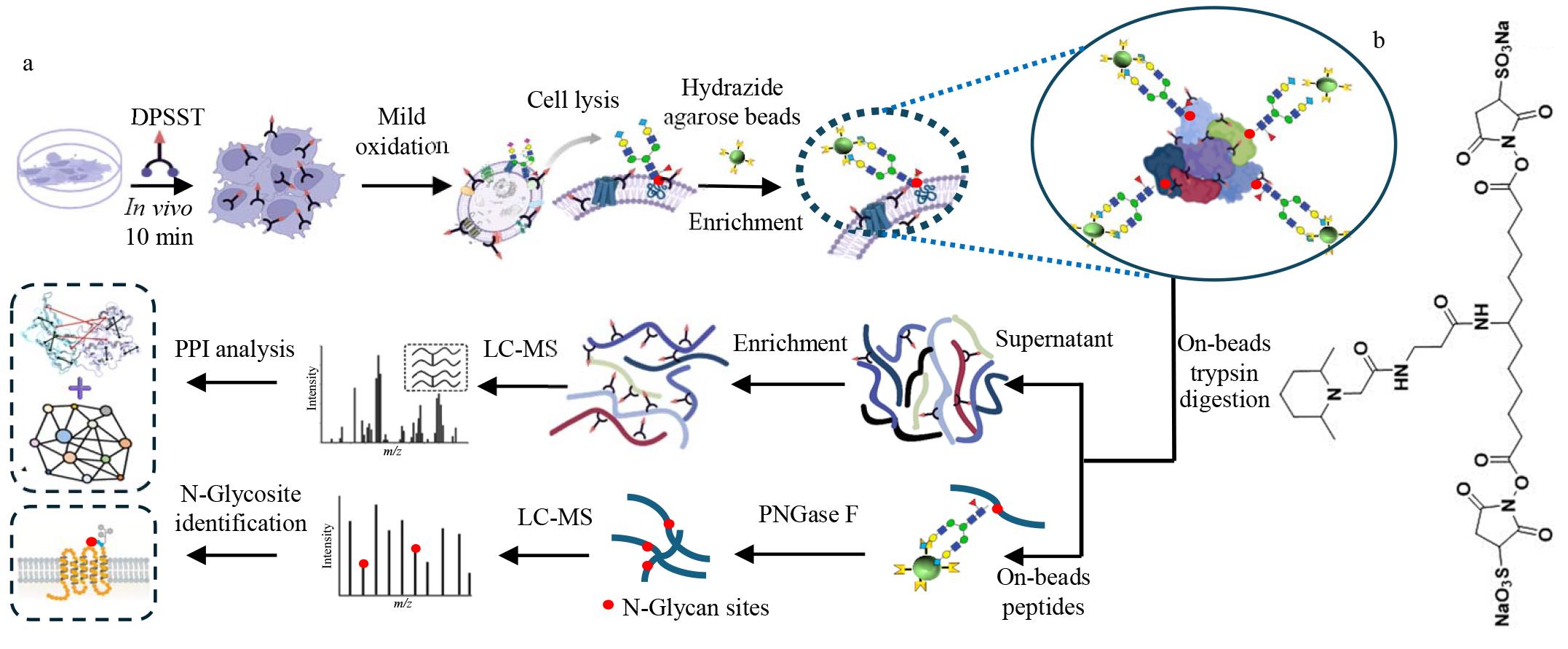
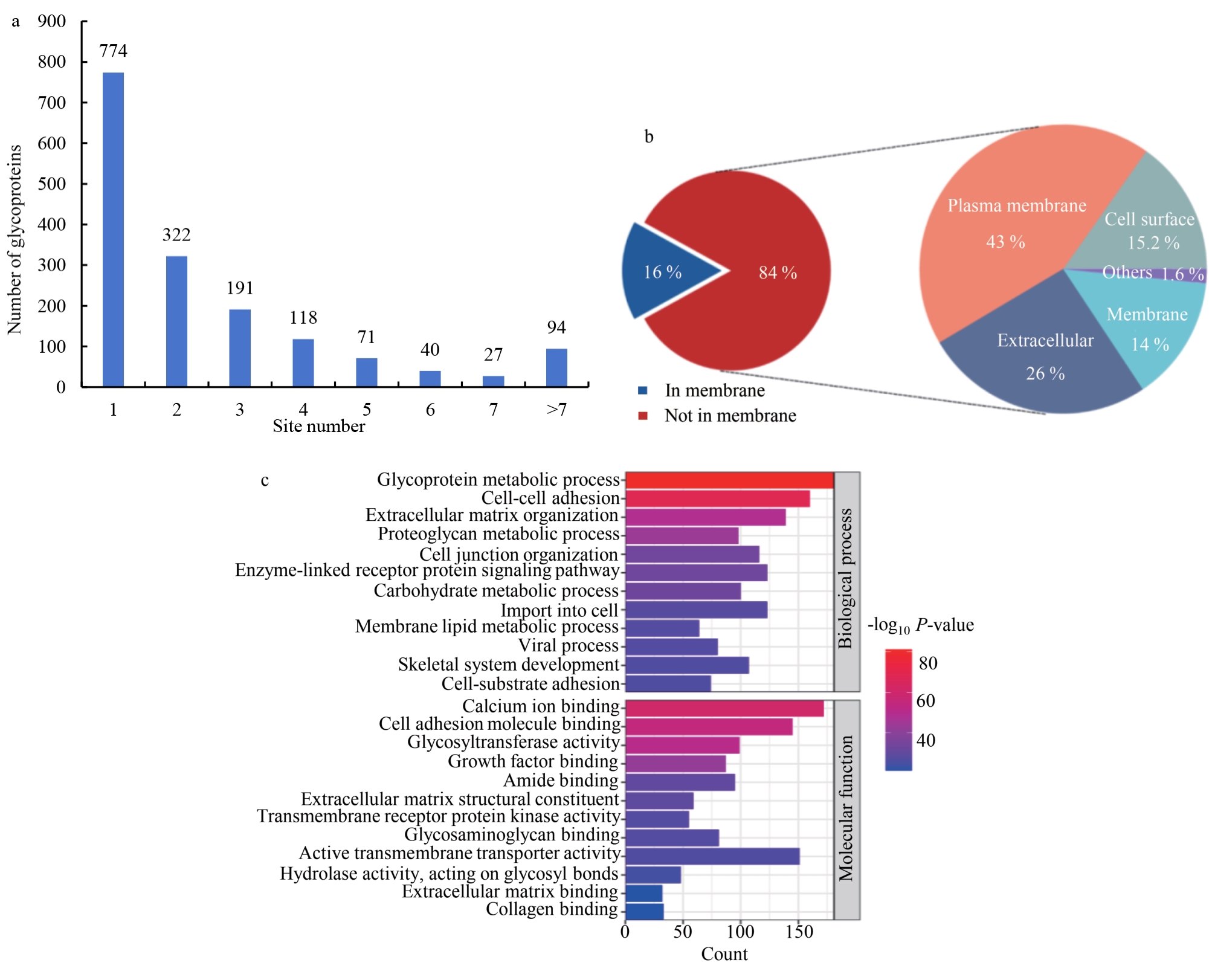
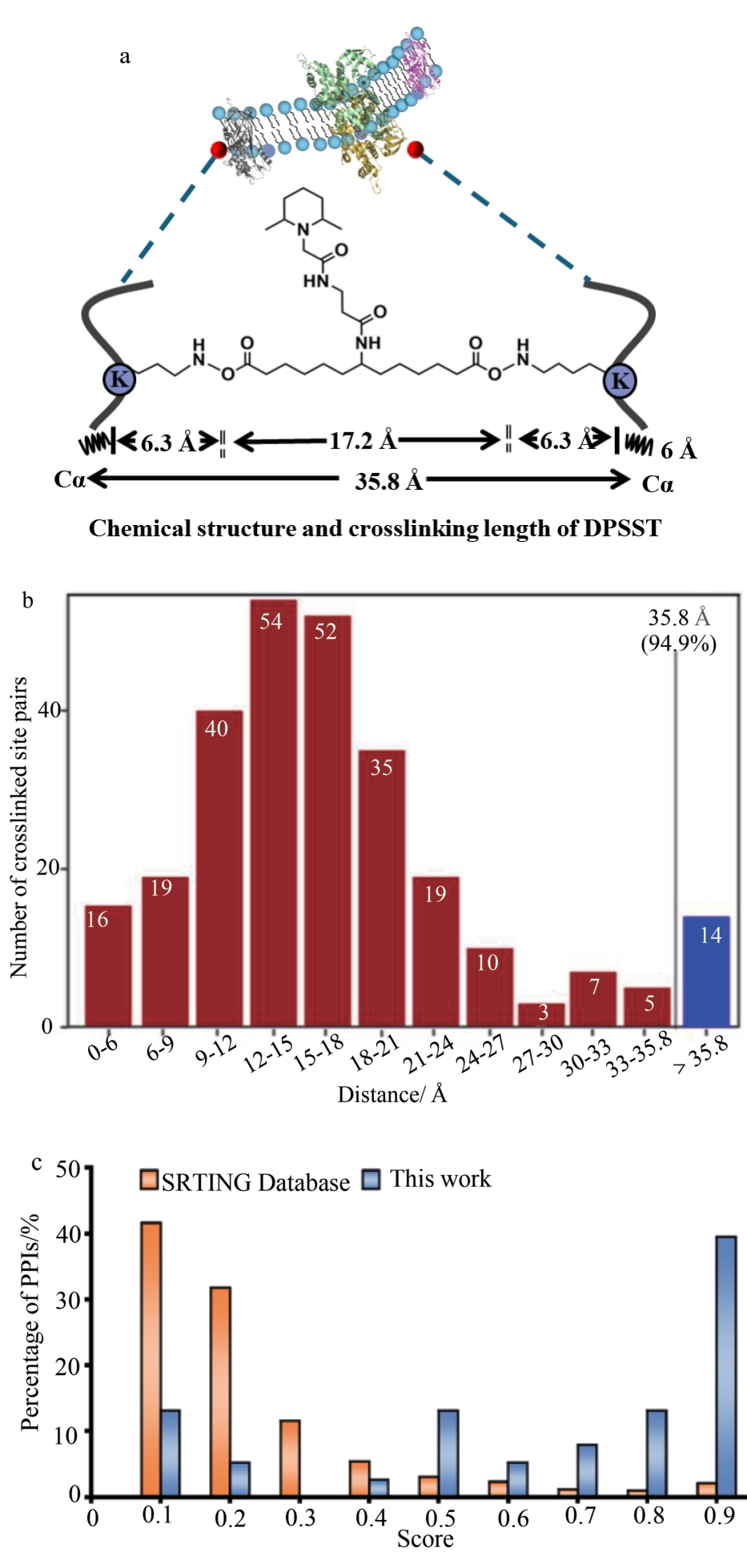
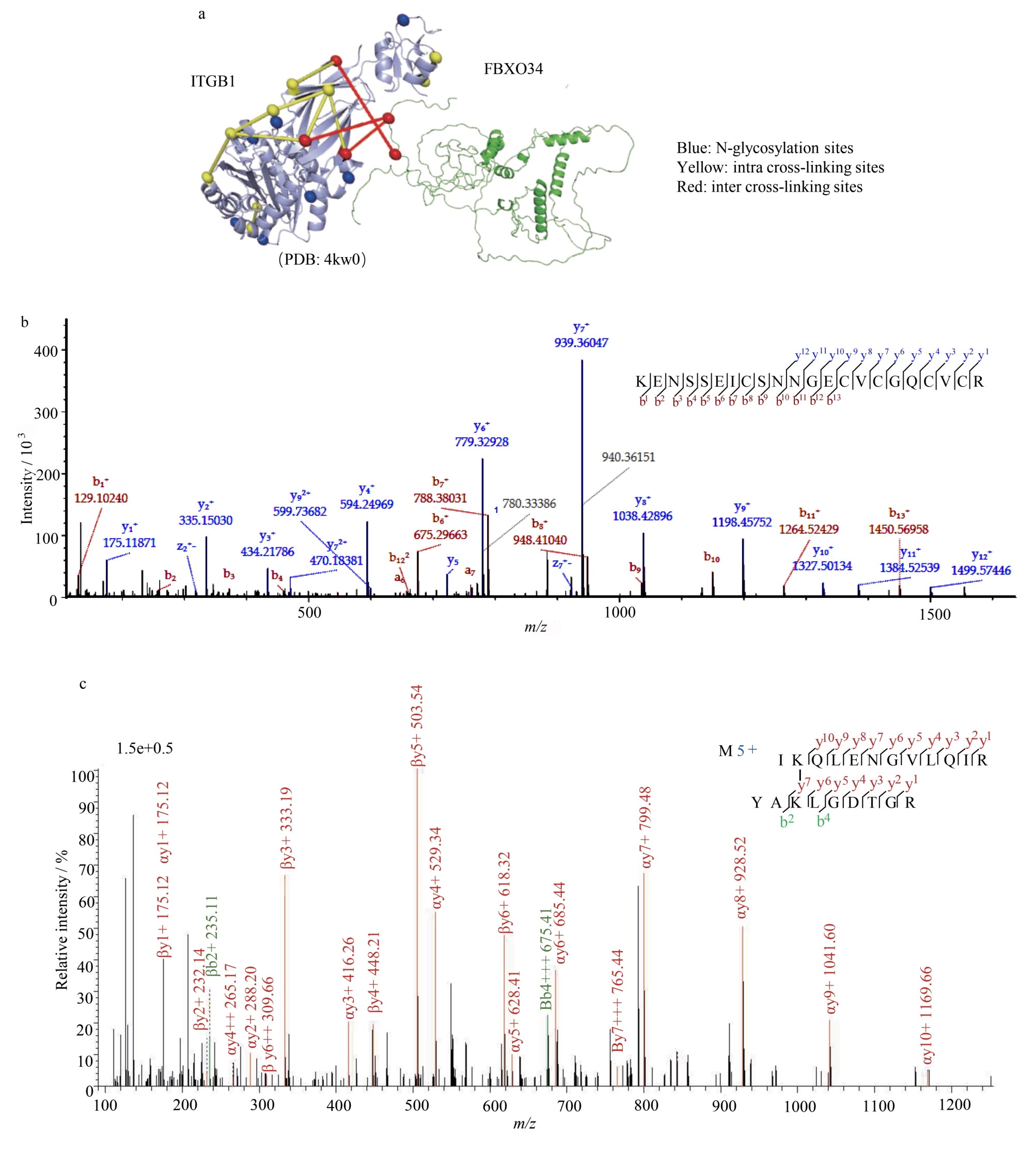
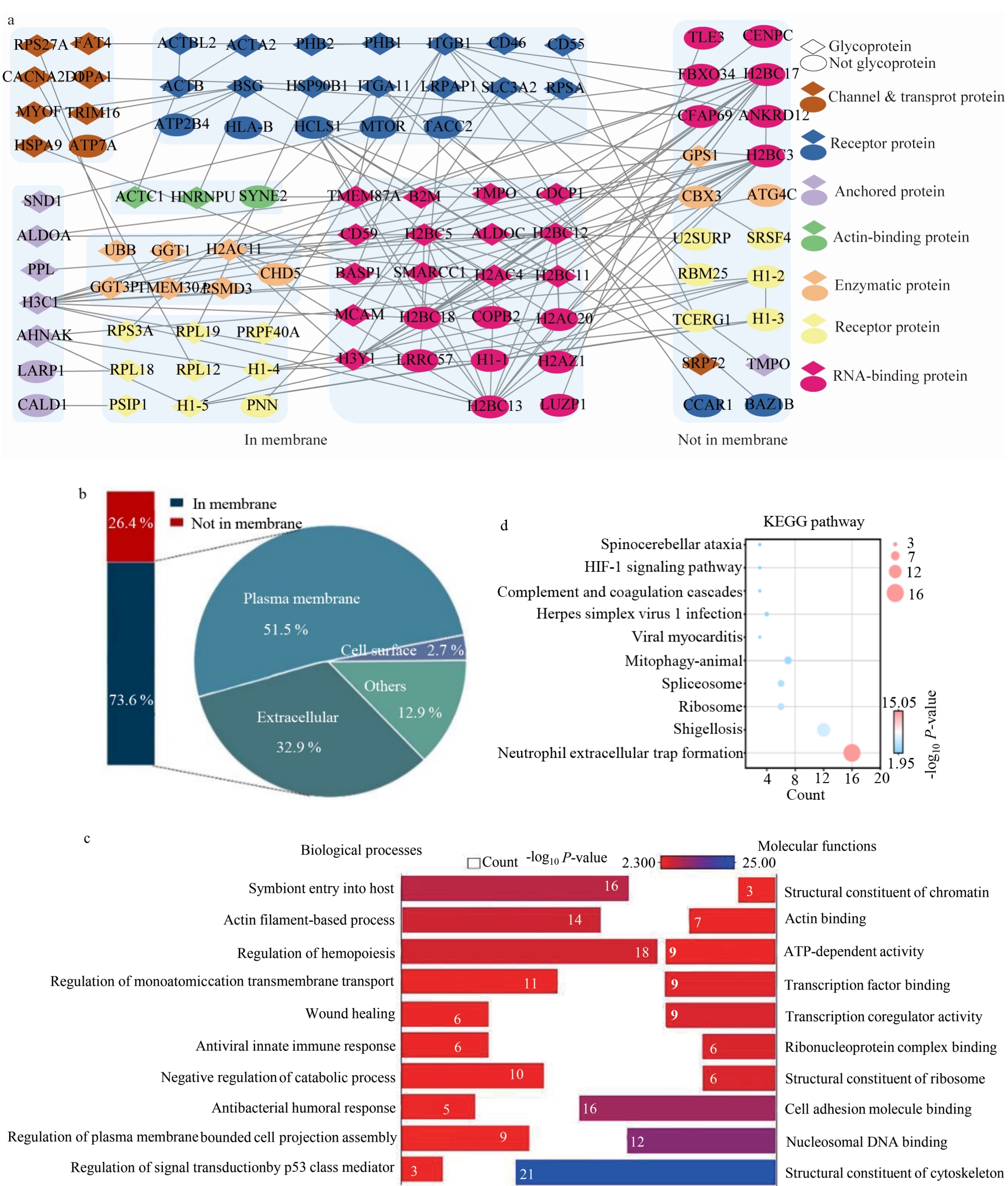
细胞表面糖蛋白复合物通过动态糖基化修饰调控细胞间识别、信号转导和免疫调节等关键生物学过程,其具有时空特异性的原位相互作用网络直接影响疾病的发生与治疗响应。然而,由于细胞表面糖蛋白相互作用通常具有弱结合力、瞬时性及糖基化修饰的复杂性,研究这类相互作用面临诸多技术性挑战。在本研究中,采用不可透膜型交联剂,结合氧化糖链-酰肼特异性反应与原位化学交联-质谱技术(CX-MS),成功实现了活细胞表面糖蛋白相互作用的高选择性捕获。该方法在人宫颈癌细胞(HeLa细胞)中共鉴定出4 457个高置信度糖基化位点,对应1 637个糖蛋白,其中84%的糖蛋白定位于细胞表面或细胞外相关分泌途径。进一步分析发现,在鉴定的蛋白-蛋白相互作用网络中,90%以上为糖蛋白-糖蛋白相互作用、糖蛋白-关联蛋白相互作用及关联蛋白间的相互作用网络,其中包括整合素β1(ITGB1)等关键糖蛋白介导的相互作用。该方法为深入解析细胞表面糖蛋白相互作用中的糖链功能提供了重要依据,有助于揭示糖基化在细胞信号传导与免疫调控等生物学过程中的关键作用,并为疾病的早期诊断和精准治疗提供新的策略。

关键词: 原位化学交联, 糖蛋白相互作用, 选择性富集, 液相色谱-串联质谱

Abstract:

Cell surface glycoprotein complexes regulate critical biological processes such as intercellular recognition, signal transduction, and immune modulation through dynamic glycosylation modifications. Their spatiotemporally specific in vivo interaction networks directly influence disease pathogenesis and therapeutic responses. However, studying these interactions faces substantial technical challenges due to the weak/transient nature of glycoprotein interactions and the complexity of glycosylation modifications. In this study, we employed membrane-impermeable crosslinkers combined with oxidized glycan-hydrazide specific reactions and in vivo chemical crosslinking-mass spectrometry technology, successfully achieving high-selectivity capture of glycoprotein interactions on living cell surfaces. This approach identified 4 457 high-confidence glycosylation sites corresponding to 1 637 glycoproteins in HeLa cells, with 84% localized to the cell surface. Further analysis revealed that over 90% of the identified protein-protein interaction networks comprised glycoprotein-glycoprotein interactions, glycoprotein-associated protein interactions, and associated protein interaction networks. Key glycoprotein-mediated interactions, such as those involving integrin beta-1(ITGB1), were elucidated. This methodology provides crucial insights for deciphering glycan functionality in cell surface glycoprotein interactions, contributes to revealing the pivotal role of glycosylation in biological processes like cellular signaling and immune regulation, and offers novel strategies for early disease diagnosis and precision therapeutics

Key words: in vivo chemical crosslinking, glycoprotein interactions, selective enrichment, liquid chromatography-tandem mass spectrometry (LC-MS/MS)

中图分类号: