色谱 ›› 2026, Vol. 44 ›› Issue (10): 1223-1232.DOI: 10.3724/SP.J.1123.2026.01019

• 研究论文 • 上一篇    下一篇

三氟乙酸调控合成缺陷型UiO-66用于高效去除全氟壬烯氧基苯磺酸钠

王璇, 王春晓, 夏炎*()   

  1. 南开大学化学学院分析科学研究中心,天津市生物传感与分子识别重点实验室,天津 300071
  • 收稿日期:2026-02-10 出版日期:2026-10-08 发布日期:2026-10-13
  • 通讯作者: *E-mail:nkxiayan@nankai.edu.cn.
  • 基金资助:
    国家自然科学基金(22476098)

Trifluoroacetic acid-modulated synthesis of defective UiO-66 for highly efficient removal of sodium p-perfluorous nonenoxybenzenesulfonate

WANG Xuan, WANG Chunxiao, XIA Yan*()   

  1. Research Center for Analytical Science,College of Chemistry,Nankai University,Tianjin Key Laboratory of Biosensing and Molecular Recognition,Tianjin 300071,China
  • Received:2026-02-10 Online:2026-10-08 Published:2026-10-13
  • Supported by:
    National Natural Science Foundation of China(22476098)

摘要:

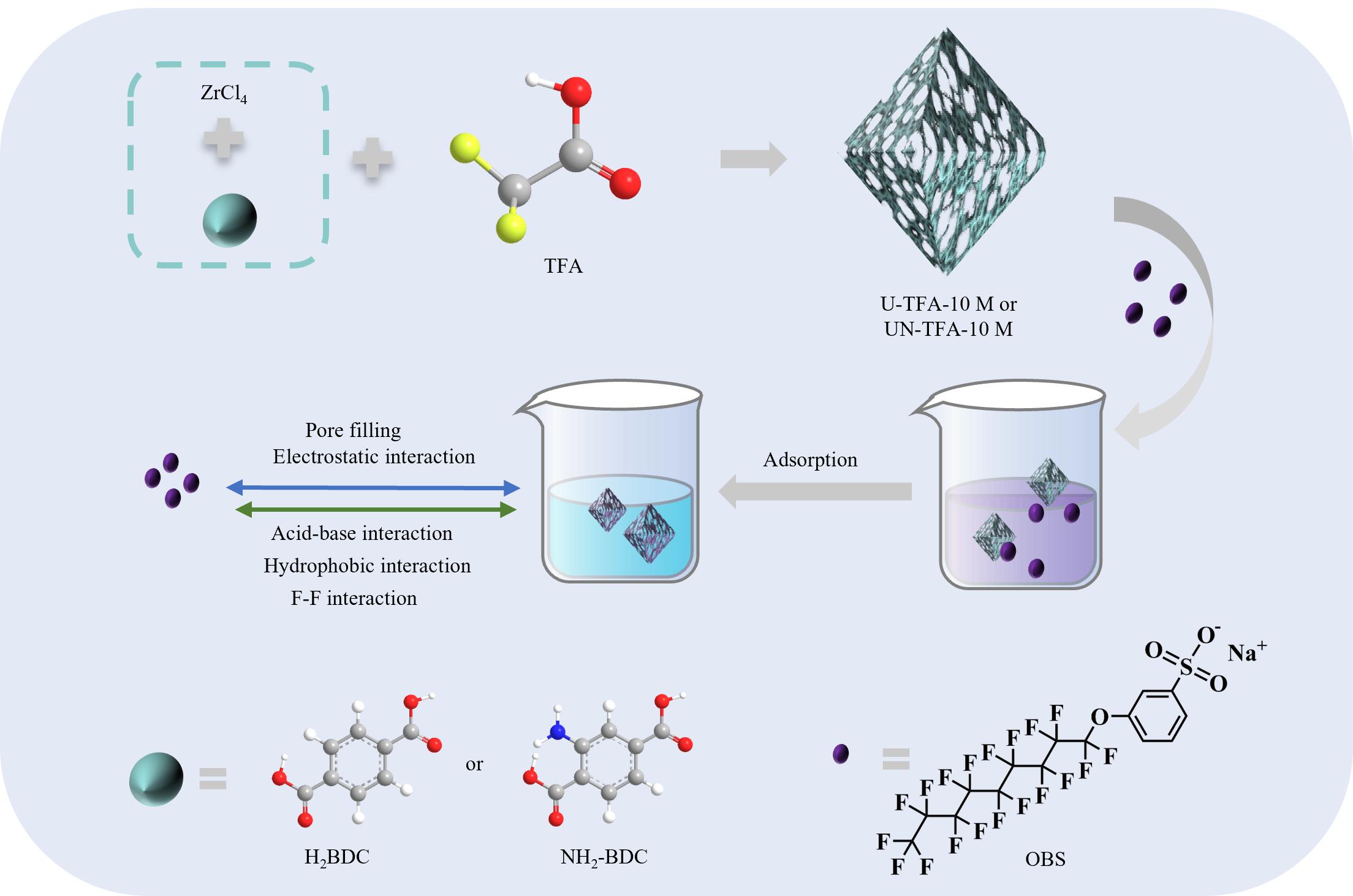
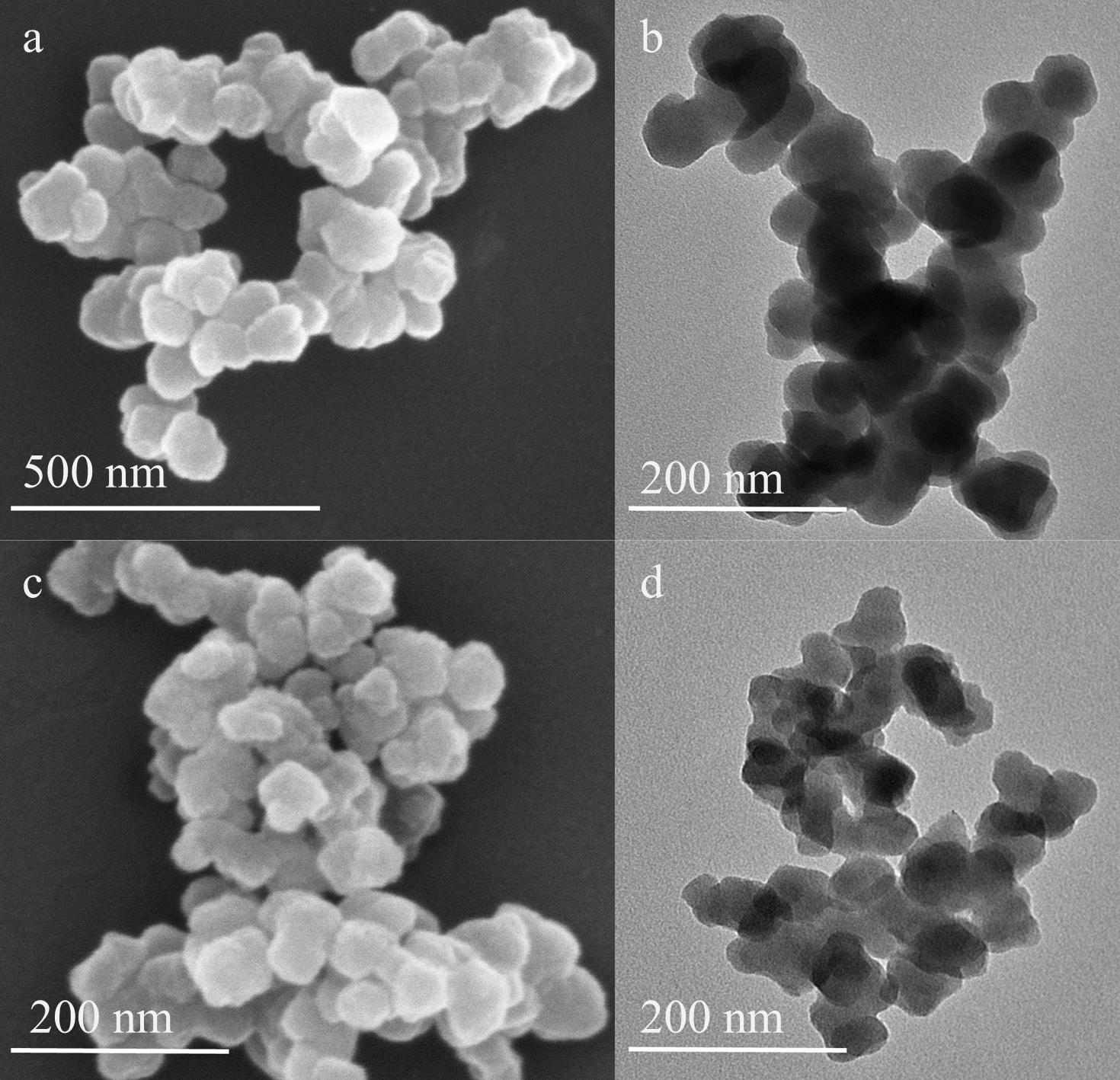
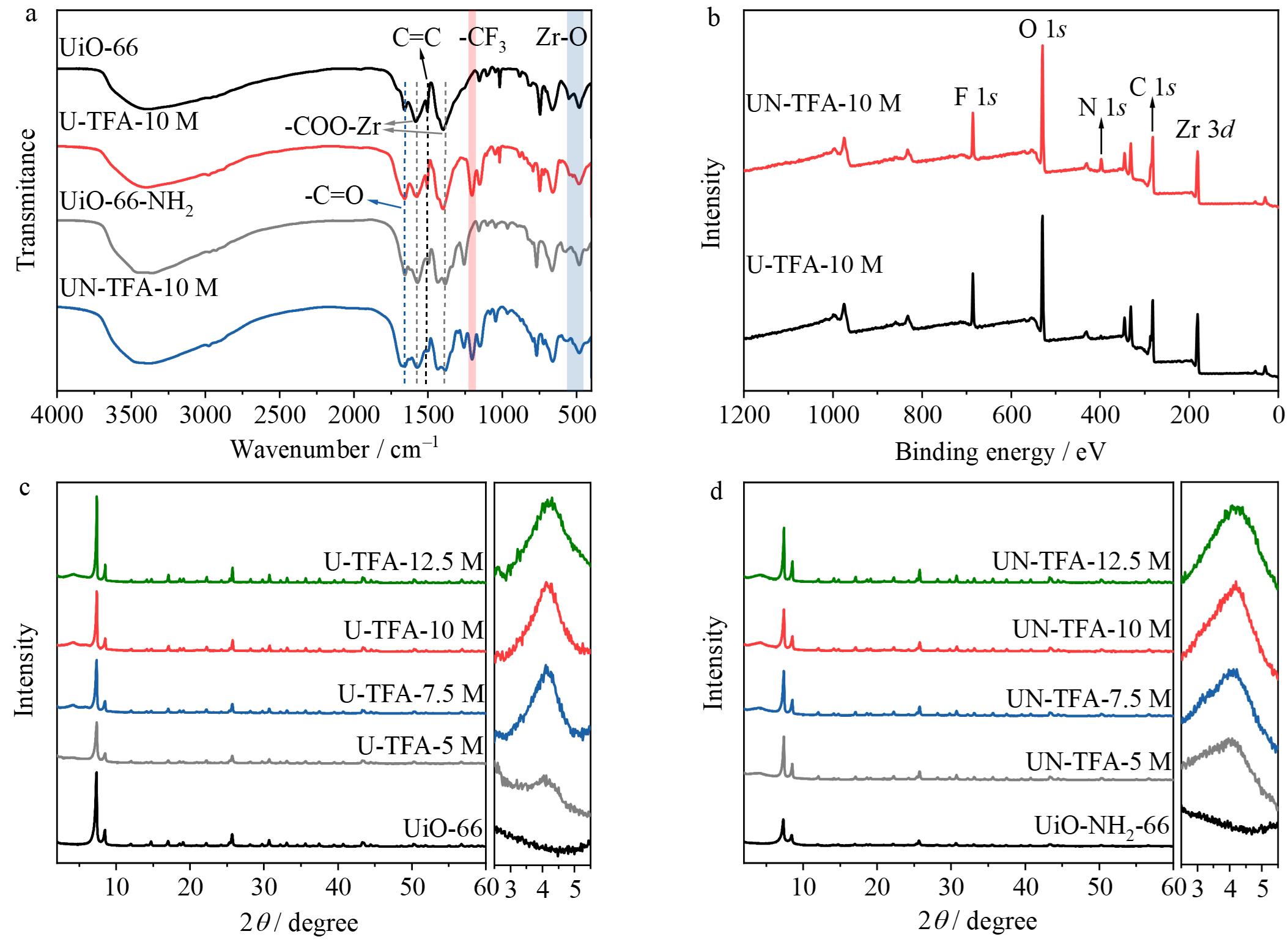
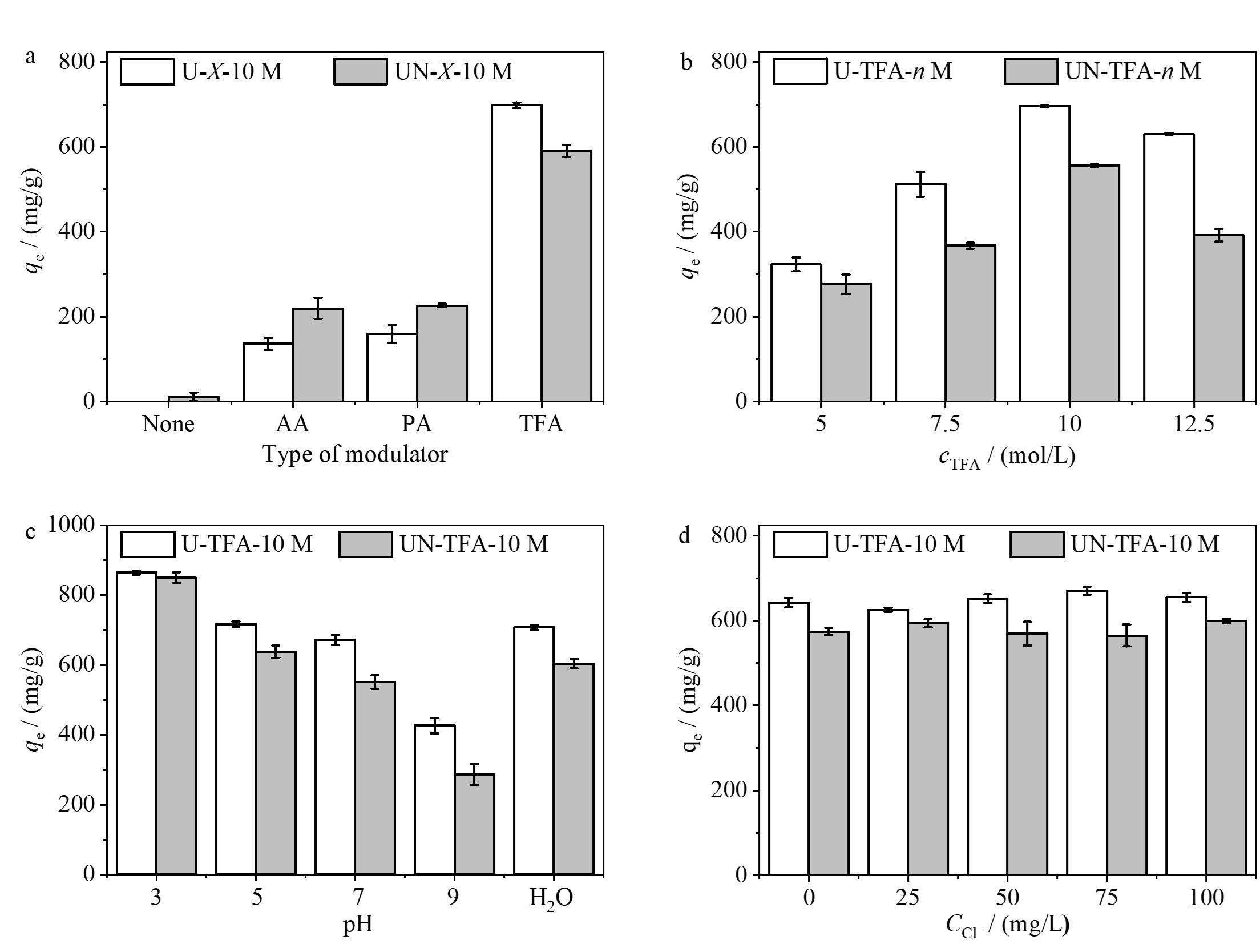
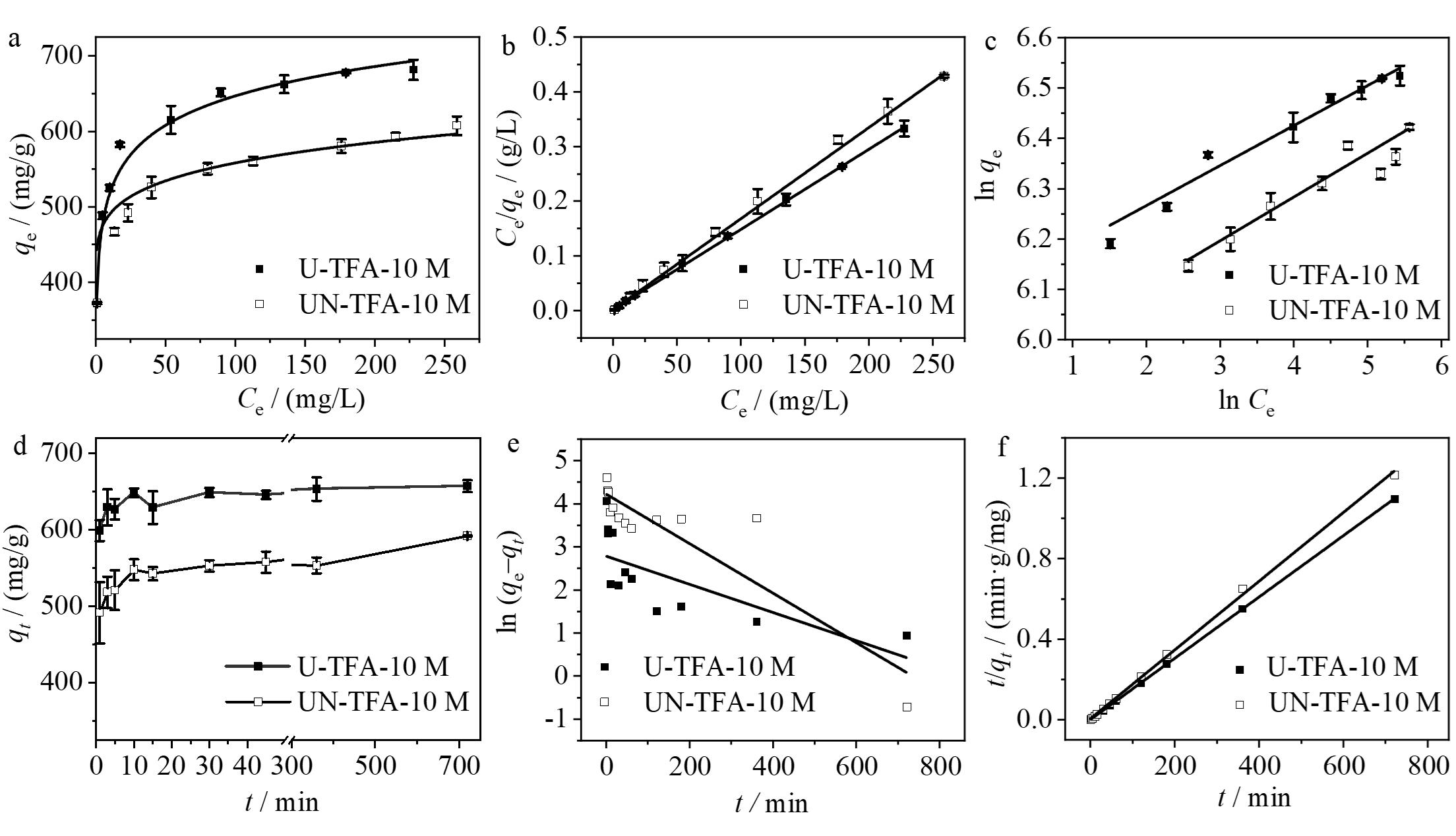
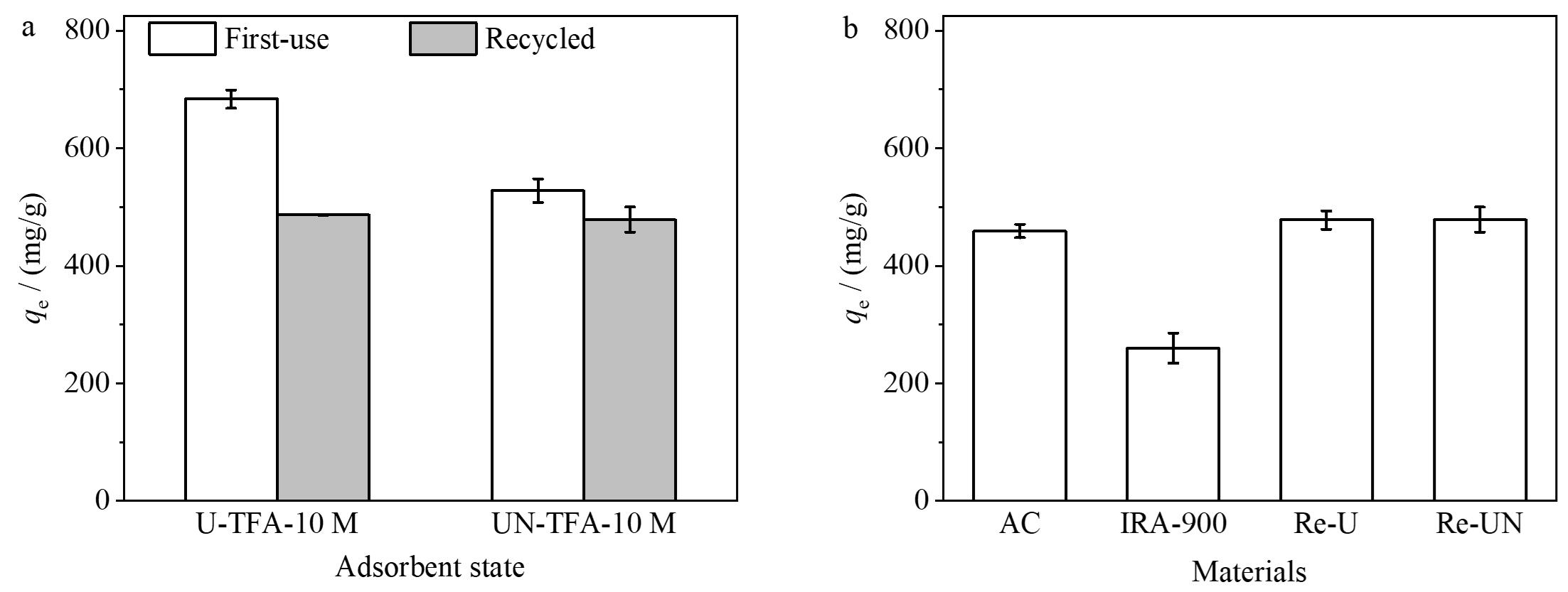
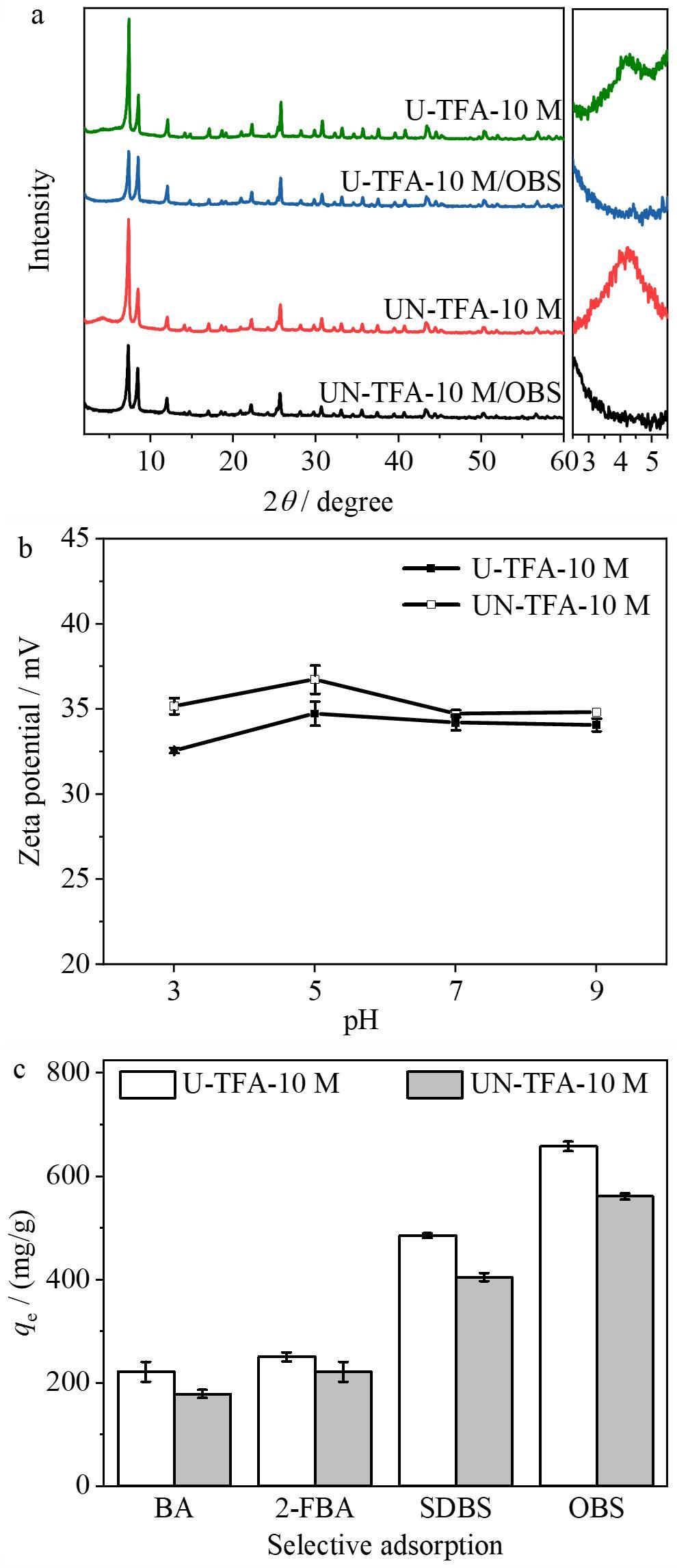
全氟壬烯氧基苯磺酸钠(OBS)作为全氟辛烷磺酸(PFOS)的替代品,具有更强的生物积累性、难降解性和细胞毒性。本研究提出了一种缺陷工程策略,通过溶剂热法合成三氟乙酸(TFA)调控的UiO-66系列材料(U-TFA-10 M和UN-TFA-10 M等)用于吸附去除OBS。扫描电子显微镜(SEM)、透射电子显微镜(TEM)、X射线衍射(XRD)结果表明,U-TFA-10 M和UN-TFA-10 M并未呈现规则的八面体形貌,具有丰富的结构缺陷。傅里叶变换红外光谱(FT-IR)、X射线光电子能谱(XPS)等进一步证实材料中成功引入三氟甲基(-CF3)。优化结果表明,在溶液pH为3时,U-TFA-10 M和UN-TFA-10 M对OBS的吸附效果最佳,离子强度的影响可忽略不计。吸附等温线和吸附动力学模拟结果表明,吸附过程符合Langmuir模型和伪二级动力学模型,用Langmuir模型计算的饱和吸附容量分别为684.9 mg/g和602.4 mg/g。同时U-TFA-10 M和UN-TFA-10 M展现出良好的再生能力,在吸附-解吸-再生过程后仍能保持较高的吸附效率。机理研究表明,其高效吸附性能源于多种吸附机制的协同作用:孔径匹配、静电相互作用、酸碱相互作用、氟-氟相互作用和疏水相互作用。通过与已报道的吸附剂相比,U-TFA-10 M和UN-TFA-10 M对OBS兼具较高的吸附容量和快速吸附的显著优势,是一种有效且易制备的固体吸附剂,在污染物吸附分离的应用中具有较大的潜力。

关键词: 金属有机框架, 全氟壬烯氧基苯磺酸钠, 缺陷工程, 吸附, 氟-氟相互作用

Abstract:

Per- and polyfluoroalkyl substances (PFAS), widely known as “forever chemicals”, present a severe and escalating global threat to ecological systems and human health. Their extreme persistence originates from remarkably strong carbon-fluorine bonds, while their amphiphilic nature facilitates widespread environmental dispersal and bioaccumulation. Among them, sodium p-perfluorous nonenoxybenzenesulfonate (OBS) has been extensively used as a commercial alternative to perfluorooctanesulfonic acid (PFOS), which is under strict global regulation. However, mounting evidence has revealed that OBS exhibits higher bioaccumulation, higher environmental persistence, and significant cytotoxicity, raising urgent environmental concerns and creating an urgent demand for efficient remediation technologies. To tackle this challenge, this study proposes a defect-engineering strategy for the design of advanced adsorbent materials. Specifically, a series of trifluoroacetic acid (TFA)-modulated UiO-66-type metal-organic frameworks (MOFs), denoted as U-TFA-10 M, UN-TFA-10 M etc., were successfully synthesized via a solvothermal method. The intentional introduction of structural defects was designed to increase the density of active sites and tailor surface properties, thereby achieving enhanced pollutant capture performance. Comprehensive characterization confirmed the successful material synthesis and modification. Scanning electron microscopy (SEM) and transmission electron microscopy (TEM) images revealed that U-TFA-10 M and UN-TFA-10 M particles exhibited irregular, fragmented morphologies, a stark contrast to the regular octahedral shape of pristine UiO-66, visually indicating abundant structural defects. X-ray diffraction (XRD) patterns displayed a new broad peak in the 2θ range of 3°-5°, further confirming defect formation. Fourier-transform infrared spectroscopy (FT-IR) identified characteristic vibrations: peaks at 556 cm–1 and 482 cm–1 corresponded to Zr-O coordination, while a distinct peak at 1 212 cm–1 confirmed the presence of -CF3 groups. X-ray photoelectron spectroscopy (XPS) provided definitive evidence, with a clear F 1s signal verifying the successful incorporation of trifluoromethyl moieties into the MOF framework—a critical modification for enabling specific interactions with the target pollutant. Systematic adsorption evaluation and optimization were conducted. The optimal synthesis condition was identified as using 10 mol/L TFA as the modulator. The pH of the solution profoundly influenced adsorption, with maximum OBS removal achieved at pH 3, where the protonated adsorbent surface exerted strong electrostatic attraction towards anionic OBS molecules. Notably, adsorption efficiency remained stable across a range of ionic strengths (Cl– mass concentration 0-100 mg/L), indicating strong resistance to interference from common salts, a vital advantage for practical application. Adsorption equilibrium data fitted the Langmuir isotherm model (R2 of 0.999 9 for U-TFA-10 M and 0.999 5 for UN-TFA-10 M), suggesting monolayer adsorption on homogeneous active sites. The maximum adsorption capacities were 684.9 mg/g for U-TFA-10 M and 602.4 mg/g for UN-TFA-10 M. Kinetic analysis followed the pseudo-second-order model (R2 of 0.999 9 for U-TFA-10 M and 0.998 8 for UN-TFA-10 M), implying chemisorption as the rate-limiting step. The materials also exhibited excellent regenerability and reusability, maintaining high efficiency after repeated adsorption-desorption cycles. Mechanistic studies revealed that the superior performance stems from a synergistic combination of multiple interactions: (1) pore-size matching for physical entrapment; (2) electrostatic attraction between the protonated surface and the OBS sulfonate group; (3) acid-base interaction between unsaturated metal sites (Lewis acids) and the sulfonate group; (4) specific fluorine-fluorine (F-F) interaction between the -CF3 groups and the OBS perfluorinated chain, enhancing selectivity; and (5) hydrophobic interaction promoting partitioning from the aqueous phase. Compared with other reported OBS adsorbents, U-TFA-10 M and UN-TFA-10 M combined ultrahigh capacity and fast kinetics, with a simple and scalable synthesis route, showing great practical potential. In summary, this work successfully developed U-TFA-10 M and UN-TFA-10 M as efficient, stable, and easily prepared adsorbents for OBS removal. It also validated defect engineering coupled with -CF3 functionalization as a powerful material design strategy. The mechanistic insights provide a valuable theoretical foundation for developing next-generation materials for the separation and remediation of persistent aquatic pollutants.

Key words: metal-organic frameworks, sodium p-perfluorous nonenoxybenzenesulfonate, defect engineering, adsorption, fluorine-fluorine interaction

中图分类号: