色谱 ›› 2026, Vol. 44 ›› Issue (8): 979-985.DOI: 10.3724/SP.J.1123.2026.04010

• 技术与应用 • 上一篇    

亲水作用液相色谱分离纯化南极磷虾油中的磷脂

潘剑3, 洪麟2, 张雁1,*()   

  1. 1.大连凌水湾实验室,辽宁 大连 116000
    2.大连市检验检测认证技术服务中心,辽宁 大连 116000
    3.海正药业(杭州)有限公司,浙江 杭州 311404
  • 收稿日期:2026-04-08 出版日期:2026-08-08 发布日期:2026-07-30
  • 通讯作者: *Tel:0411-84820111,E-mail:071026-zy@163.com.

Separation and purification of phospholipids from Antarctic krill oil by hydrophilic interaction liquid chromatography

PAN Jian3, HONG Lin2, ZHANG Yan1,*()   

  1. 1.Dalian Lingshui Bay Laboratory,Dalian 116000,China
    2.Dalian Center for Certification and Food and Drug Control,Dalian 116000,China
    3.Hisun Pharmaceutical (Hangzhou) Co.,Ltd.,Hangzhou 311404,China
  • Received:2026-04-08 Online:2026-08-08 Published:2026-07-30

摘要:

南极磷虾油富含磷脂,是海洋磷脂的重要来源,且此类磷脂与二十碳五烯酸(EPA)、二十碳六烯酸(DHA)结合产生磷脂型EPA、DHA,更易被人体吸收利用,发挥良好的生物活性功能。本研究建立了从南极磷虾油中纯化制备高含量磷脂的亲水作用色谱方法。该方法以二醇基(diol)键合硅胶为固定相,乙醇和水为流动相,采用3个台阶梯度洗脱的方式对南极磷虾油进行分离纯化。实验结果表明终产品的产率为49.15%。经钼蓝比色法(GB/T 5537-2008)测定,产品中磷脂含量由57.88%提升至95.42%,磷脂回收率为81%;经外标定量法(GB 5009.168-2016)测定,产品中EPA含量为18.5%,DHA含量为7.18%。该方法可高效获得药用级纯度的磷脂,具备环境友好性与工艺放大潜力。本文提供了以南极磷虾油为代表的海洋磷脂的绿色纯化制备新路径,为相关产品质量标准的提高奠定了关键技术基础。

关键词: 海洋磷脂, 南极磷虾油, 亲水作用色谱, 二醇基固定相, 制备高效液相色谱

Abstract:

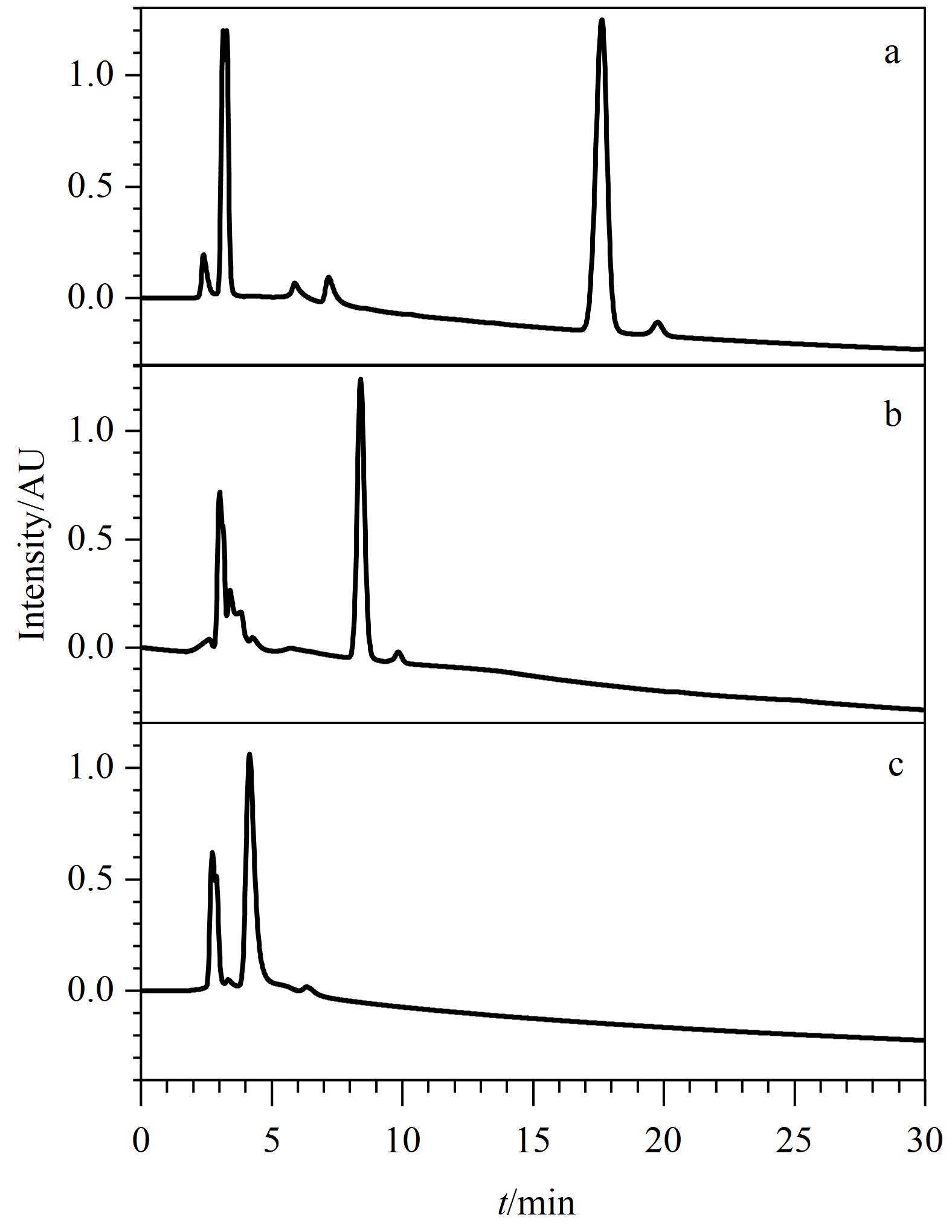
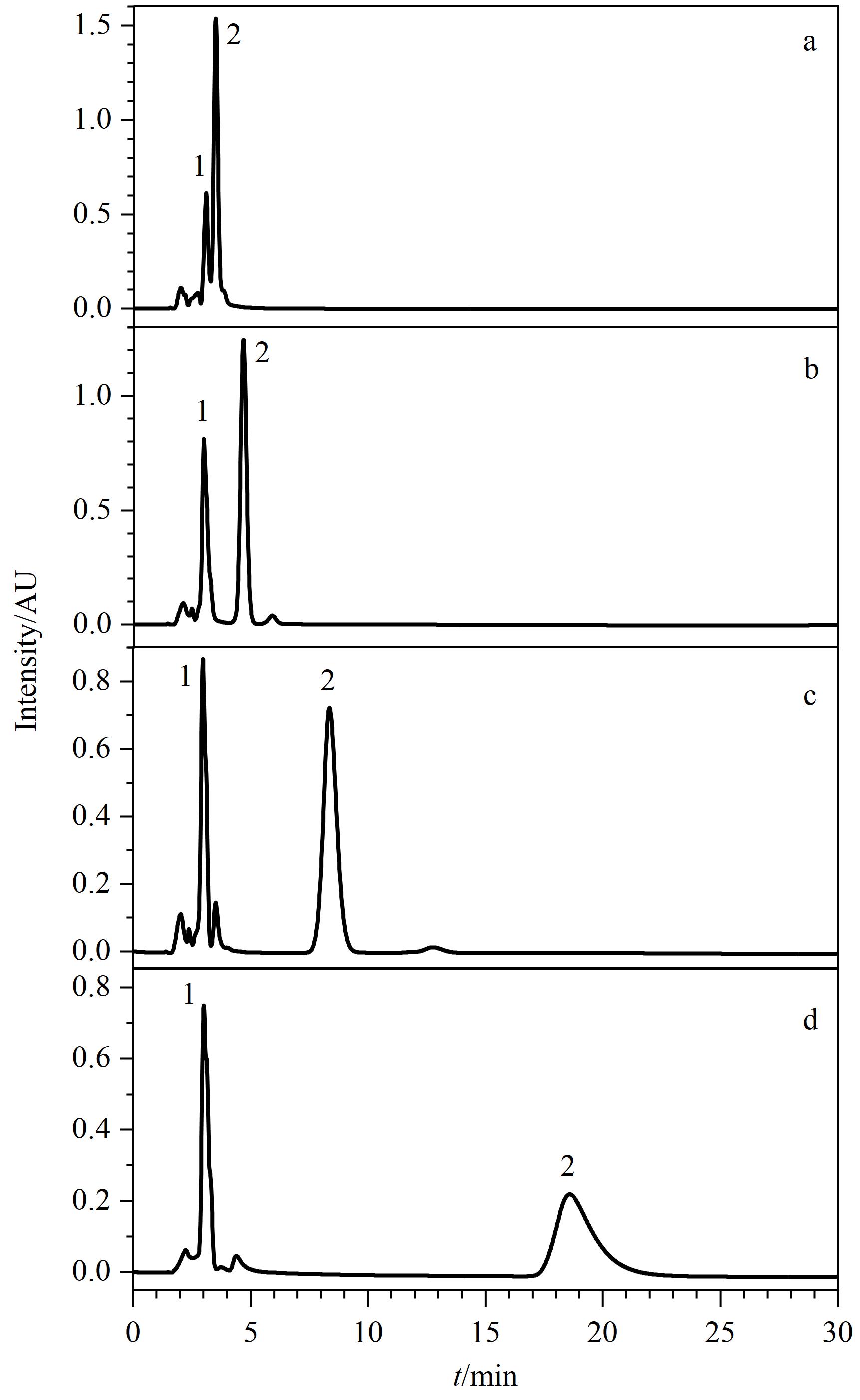
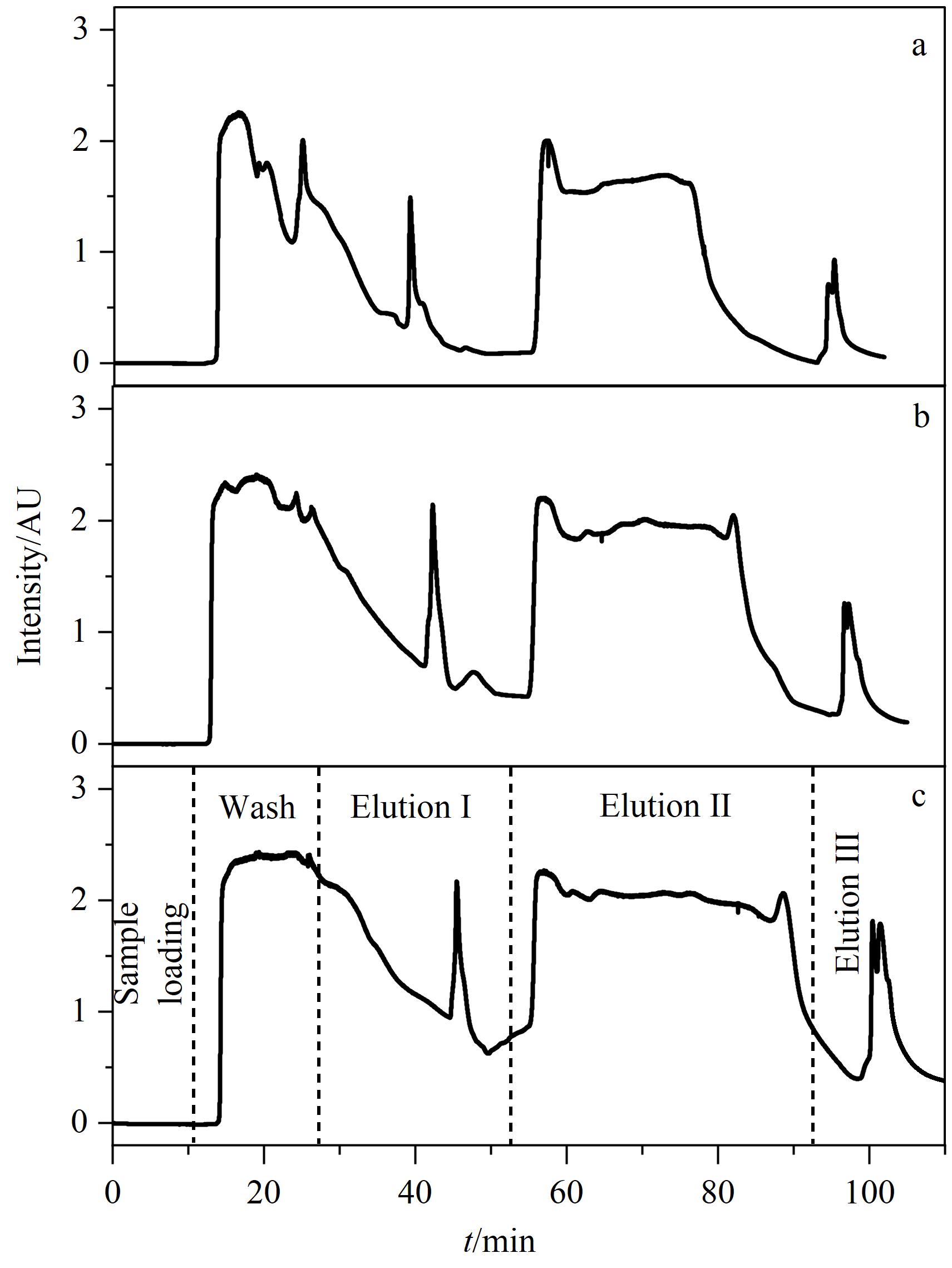
Antarctic krill has the largest biomass of any wild animal species on Earth. Krill oil extracted from Antarctic krill is rich in phospholipids, and is a major natural source of marine phospholipids. In marine phospholipids, eicosapentaenoic acid (EPA) and docosahexaenoic acid (DHA) are esterified at the sn-2 position of glycerol. This unique structural configuration endows them with the dual physiological functions of both phospholipids and Ω-3 polyunsaturated fatty acids. Compared with terrestrial phospholipids, marine phospholipids exhibit superior bioactivity in several key aspects, including neurotrophic support, anti-atherosclerotic effects, and lipid metabolism regulation, thereby conferring significant application value in pharmaceuticals, health foods, and functional foods. However, pharmaceutical excipient applications require phospholipid purity above 90%, a standard also required for high-end pharmaceutical formulations and active pharmaceutical ingredients. Currently, commercial krill oil products vary significantly in quality. Their total phospholipid content ranges from only 30% to 60%. Therefore, purifying phospholipids from Antarctic krill is essential. This process holds practical value for improving the quality standards of marine phospholipids. Hydrophilic interaction liquid chromatography (HILIC) separates polar compounds through multiple mechanisms, relying on polar interactions between the hydrophilic headgroups of phospholipids and the stationary phase, as well as partitioning within the water-rich layer on the stationary phase surface. In this study, a HILIC-based method was developed for the purification of phospholipids from Antarctic krill oil. Industrial-scale preparative chromatography requires stable stationary phases. Three HILIC-compatible stationary phases were systematically evaluated. These were unmodified bare silica gel, Diol (3% carbon), and Diol-H (7% carbon). Diol showed favorable retention and resolution. Therefore, Diol was selected as the optimal stationary phase. The superior performance of the Diol phase compared to Diol-H suggests that a moderate carbon content is crucial. Excessive hydrophobicity in Diol-H likely interfered with the specific hydrogen bonding interactions required for separating polar lipid headgroups. Ethanol and water were chosen as the mobile phases, because these solvents have low toxicity. Ethanol-water proportions were investigated to develop a three-step elution program: washing with 100% ethanol, elution with 95% ethanol, and column re-equilibration with 80% ethanol. Based on chromatographic plate and rate theories, a Diol column (250 mm×4.6 mm) was used. Isocratic elution with 95% ethanol was applied. The relationship between flow rate, theoretical plate number, and peak width was evaluated. An optimal flow rate was selected. Peak broadening under high sample loading was examined. This determined the maximum loading capacity. It was optimized at 8% of the stationary phase mass. Separation remained efficient at this level. Resolution did not decrease significantly. The final purification protocol involved washing with 2 column volumes of 100% ethanol, eluting the target phospholipid fraction with 5.5 column volumes of 95% ethanol, and re-equilibrating the column with 2.5 column volumes of 80% ethanol. Finally, scale-up separation was performed using a DAC50 column. The crude oil contained 57.88% phospholipids. Four fractions were collected based on online chromatograms. Each fraction was concentrated, dried, and then analyzed. The recovery of the purified product was 49.15%. Purity was measured using the molybdenum blue colorimetric method (GB/T 5537-2008). Purity reached 95.42%. The overall phospholipid recovery was 81%. EPA and DHA were quantified via external standard method (GB 5009.168-2016). EPA and DHA contents were 18.5% and 7.18%, respectively. This method efficiently prepares pharmaceutical-grade phospholipids. The process is environmentally friendly and easily scalable for industrial manufacturing. This approach supports the purification of marine phospholipids from Antarctic krill oil and the high-purity concentrate serves as a reference material. It supports clinical research on krill-derived lipids and promotes applications in drug delivery and nutraceuticals. This work improves quality standards for marine lipid products and contributes to the sustainable use of Antarctic krill resources. Preparative liquid chromatography is a mature technology widely used for separating complex samples like drugs and natural products. This study investigated HILIC for purifying phospholipids from Antarctic krill oil. The research provides a technical basis for selecting preparation methods.

Key words: marine phospholipids, Antarctic krill oil, hydrophilic interaction chromatography (HILIC), diol stationary phase, preparative high performance liquid chromatography (Prep-HPLC)

中图分类号: