
色谱 ›› 2026, Vol. 44 ›› Issue (11): 1367-1379.DOI: 10.3724/SP.J.1123.2026.01021
郑珺瀛, 曾虹燕, 吴晓苹*( )
收稿日期:2026-03-12
出版日期:2026-11-08
发布日期:2026-11-03
通讯作者:
* Tel:0591-22866131,E-mail:wapple@fzu.edu.cn.
作者简介:#共同第一作者.
基金资助:
ZHENG Junying, ZENG Hongyan, WU Xiaoping*()
Received:2026-03-12
Online:2026-11-08
Published:2026-11-03
Supported by:摘要:
微囊藻毒素(MCs)是一类环状七肽毒素,可造成水体污染,并能在水生生物体内富集、沿食物链传递,对人类健康构成严重威胁。然而,环境水样中复杂基质的干扰以及MCs的痕量存在,给其分析检测带来了严峻挑战,亟需开发高效的预处理技术加以克服。本研究利用离子液体介导反应快速聚合制备了一种金属有机框架HKUST-1功能化聚合物整体柱(HKUST-1@poly(DVB-co-AM-co-GMA)),并将其作为毛细管微萃取固定相用于富集水中的MCs。整体柱的制备是以甲基丙烯酸甘油酯(GMA)和丙烯酰胺(AM)为双功能单体,掺杂金属有机框架HKUST-1,以二乙烯苯(DVB)为交联剂,1-己基-3-甲基咪唑四氟硼酸盐([HMIM][BF4])和环己醇为二元致孔剂,热引发聚合而成。表面形貌特征和元素组成表征结果表明,金属有机框架HKUST-1的引入显著增加了整体柱材料的介孔和微孔占比,并提高了比表面积,改善了传统有机聚合物整体柱比表面积小和易溶胀的缺陷,提高了材料对MCs的富集效率。在最优萃取条件下,将HKUST-1功能化整体柱作为毛细管微萃取(CME)的萃取相,与液相色谱-串联质谱(LC-MS/MS)联用,分析环境水样中的3种MCs异构体,检出限为0.28~0.60 ng/L,定量限为0.94~1.99 ng/L,回收率为82.2%~112.0%,相对标准偏差(RSD)不大于7.9%(n=3)。研究表明,借助HKUST-1功能化整体柱提供的特异性金属识别位点、氢键相互作用和π-π相互作用,该方法可高效富集并灵敏检测环境水体中的超痕量MCs,应用前景良好。
中图分类号:
郑珺瀛, 曾虹燕, 吴晓苹. 基于金属有机框架HKUST-1功能化聚合物整体柱的环境水样中痕量微囊藻毒素微萃取与分析[J]. 色谱, 2026, 44(11): 1367-1379.
ZHENG Junying, ZENG Hongyan, WU Xiaoping. Enrichment and analysis of trace microcystins in environmental water based on metal-organic framework HKUST-1 functionalized polymer monolithic column[J]. Chinese Journal of Chromatography, 2026, 44(11): 1367-1379.
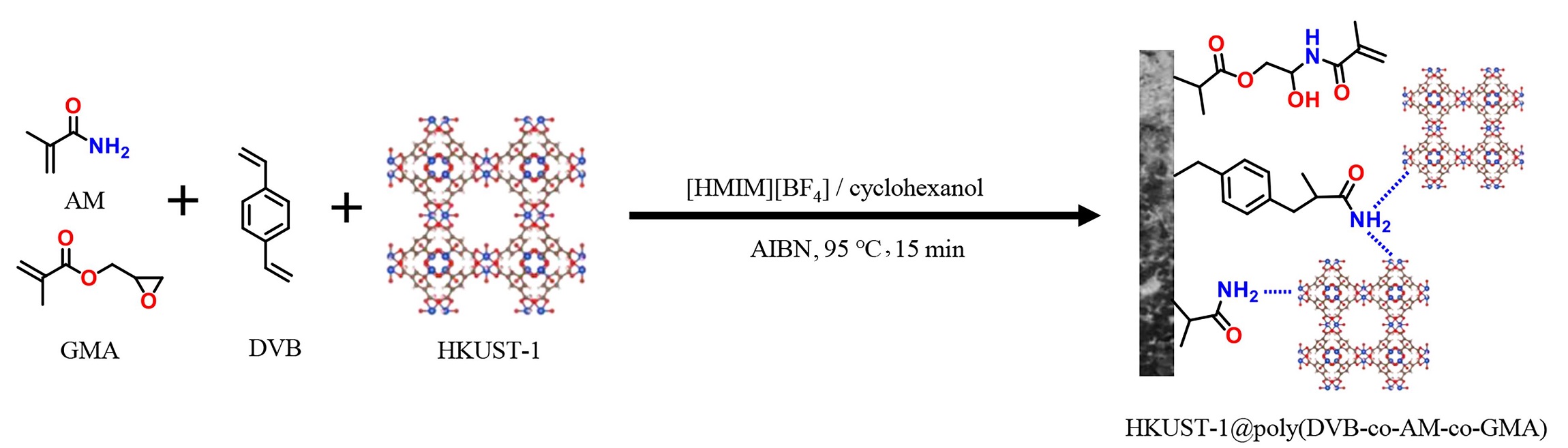
图1 HKUST-1@poly(DVB-co-AM-co-GMA)功能化整体柱的制备流程图AM: acrylamide; GMA: glycidyl methacrylate; DVB: divinylbenzene; AIBN: 2,2′-azobisisobutyronitrile.
Fig. 1 Schematic illustration of preparation of HKUST-1@poly(DVB-co-AM-co-GMA) functionalized monolithic column
| Analyte | Precursor ion (m/z) | Product ions (m/z) | Collision energies/eV |
|---|---|---|---|
| MC-RR | 519.9 | 135.1*,127.1 | 36,22 |
| MC-LRa | 498.4 | 135.1*,861.5 | 14,11 |
| MC-YRa | 523.4 | 135.1*,911.5 | 19,9 |
表1 3种MCs的MS/MS参数
Table 1 MS/MS parameters of three microcystins (MCs)
| Analyte | Precursor ion (m/z) | Product ions (m/z) | Collision energies/eV |
|---|---|---|---|
| MC-RR | 519.9 | 135.1*,127.1 | 36,22 |
| MC-LRa | 498.4 | 135.1*,861.5 | 14,11 |
| MC-YRa | 523.4 | 135.1*,911.5 | 19,9 |
| Column | HKUST-1/mg | GMA/mg | AM/mg | DVB/mg | [HMIM][BF4]/mg | Cyclohexanol/mg | Permeability (K)/(10-14 m2) | SMC-LR |
|---|---|---|---|---|---|---|---|---|
| A | 0 | 24 | 16 | 60 | 60 | 40 | 15.3 | 207959 |
| B | 0 | 26 | 14 | 60 | 60 | 40 | 15.3 | 150628 |
| C | 0 | 22 | 18 | 60 | 60 | 40 | 7.66 | 171502 |
| D | 0 | 24 | 16 | 60 | 65 | 35 | 7.66 | 208332 |
| E | 0 | 24 | 16 | 60 | 55 | 45 | 15.3 | 219714 |
| F | 1 | 24 | 16 | 60 | 60 | 40 | 15.3 | 233172 |
| G | 3 | 24 | 16 | 60 | 60 | 40 | 7.66 | 240598 |
| H | 5 | 24 | 16 | 60 | 60 | 40 | 7.66 | 254036 |
| I | 7 | 24 | 16 | 60 | 60 | 40 | 3.83 | 198018 |
表2 HKUST-1@poly(DVB-co-AM-co-GMA)功能化整体柱的预聚合液组成
Table 2 Composition of the polymerization solution for the preparation of HKUST-1@poly(DVB-co-AM-co-GMA) monolithic column
| Column | HKUST-1/mg | GMA/mg | AM/mg | DVB/mg | [HMIM][BF4]/mg | Cyclohexanol/mg | Permeability (K)/(10-14 m2) | SMC-LR |
|---|---|---|---|---|---|---|---|---|
| A | 0 | 24 | 16 | 60 | 60 | 40 | 15.3 | 207959 |
| B | 0 | 26 | 14 | 60 | 60 | 40 | 15.3 | 150628 |
| C | 0 | 22 | 18 | 60 | 60 | 40 | 7.66 | 171502 |
| D | 0 | 24 | 16 | 60 | 65 | 35 | 7.66 | 208332 |
| E | 0 | 24 | 16 | 60 | 55 | 45 | 15.3 | 219714 |
| F | 1 | 24 | 16 | 60 | 60 | 40 | 15.3 | 233172 |
| G | 3 | 24 | 16 | 60 | 60 | 40 | 7.66 | 240598 |
| H | 5 | 24 | 16 | 60 | 60 | 40 | 7.66 | 254036 |
| I | 7 | 24 | 16 | 60 | 60 | 40 | 3.83 | 198018 |
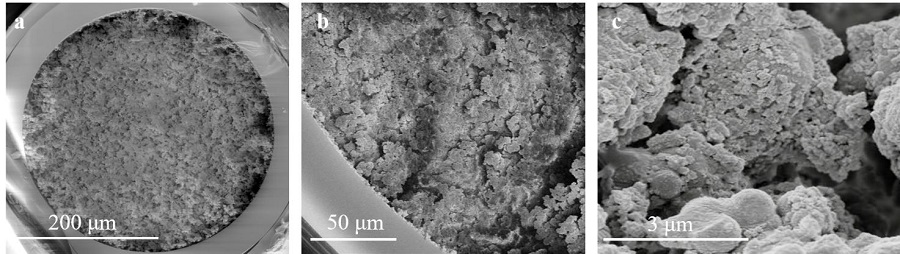
图2 HKUST-1@poly(DVB-co-AM-co-GMA)整体柱的扫描电镜图
Fig. 2 SEM images of the HKUST-1@poly(DVB-co-AM-co-GMA) monolithic column Magnification: (a) 800×; (b) 2000×; (c) 30000×.
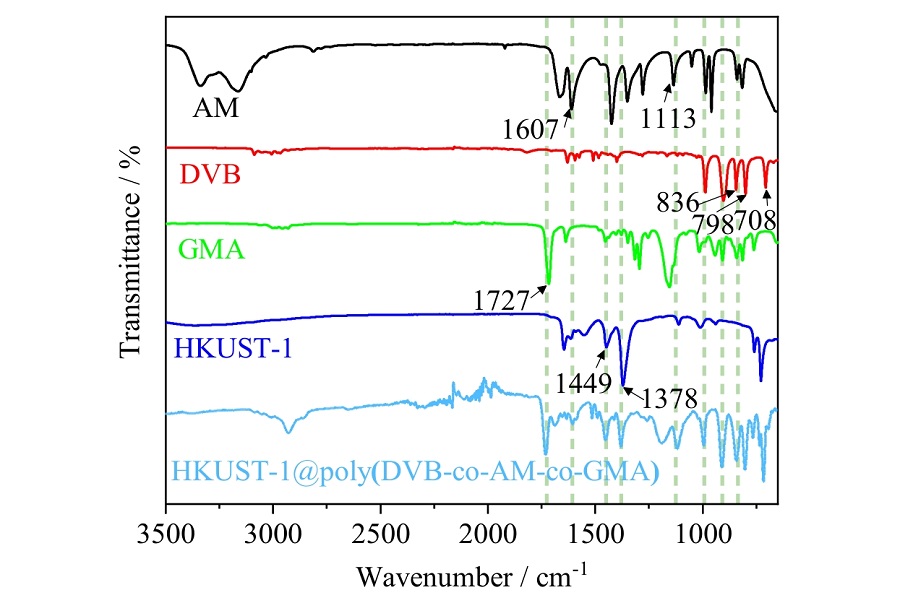
图3 AM、DVB、GMA、HKUST-1及HKUST-1@poly(DVB-co-AM-co-GMA)功能化整体柱的FT-IR谱图
Fig. 3 FT-IR spectra of AM,DVB,GMA,HKUST-1 and HKUST-1@poly(DVB-co-AM-co-GMA) functionalized monolithic column
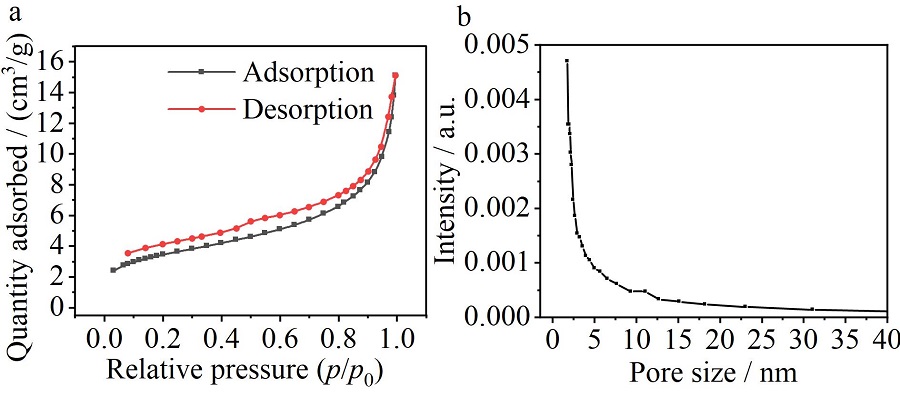
图4 HKUST-1@poly(DVB-co-AM-co-GMA)功能化整体材料的(a)氮气吸附-脱附等温曲线和(b)孔径分布图
Fig. 4 (a) N2 adsorption-desorption isotherm curves and (b) pore-size distribution of HKUST-1@poly(DVB-co-AM-co-GMA) functionalized monolithic material
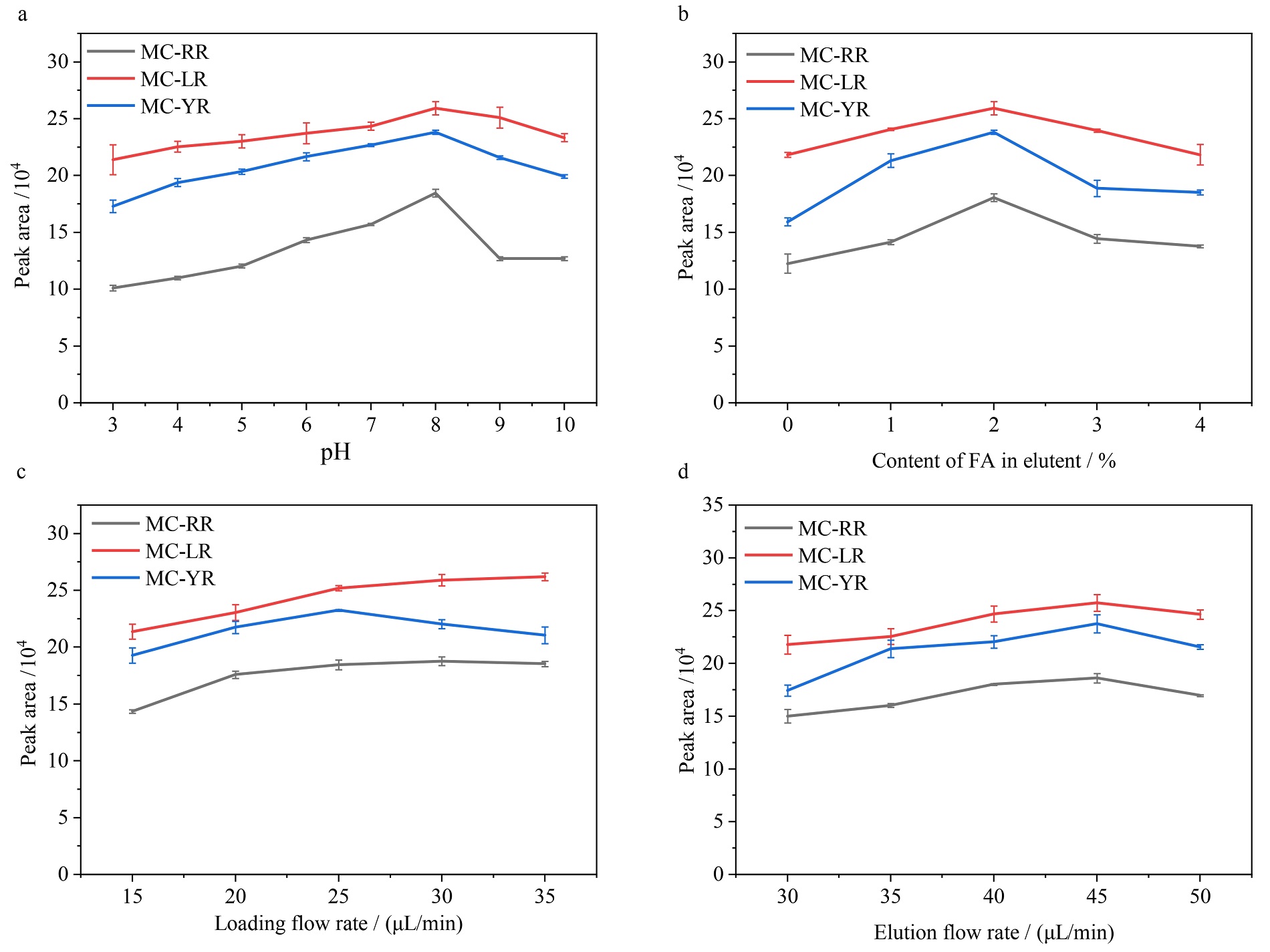
图5 (a)上样液pH、(b)洗脱液中FA的含量、(c)上样流速和(d)洗脱流速对3种MCs萃取效率的影响(n=3)
Fig. 5 Effects of (a) pH of loading solution,(b) FA content in elution solution,(c) loading flow rate and (d) elution flow rate on extraction efficiencies of the three MCs (n=3)
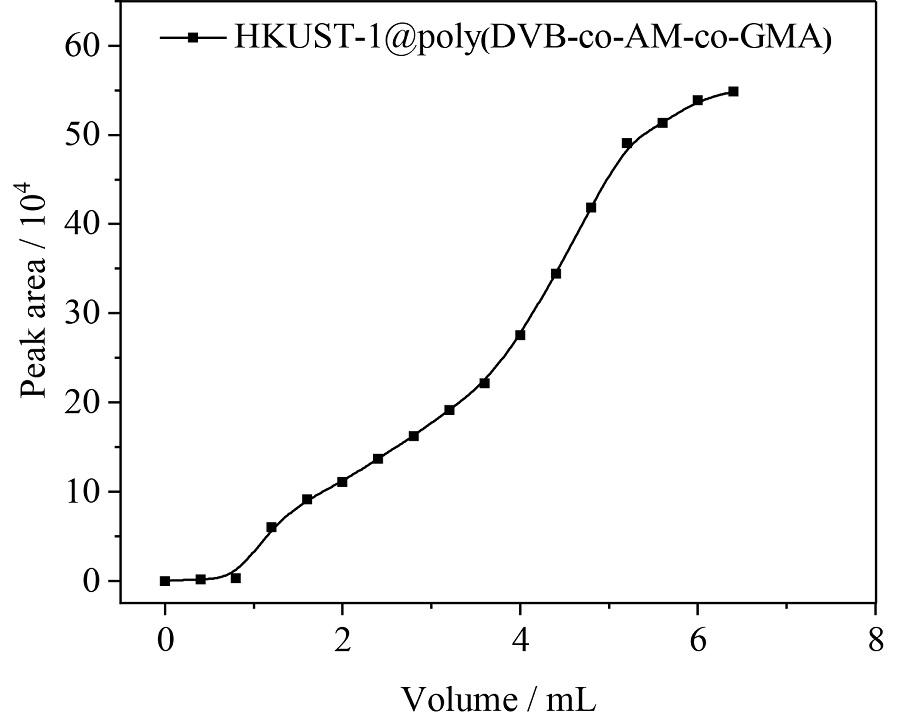
图6 HKUST-1@poly(DVB-co-AM-co-GMA)整体柱对MC-LR的穿透曲线
Fig. 6 Breakthrough curve of MC-LR in the HKUST-1@poly(DVB-co-AM-co-GMA) monolithic column
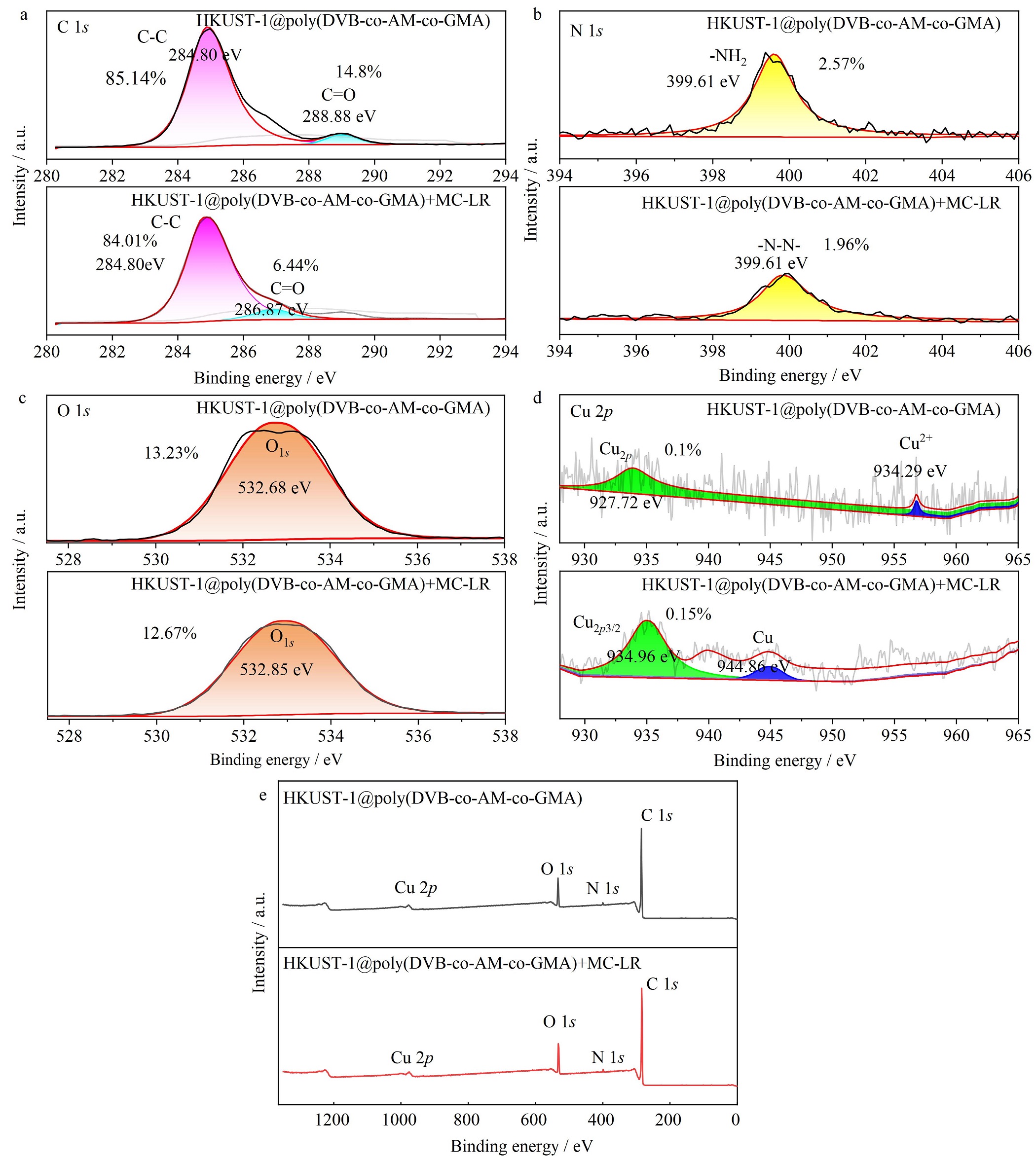
图7 HKUST-1@poly(DVB-co-AM-co-GMA)整体柱结合MC-LR前后的(a) C 1s的XPS谱图、(b) N 1s的XPS谱图、(c) O 1s的XPS谱图、(d) Cu 2p的XPS谱图和(e) XPS全谱
Fig. 7 XPS spectra of (a) C 1s,(b) N 1s,(c) O 1s,(d) Cu 2p and (e) XPS full spectrum for HKUST-1@poly(DVB-co-AM-co-GMA) monolithic column before and after adsorption of MC-LR
| Analyte | Linear range/(μg/L) | R2 | LOD/(ng/L,S/N=3) | LOQ/(ng/L,S/N=10) | RSDs/% (n=5) | ||
|---|---|---|---|---|---|---|---|
| Column-to-column | Inter-day | Intra-day | |||||
| MC-LR | 0.01-10 | 0.9955 | 0.28 | 0.94 | 3.0 | 1.4 | 1.4 |
| MC-RR | 0.01-10 | 0.9986 | 0.60 | 1.99 | 2.6 | 2.3 | 3.4 |
| MC-YR | 0.01-10 | 0.9995 | 0.48 | 1.60 | 3.5 | 3.7 | 2.6 |
表3 CME与LC-MS/MS联用方法对MCs的分析性能
Table 3 Analytical performance of CME-LC-MS/MS method for MCs
| Analyte | Linear range/(μg/L) | R2 | LOD/(ng/L,S/N=3) | LOQ/(ng/L,S/N=10) | RSDs/% (n=5) | ||
|---|---|---|---|---|---|---|---|
| Column-to-column | Inter-day | Intra-day | |||||
| MC-LR | 0.01-10 | 0.9955 | 0.28 | 0.94 | 3.0 | 1.4 | 1.4 |
| MC-RR | 0.01-10 | 0.9986 | 0.60 | 1.99 | 2.6 | 2.3 | 3.4 |
| MC-YR | 0.01-10 | 0.9995 | 0.48 | 1.60 | 3.5 | 3.7 | 2.6 |
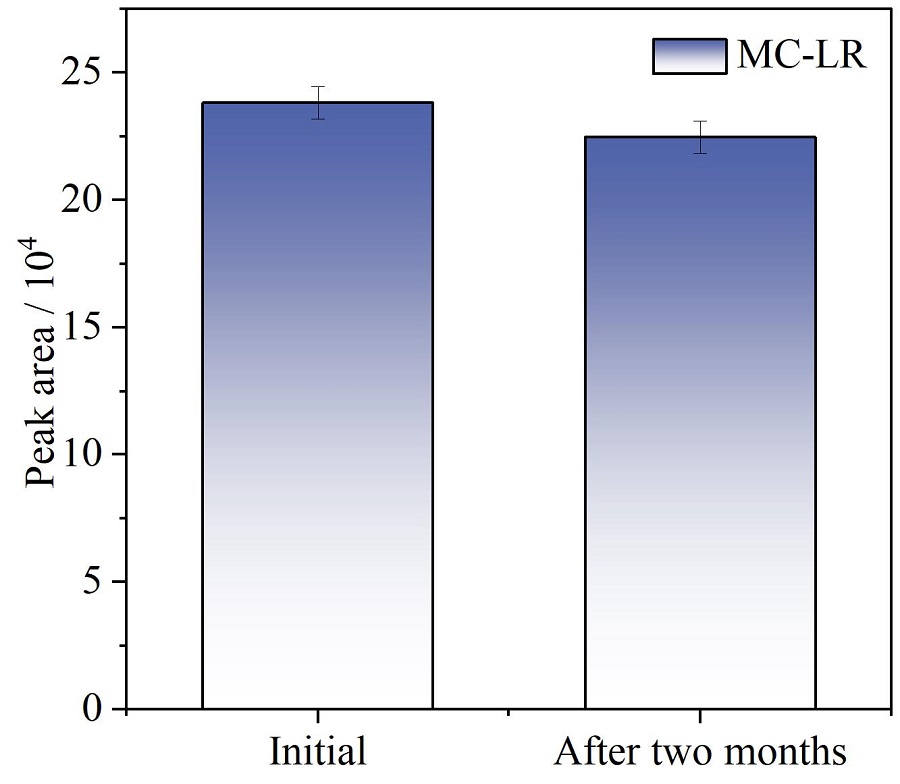
图8 HKUST-1@poly(DVB-co-AM-co-GMA)功能化整体柱的重复使用性(n=3)
Fig. 8 Reusability of HKUST-1@poly(DVB-co-AM-co-GMA) functionalized monolithic column (n=3)
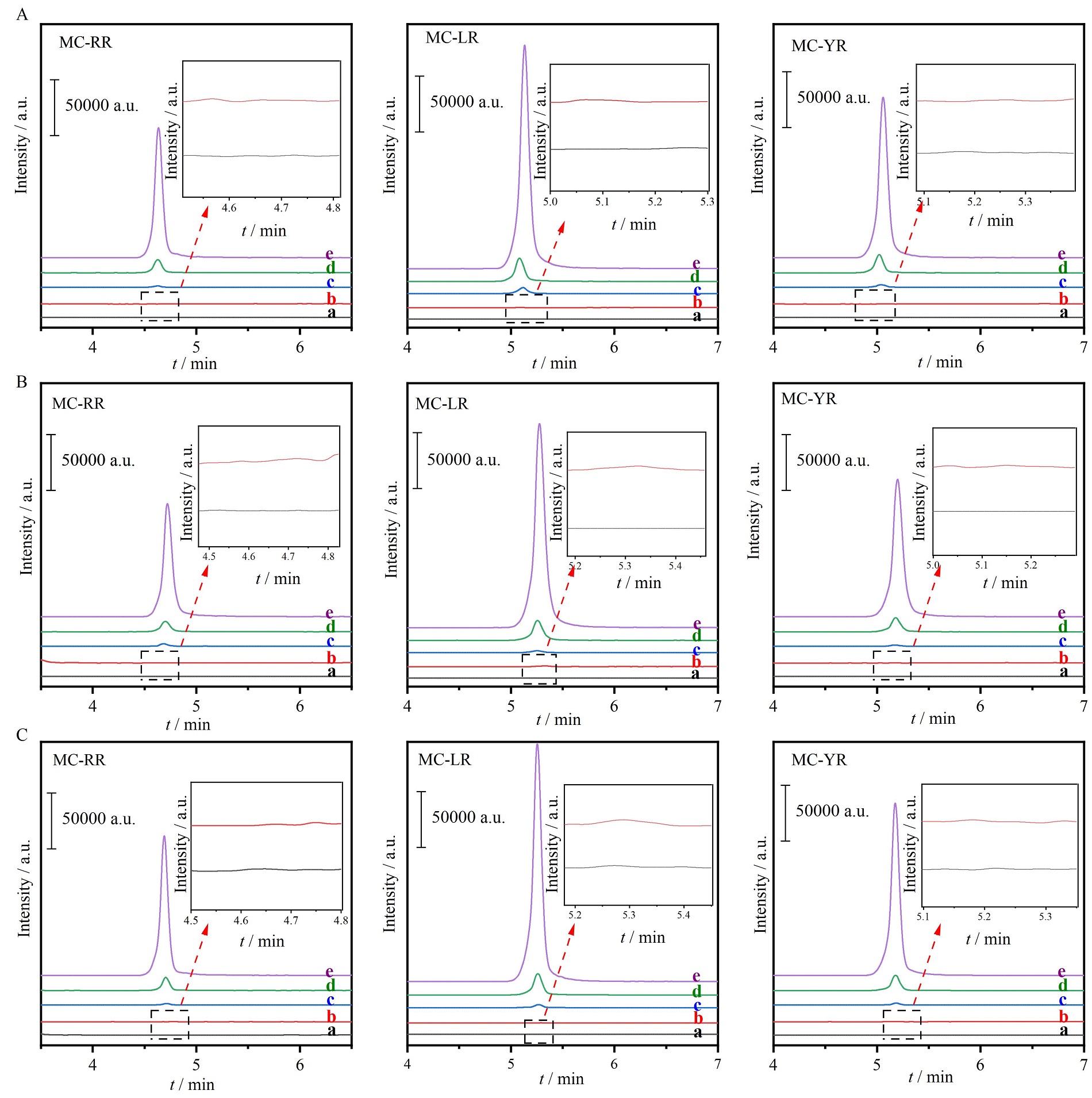
图9 (A)水库水、(B)河水和(C)湖水样品中MCs的TIC谱图a. direct analysis; b. sample analysis after CME enrichment; c. sample spiked with 0.05 µg/L MCs; d. sample spiked with 0.5 µg/L MCs; e. sample spiked with 5 µg/L MCs.
Fig. 9 TIC chromatograms of MCs in (A) reservoir water,(B) river water and (C) lake water
| Sample | Spiked/(μg/L) | MC-LR | MC-RR | MC-YR | |||||
|---|---|---|---|---|---|---|---|---|---|
| Detected/(μg/L) | Recovery (RSD)/% | Detected/(μg/L) | Recovery (RSD)/% | Detected/(μg/L) | Recovery (RSD)/% | ||||
| Reservoir water | 0 | 0.0027 | / | N.D. | / | N.D. | / | ||
| 0.05 | 0.041 | 82.2 (5.5) | 0.044 | 88.8 (3.0) | 0.056 | 111.0 (7.9) | |||
| 0.50 | 0.53 | 105.0 (2.5) | 0.56 | 112.0 (1.8) | 0.49 | 98.5 (1.7) | |||
| 5.0 | 5.5 | 111.1 (7.0) | 4.7 | 94.3 (2.3) | 5.2 | 103.0 (4.2) | |||
| River water | 0 | 0.0014 | / | 0.0023 | / | 0.0019 | / | ||
| 0.05 | 0.045 | 90.5 (4.3) | 0.052 | 104.0 (6.1) | 0.057 | 101.0 (1.4) | |||
| 0.50 | 0.55 | 109.0 (4.3) | 0.42 | 83.6 (5.8) | 0.45 | 90.9 (3.0) | |||
| 5.0 | 5.0 | 101.0 (3.7) | 4.6 | 93.2 (1.6) | 5.1 | 101.0 (2.4) | |||
| Lake water | 0 | 0.0012 | / | 0.0009 | / | N.D. | / | ||
| 0.05 | 0.048 | 95.3 (4.3) | 0.049 | 97.2 (4.7) | 0.50 | 100.0 (2.6) | |||
| 0.50 | 0.51 | 102.0 (2.8) | 0.42 | 83.2 (6.3) | 0.49 | 99.1 (2.0) | |||
| 5.0 | 4.8 | 96.4 (6.0) | 4.7 | 93.8 (1.7) | 5.2 | 104.0 (6.3) | |||
表4 CME与LC-MS/MS方法联用分析3种实际水样中MCs的回收率和精密度(n=3)
Table 4 Recoveries and precisions (RSDs) of the MCs with CME-LC-MS/MS method in three actual water samples (n=3)
| Sample | Spiked/(μg/L) | MC-LR | MC-RR | MC-YR | |||||
|---|---|---|---|---|---|---|---|---|---|
| Detected/(μg/L) | Recovery (RSD)/% | Detected/(μg/L) | Recovery (RSD)/% | Detected/(μg/L) | Recovery (RSD)/% | ||||
| Reservoir water | 0 | 0.0027 | / | N.D. | / | N.D. | / | ||
| 0.05 | 0.041 | 82.2 (5.5) | 0.044 | 88.8 (3.0) | 0.056 | 111.0 (7.9) | |||
| 0.50 | 0.53 | 105.0 (2.5) | 0.56 | 112.0 (1.8) | 0.49 | 98.5 (1.7) | |||
| 5.0 | 5.5 | 111.1 (7.0) | 4.7 | 94.3 (2.3) | 5.2 | 103.0 (4.2) | |||
| River water | 0 | 0.0014 | / | 0.0023 | / | 0.0019 | / | ||
| 0.05 | 0.045 | 90.5 (4.3) | 0.052 | 104.0 (6.1) | 0.057 | 101.0 (1.4) | |||
| 0.50 | 0.55 | 109.0 (4.3) | 0.42 | 83.6 (5.8) | 0.45 | 90.9 (3.0) | |||
| 5.0 | 5.0 | 101.0 (3.7) | 4.6 | 93.2 (1.6) | 5.1 | 101.0 (2.4) | |||
| Lake water | 0 | 0.0012 | / | 0.0009 | / | N.D. | / | ||
| 0.05 | 0.048 | 95.3 (4.3) | 0.049 | 97.2 (4.7) | 0.50 | 100.0 (2.6) | |||
| 0.50 | 0.51 | 102.0 (2.8) | 0.42 | 83.2 (6.3) | 0.49 | 99.1 (2.0) | |||
| 5.0 | 4.8 | 96.4 (6.0) | 4.7 | 93.8 (1.7) | 5.2 | 104.0 (6.3) | |||
| Method | Adsorbent | Samples | Sample consumption/mL | LODs/(ng/L) | Recoveries/% | Ref. |
|---|---|---|---|---|---|---|
| MSPE-LC-MS/MS | DS-MMIP@GO | tap water,river water | 1000 | 0.03-0.61 | 84.1-98.2 | [ |
| MSPE-HPLC-MS/MS | MCNTs@TpPa-1 | tap water | 20 | 0.8-1.5 | 85.0-106.0 | [ |
| SPME-LC-MS | aptamer@AuNPs@UiO-66-NH2 | lake water,tap water | 5 | 4 | 92.0-96.8 | [ |
| d-SPE-HPLC-MS | HFH-COF | biological samples | 20 | 0.6-0.8 | 85.7-108.7 | [ |
| SPE-LC-MS | Au-PPy nanocomposite sorbent | tap water | 2 | 1.5 | 94.1-103.2 | [ |
| CME-LC-MS/MS | HKUST-1@poly(DVB-co-AM-co-GMA) | lake water,tap water,reservoir water | 1 | 0.28-0.60 | 82.2-112.0 | this work |
表 5 本方法与其他已报道的MCs分析方法的比较
Table 5 Comparison of the current strategy with previously reported methods for MCs analysis
| Method | Adsorbent | Samples | Sample consumption/mL | LODs/(ng/L) | Recoveries/% | Ref. |
|---|---|---|---|---|---|---|
| MSPE-LC-MS/MS | DS-MMIP@GO | tap water,river water | 1000 | 0.03-0.61 | 84.1-98.2 | [ |
| MSPE-HPLC-MS/MS | MCNTs@TpPa-1 | tap water | 20 | 0.8-1.5 | 85.0-106.0 | [ |
| SPME-LC-MS | aptamer@AuNPs@UiO-66-NH2 | lake water,tap water | 5 | 4 | 92.0-96.8 | [ |
| d-SPE-HPLC-MS | HFH-COF | biological samples | 20 | 0.6-0.8 | 85.7-108.7 | [ |
| SPE-LC-MS | Au-PPy nanocomposite sorbent | tap water | 2 | 1.5 | 94.1-103.2 | [ |
| CME-LC-MS/MS | HKUST-1@poly(DVB-co-AM-co-GMA) | lake water,tap water,reservoir water | 1 | 0.28-0.60 | 82.2-112.0 | this work |
|
| [1] | 张晓男, 马智超, 刘安, 黄渊, 闵雪红, 刘梅, 谢正齐, 魏岩松. QuEChERS-超高效液相色谱-串联质谱法测定马尿中33种非甾体抗炎药残留[J]. 色谱, 2026, 44(9): 1028-1037. |
| [2] | 廖晓磊, 林钦, 梅月, 窦红顺, 许晖, 何芸, 潘城, 江凤玲. 亲水柱分离-超高效液相色谱-串联质谱法测定食品中3种色胺类精神活性物质[J]. 色谱, 2026, 44(9): 1010-1018. |
| [3] | 毕瑞锋, 付世慧, 邓锁成, 付萌, 张伟伟, 宋玉华. 柱前衍生-超高效液相色谱-串联质谱法检测茶叶中草铵膦及其代谢物残留量[J]. 色谱, 2026, 44(9): 1019-1027. |
| [4] | 陈茜, 马智超, 李要南. 基于离子液体基低共熔溶剂的液液微萃取-超高效液相色谱-串联质谱法测定马尿中2种胰腺兴奋剂[J]. 色谱, 2026, 44(9): 1038-1047. |
| [5] | 韦棋, 苏福海, 朱欣. 液相色谱-串联质谱法与气相色谱-质谱法测定毛发中15种芬太尼类似物和苯丙胺类兴奋剂[J]. 色谱, 2026, 44(9): 1048-1058. |
| [6] | 詹昆松, 唐明珠, 林颖, 倪林君, 余丽双. 铁卟啉金属有机框架材料用于高效富集地龙多肽[J]. 色谱, 2026, 44(8): 960-967. |
| [7] | 张晓梅, 孟祥娟, 胡越, 刘晓东. 液液萃取结合超高效液相色谱-串联质谱同时测定尿中5种常见拟除虫菊酯代谢产物[J]. 色谱, 2026, 44(7): 777-784. |
| [8] | 李爽, 朱艺玲, 任真, 高当当, 顾贺琳, 劳俊琅. 大型仪器支撑下的样品前处理教学改革实践——以磁性共价有机骨架材料富集海水中有机紫外防晒剂为例[J]. 色谱, 2026, 44(6): 705-712. |
| [9] | 刘峰, 唐彬彬, 吴丽媛, 宋丽新, 张敏, 贺敏. 高效液相色谱-串联质谱法测定大气细颗粒物中7种轮胎抗氧化剂及其醌类氧化物[J]. 色谱, 2026, 44(6): 658-666. |
| [10] | 刘真, 王玉梅, 潘建斌, 宗凌丽, 宋玉函, 孙小杰, 陈洪渊. QuEChERS净化结合超高效液相色谱-串联质谱法测定精油类化妆品中13种禁用生物碱[J]. 色谱, 2026, 44(6): 667-674. |
| [11] | 石飞云, 徐浩宇, 黎俊宏, 徐梦媛. 超高效液相色谱-串联质谱法测定人体全血中22种有机磷酸酯及其代谢物和11种邻苯二甲酸酯类代谢物[J]. 色谱, 2026, 44(6): 682-693. |
| [12] | 梁静, 冯家力, 曾栋, 周丽平, 钟旋, 李轶, 陈东洋. 全自动固相萃取-超高效液相色谱-串联质谱法同时测定饮用水中全氟化合物、抗生素和农药[J]. 色谱, 2026, 44(5): 547-554. |
| [13] | 刘祎, 吴慈, 赵群, 梁振, 张付云, 张丽华. 细胞表面糖蛋白相互作用规模化解析新技术及应用[J]. 色谱, 2026, 44(5): 515-524. |
| [14] | 任彩霞, 王晓敏, 盛万里, 韩祎陟, 张春艳, 郑书展. 固相支撑液液萃取结合超高效液相色谱-串联质谱快速检测牧草中10种麦角生物碱毒素[J]. 色谱, 2026, 44(4): 403-412. |
| [15] | 杨成, 祝伟霞, 刘亚风, 张鸿伟, 魏蔚, 胡锴. 超高效液相色谱-串联质谱法快速测定动物源性食品中卢巴贝隆残留[J]. 色谱, 2026, 44(4): 479-485. |
| 阅读次数 | ||||||
|
全文 |
|
|||||
|
摘要 |
|
|||||
