色谱 ›› 2026, Vol. 44 ›› Issue (5): 597-604.DOI: 10.3724/SP.J.1123.2025.09027

• 教学研究 • 上一篇    下一篇

开放性实验:二氧化硫的微萃取及智能手机比色法辅助的快速定量分析

张亮1, 刘畅2, 朱佳1, 张景慧1, 沈薇1, 唐盛1,*()   

  1. 1.江苏科技大学环境与化学工程学院,江苏 镇江 212100
    2.江苏科技大学粮食学院,江苏 镇江 212100
  • 收稿日期:2025-09-29 出版日期:2026-05-08 发布日期:2026-05-07
  • 通讯作者: 唐盛 E-mail:chmts@just.edu.cn,tangsheng.nju@gmail.com.
  • 基金资助:
    国家自然科学基金(22276080);国家自然科学基金(22574067);江苏省自然科学基金(BK20211340);江苏省自然科学基金(BK20241025);江苏省高等教育教改研究立项课题(2023JSJG271);江苏科技大学本科教育教学改革研究课题(XJG2022039)

Open-ended experiment: microextraction and smartphone-assisted colorimetric quantification of sulfur dioxide

ZHANG Liang1, LIU Chang2, ZHU Jia1, ZHANG Jinghui1, SHEN Wei1, TANG Sheng1,*()   

  1. 1. School of Environmental and Chemical Engineering,Jiangsu University of Science and Technology,Zhenjiang 212100,China
    2. School of Grain Science and Technology,Jiangsu University of Science and Technology,Zhenjiang 212100,China
  • Received:2025-09-29 Online:2026-05-08 Published:2026-05-07
  • Supported by:
    National Natural Science Foundation of China(22276080);National Natural Science Foundation of China(22574067);Natural Science Foundation of Jiangsu Province, China(BK20211340);Natural Science Foundation of Jiangsu Province, China(BK20241025);Jiangsu Higher Education Teaching Reform Research Project(2023JSJG271);Undergraduate Teaching Reform Research Project, Jiangsu University of Science and Technology(XJG2022039)

摘要:

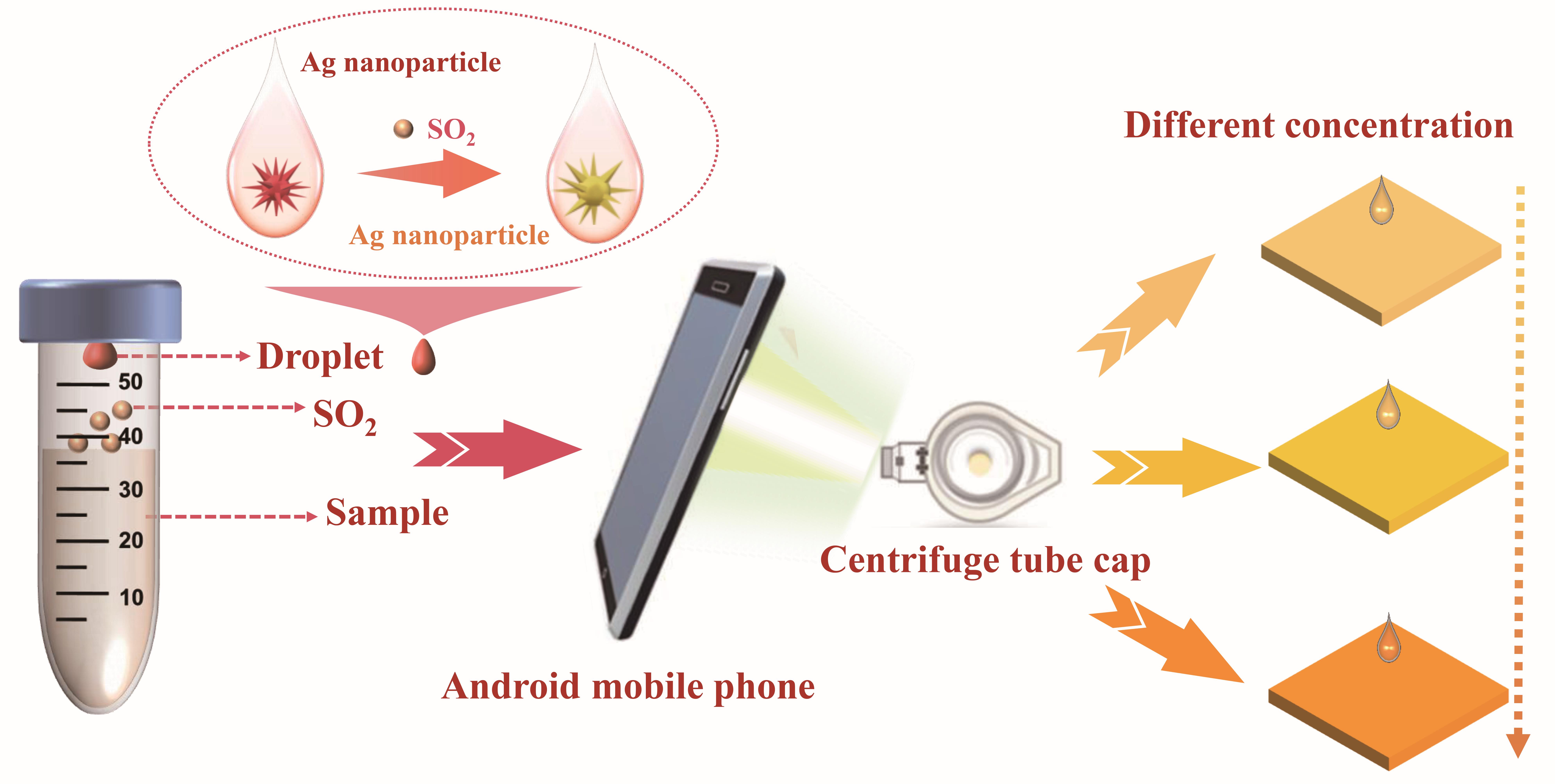
开放性实验课程是培养本科生实践能力、创新意识与科学素养的重要环节。本项目设计并实施了以“智能手机比色法定量检测二氧化硫(SO2)气体污染物”为主题的开放性实验。在实验过程中,采用顶空单滴微萃取法富集样品中挥发的SO2,SO2与银纳米粒子在单滴体系中发生刻蚀反应并引发溶液颜色的信号变化,通过智能手机的比色测定,从而实现对SO2的定量分析。该实验引导学生运用智能手机作为新型的便携检测平台,启发其对各类科研工具的创新运用。实验设计不但涉及构建标准曲线、样品定量分析、比色法等基础分析化学实验基础知识与技能,还引入了样品微萃取、纳米材料显色反应等较为前沿的分析手段。该开放性实验课程可帮助本科生理解环境监测中比色分析技术应用的基本思路,使学生在实际科研情境中理解理论与技术的紧密联系。在实验过程中,学生不仅可以体验到科学探索的严谨性和创新性,还能感受到科学实验对环境保护、社会发展及国家科技进步的重要意义,从而在潜移默化中形成科学精神、社会责任感与专业使命感,实现专业素养与思政教育的深度融合。

关键词: 智能手机比色法, 单滴微萃取, 二氧化硫, 光信号, 开放性实验

Abstract:

Open-ended experiment courses play a crucial role in cultivating practical skills, innovative thinking and scientific literacy of undergraduate students. In this project, an open-ended experiment was designed and implemented with the theme of quantitative detection of sulfur dioxide (SO2) gas pollutants using smartphone-based colorimetry. During the experiment, volatile SO₂ in samples was enriched using headspace single-drop microextraction. In the single-drop system, SO2 reacted with silver nanoparticles, inducing a distinct color change. SO2 concentration was quantified through colorimetric analysis using a smartphone as a portable detection platform. This experiment guided students to employ smartphones as a novel portable detection platform, inspiring the innovative application of diverse scientific tools. The design covered fundamental analytical chemistry skills, including calibration curve construction, sample quantification and colorimetric analysis. Advanced techniques, such as microextraction and nanoparticle-mediated color reactions, were also introduced. This open-ended experiment course enables undergraduates to understand the core principles of colorimetric analysis in environmental monitoring, fostering a comprehension of the close link between theory and practical techniques in real research contexts. Throughout the experiment, students experience both the rigor and creativity of scientific exploration, while recognizing the broader significance of scientific experimentation in environmental protection, societal development and national technological advancement. Consequently, the course facilitates the internalization of scientific spirit, social responsibility and professional mission, achieving a deep integration of professional competence with values-based education.

Key words: smartphone-based colorimetry, single-drop microextraction, sulfur dioxide, optical signal, open-ended experiment

中图分类号: