
Chinese Journal of Chromatography ›› 2026, Vol. 44 ›› Issue (8): 935-945.DOI: 10.3724/SP.J.1123.2025.12030
• Articles • Previous Articles Next Articles
YAO Yunjun1, QIAN Xu1, SHU Fuxing1,2, SONG Xichao1, DONG Yuanyuan1, JIN Leilei1, LIU Fengjian1, JI Zuen3, LIU Jia4,*( ), CHEN Jishuang1,2,*()
Received:2026-01-23
Online:2026-08-08
Published:2026-07-30
Supported by:CLC Number:
YAO Yunjun, QIAN Xu, SHU Fuxing, SONG Xichao, DONG Yuanyuan, JIN Leilei, LIU Fengjian, JI Zuen, LIU Jia, CHEN Jishuang. Non-targeted metabolomics analysis of exosomes derived from Glycyrrhiza uralensis[J]. Chinese Journal of Chromatography, 2026, 44(8): 935-945.
Add to citation manager EndNote|Ris|BibTeX
URL: https://www.chrom-china.com/EN/10.3724/SP.J.1123.2025.12030
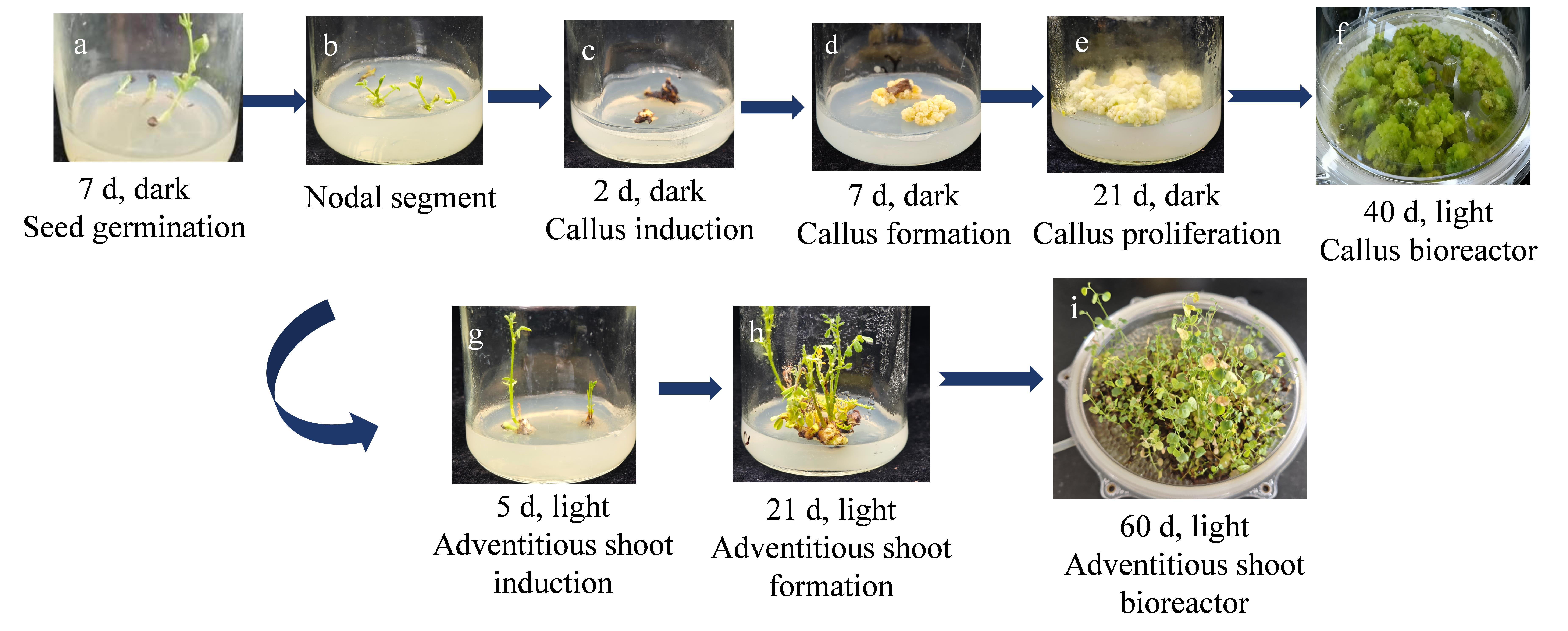
Fig. 1 (a-f) Cultivation flowchart for G. uralensis callus and (a, b, g-i) adventitious shootAll cultures were maintained at a constant temperature of 25 ℃. The term “dark” is used to denote continuous darkness, whilst “light” refers to a light intensity of 2?500 lx, with 14 h of light per day.
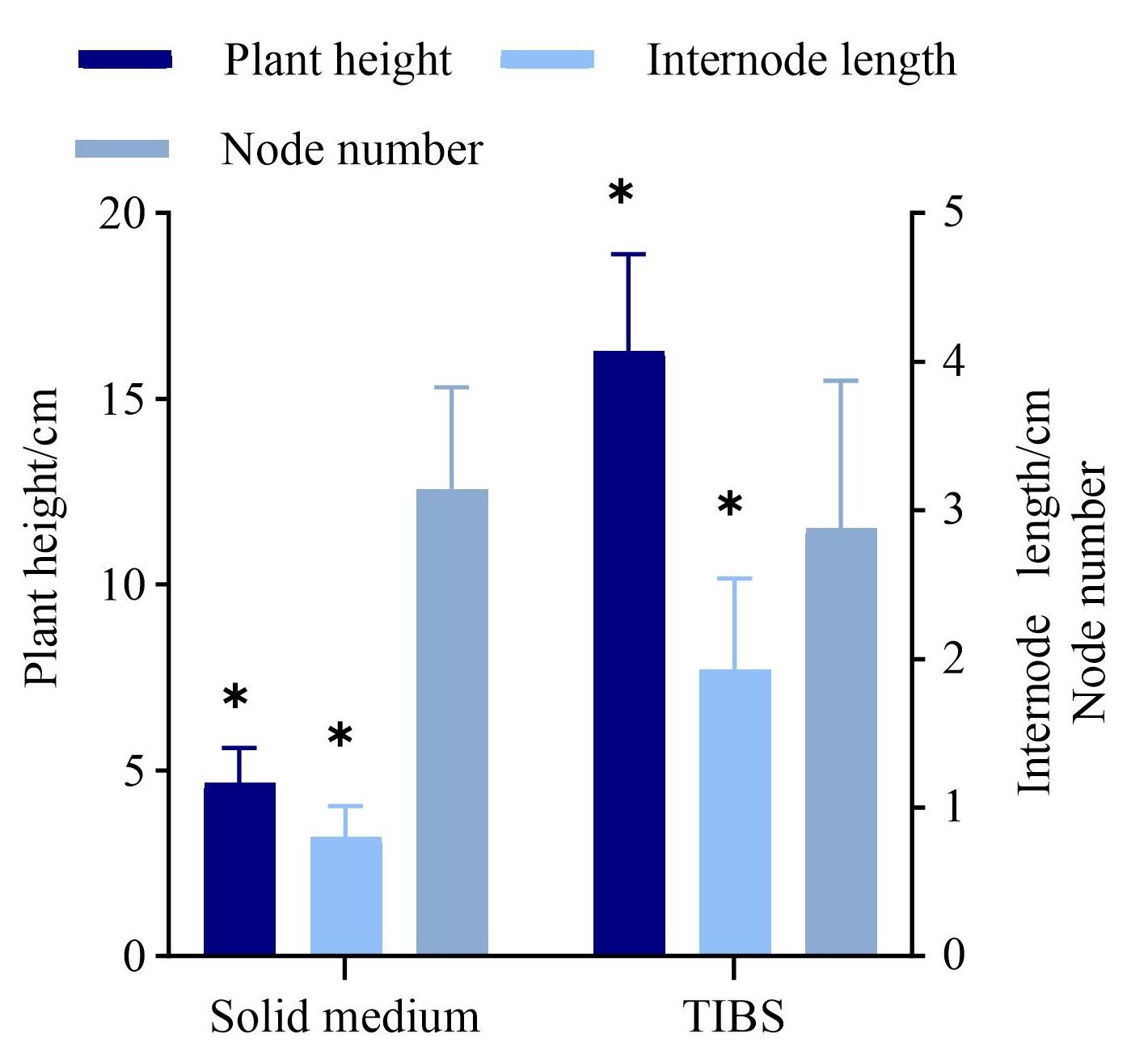
Fig. 2 Plant height, internode length and the number of stem nodes of G. uralensis in two conditions (n=6)TIBS: temporary immersion bioreactor system; * p<0.05, with solid-medium culture serving as control.
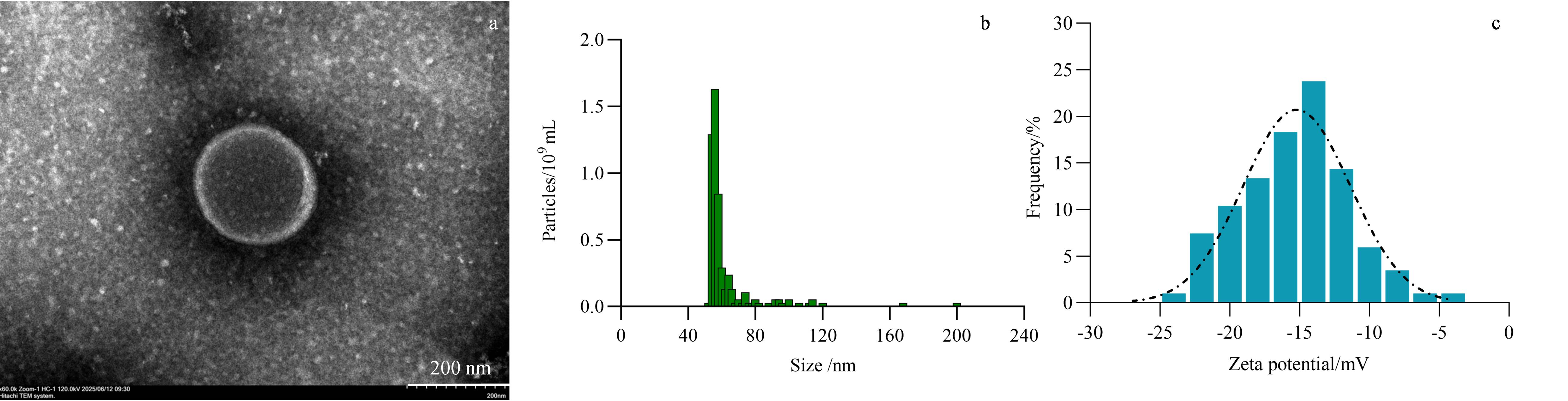
Fig. 3 (a) TEM image, (b) particle size distribution and (c) zeta potential of exosomes
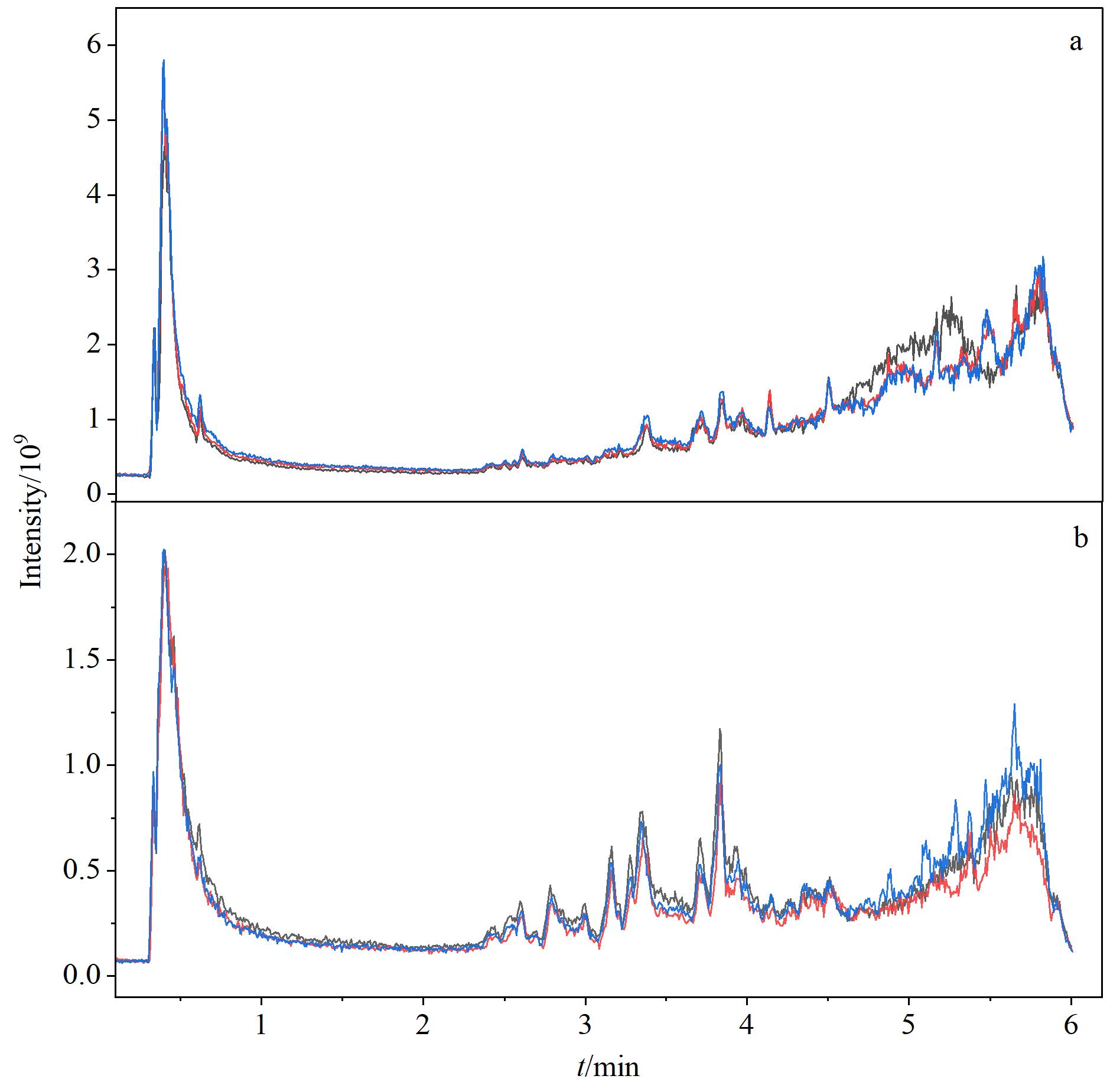
Fig. 4 TIC chromatograms of quality control (QC) samples in positive and negative ion modes
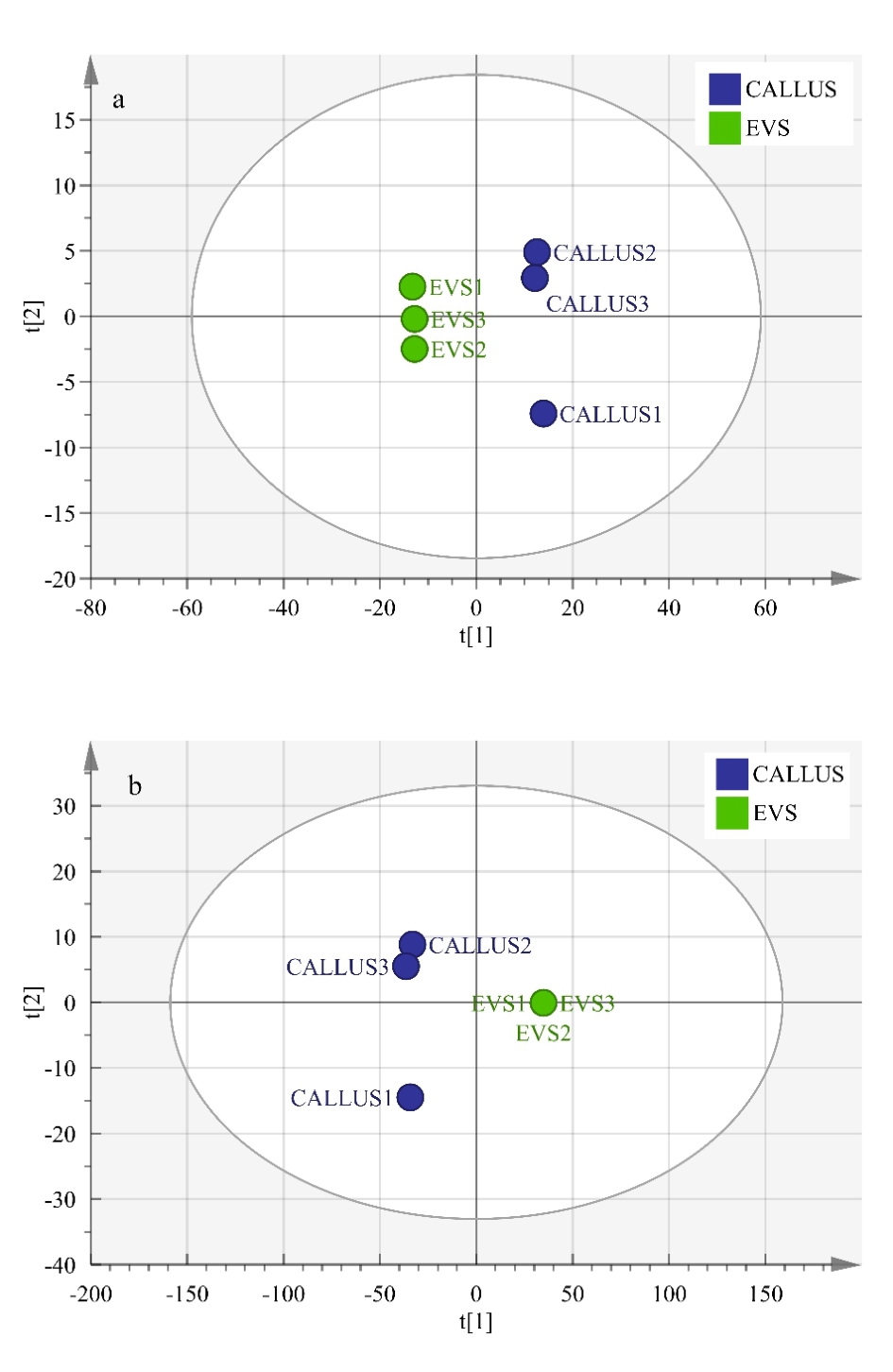
Fig. 5 (a) PCA and (b) OPLS-DA score plots of metabolites in two samplesCALLUS: the callus of G. uralensis; EVS: the exosomes of G. uralensis.
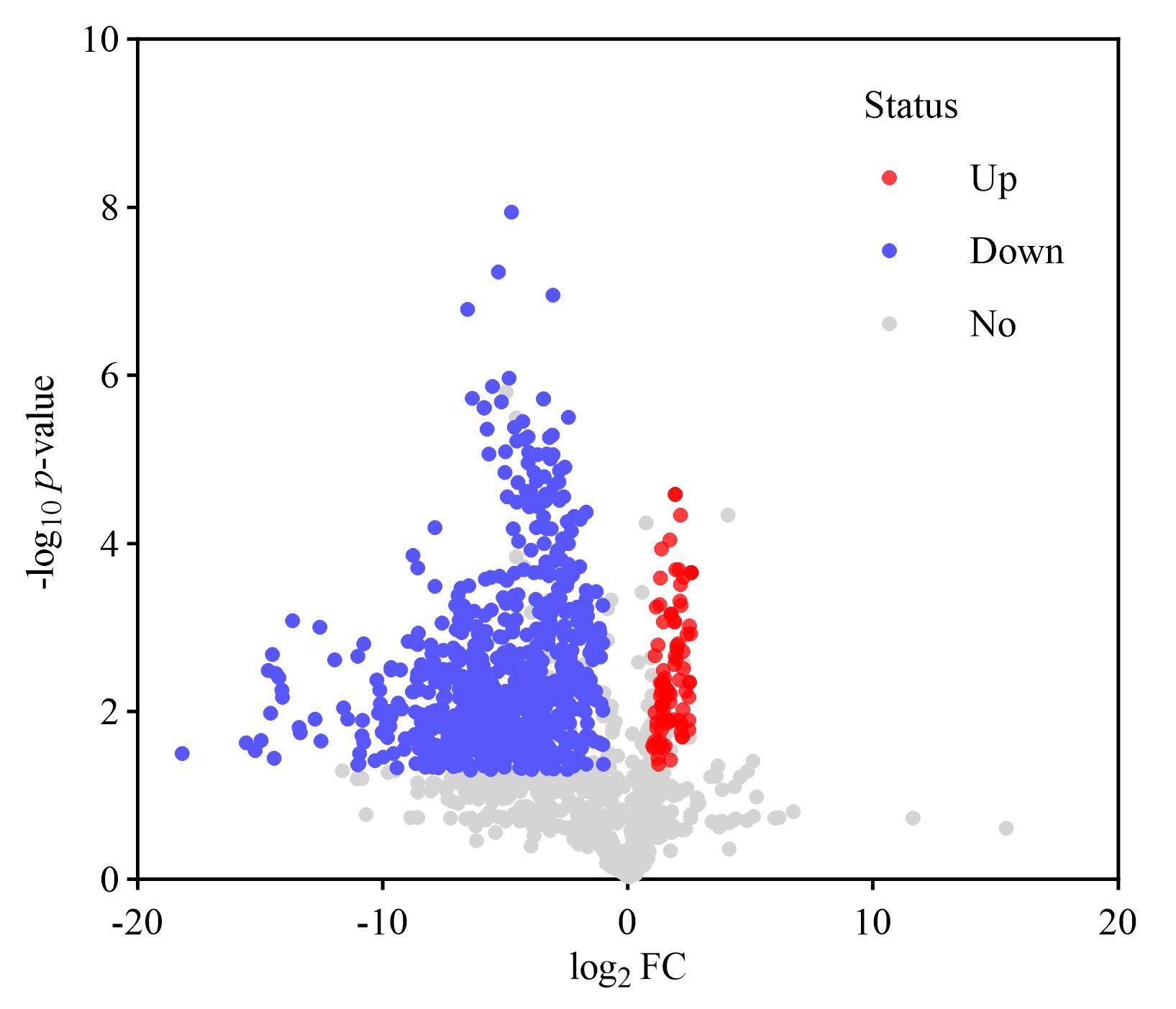
Fig. 6 Volcanic plot of differential metabolites between callus and exosomes of G. uralensisFC: fold change.
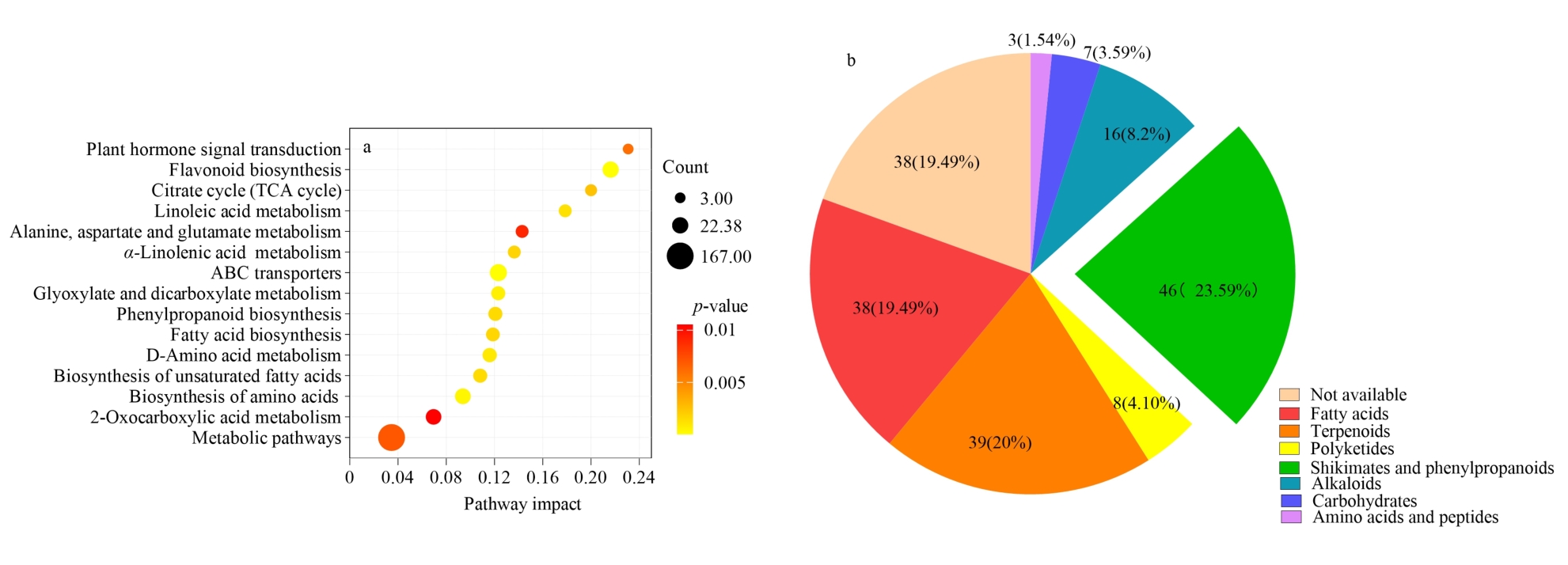
Fig. 7 Diagrams of (a) KEGG enrichment pathways and (b) classification pie chart for the dominant metabolites in exosomesKEGG: Kyoto Encyclopedia of Genes and Genomes; TCA: tricarboxylic acid cycle; ABC: ATP-binding cassette.
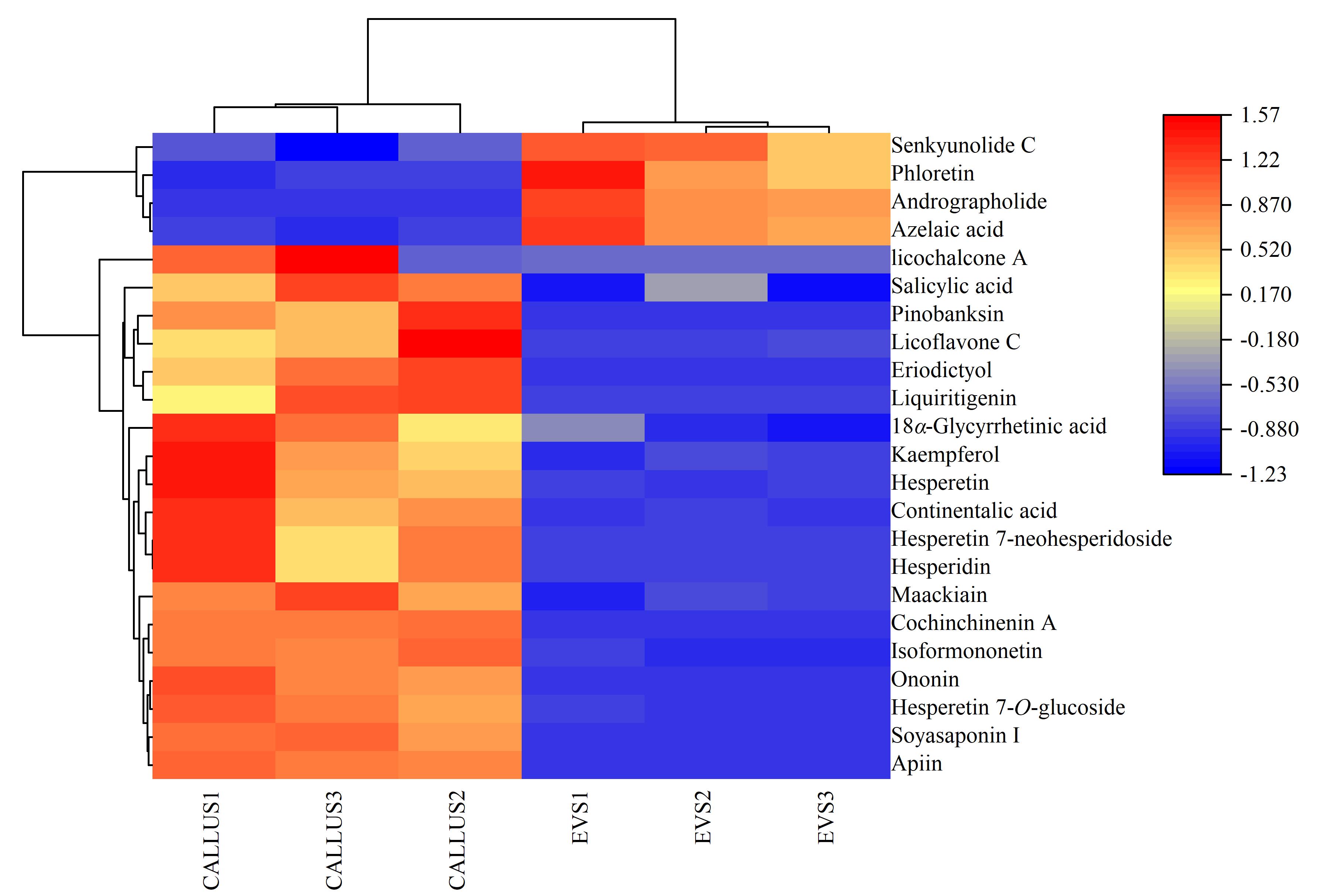
Fig. 8 Heatmap of differential metabolites
| Metabolite | m/z | tR/s | Chemical formula | VIP | p-Value | log2 FC | Mr |
|---|---|---|---|---|---|---|---|
| Hesperidin (橙皮苷) | 611.196 | 180.900 | C28H34O15 | 1.165 | 0.023 | -8.429 | 610.562 |
| Licochalcone A (甘草查耳酮A) | 337.144 | 246.400 | C21H22O4 | 0.142 | 0.196 | -5.787 | 314.385 |
| Liquiritigenin (甘草素) | 255.066 | 215.000 | C15H12O4 | 1.175 | 0.029 | -4.033 | 244.252 |
| Cochinchinenin A (剑叶龙血素A) | 285.113 | 222.600 | C17H18O4 | 1.174 | 0.000 | -8.570 | 286.322 |
| Hesperetin 7-O-glucoside (橙皮素单葡萄糖苷) | 463.124 | 205.700 | C22H24O11 | 1.179 | 0.004 | -4.386 | 464.409 |
| Phloretin (根皮素) | 257.080 | 196.000 | C15H14O5 | 1.152 | 0.023 | 0.873 | 274.268 |
| Eriodictyol (圣草酚) | 269.046 | 217.100 | C15H12O6 | 1.184 | 0.013 | -5.710 | 288.257 |
| Apiin (芹菜苷) | 545.130 | 196.300 | C26H28O14 | 1.186 | 0.001 | -5.560 | 388.367 |
| Ononin (芒柄花苷) | 431.133 | 192.000 | C22H22O9 | 1.185 | 0.003 | -7.073 | 430.404 |
| Licoflavone C (甘草黄酮C) | 339.122 | 248.000 | C20H18O5 | 1.033 | 0.045 | -7.106 | 338.353 |
| Pinobanksin (短叶松素) | 271.061 | 235.900 | C15H12O5 | 1.185 | 0.014 | -7.026 | 272.251 |
| Maackiain (高丽槐素) | 285.075 | 224.300 | C16H12O5 | 1.104 | 0.001 | -3.354 | 284.264 |
| Neohesperidoside (新橙皮苷) | 611.196 | 180.900 | C28H34O15 | 1.165 | 0.023 | -8.429 | 302.279 |
| Hesperetin (橙皮素) | 301.072 | 231.900 | C16H14O6 | 1.179 | 0.022 | -4.829 | 286.236 |
| Kaempferol (山柰酚) | 285.041 | 187.100 | C15H10O6 | 1.149 | 0.005 | -2.759 | 204.222 |
| Senkyunolide C (洋川芎内酯C) | 203.071 | 234.400 | C12H12O3 | 1.058 | 0.002 | 1.931 | 188.221 |
| Azelaic acid (壬二酸) | 187.097 | 196.400 | C9H16O4 | 1.174 | 0.001 | 1.297 | 138.121 |
| Salicylic acid (水杨酸) | 137.024 | 175.200 | C7H6O3 | 1.048 | 0.007 | -1.723 | 943.123 |
| Soyasaponin Ⅰ (大豆皂苷Ⅰ) | 941.511 | 249.000 | C48H78O18 | 1.185 | 0.002 | -4.385 | 302.451 |
| Continentalic acid (长白楤木酸) | 301.217 | 307.100 | C20H30O2 | 1.173 | 0.015 | -4.347 | 470.684 |
| 18α-Glycyrrhetinic acid (甘草次酸) | 471.344 | 241.700 | C30H46O4 | 1.102 | 0.009 | -0.684 | 350.449 |
| Andrographolide (穿心莲内酯) | 351.213 | 203.000 | C20H30O5 | 1.180 | 0.007 | 4.767 | 610.562 |
Table 1 Major effective active components in G. uralensis callus and exosomes
| Metabolite | m/z | tR/s | Chemical formula | VIP | p-Value | log2 FC | Mr |
|---|---|---|---|---|---|---|---|
| Hesperidin (橙皮苷) | 611.196 | 180.900 | C28H34O15 | 1.165 | 0.023 | -8.429 | 610.562 |
| Licochalcone A (甘草查耳酮A) | 337.144 | 246.400 | C21H22O4 | 0.142 | 0.196 | -5.787 | 314.385 |
| Liquiritigenin (甘草素) | 255.066 | 215.000 | C15H12O4 | 1.175 | 0.029 | -4.033 | 244.252 |
| Cochinchinenin A (剑叶龙血素A) | 285.113 | 222.600 | C17H18O4 | 1.174 | 0.000 | -8.570 | 286.322 |
| Hesperetin 7-O-glucoside (橙皮素单葡萄糖苷) | 463.124 | 205.700 | C22H24O11 | 1.179 | 0.004 | -4.386 | 464.409 |
| Phloretin (根皮素) | 257.080 | 196.000 | C15H14O5 | 1.152 | 0.023 | 0.873 | 274.268 |
| Eriodictyol (圣草酚) | 269.046 | 217.100 | C15H12O6 | 1.184 | 0.013 | -5.710 | 288.257 |
| Apiin (芹菜苷) | 545.130 | 196.300 | C26H28O14 | 1.186 | 0.001 | -5.560 | 388.367 |
| Ononin (芒柄花苷) | 431.133 | 192.000 | C22H22O9 | 1.185 | 0.003 | -7.073 | 430.404 |
| Licoflavone C (甘草黄酮C) | 339.122 | 248.000 | C20H18O5 | 1.033 | 0.045 | -7.106 | 338.353 |
| Pinobanksin (短叶松素) | 271.061 | 235.900 | C15H12O5 | 1.185 | 0.014 | -7.026 | 272.251 |
| Maackiain (高丽槐素) | 285.075 | 224.300 | C16H12O5 | 1.104 | 0.001 | -3.354 | 284.264 |
| Neohesperidoside (新橙皮苷) | 611.196 | 180.900 | C28H34O15 | 1.165 | 0.023 | -8.429 | 302.279 |
| Hesperetin (橙皮素) | 301.072 | 231.900 | C16H14O6 | 1.179 | 0.022 | -4.829 | 286.236 |
| Kaempferol (山柰酚) | 285.041 | 187.100 | C15H10O6 | 1.149 | 0.005 | -2.759 | 204.222 |
| Senkyunolide C (洋川芎内酯C) | 203.071 | 234.400 | C12H12O3 | 1.058 | 0.002 | 1.931 | 188.221 |
| Azelaic acid (壬二酸) | 187.097 | 196.400 | C9H16O4 | 1.174 | 0.001 | 1.297 | 138.121 |
| Salicylic acid (水杨酸) | 137.024 | 175.200 | C7H6O3 | 1.048 | 0.007 | -1.723 | 943.123 |
| Soyasaponin Ⅰ (大豆皂苷Ⅰ) | 941.511 | 249.000 | C48H78O18 | 1.185 | 0.002 | -4.385 | 302.451 |
| Continentalic acid (长白楤木酸) | 301.217 | 307.100 | C20H30O2 | 1.173 | 0.015 | -4.347 | 470.684 |
| 18α-Glycyrrhetinic acid (甘草次酸) | 471.344 | 241.700 | C30H46O4 | 1.102 | 0.009 | -0.684 | 350.449 |
| Andrographolide (穿心莲内酯) | 351.213 | 203.000 | C20H30O5 | 1.180 | 0.007 | 4.767 | 610.562 |
|
| [1] | HOU Yanqing, CHI Xiangyu, DU Tinghu, YAN Zengqi, HOU Daidi, HU Chunxiu, LIU Yuexing, LIU Xinyu, XU Guowang. Establishment and application of a knowledge-directed pseudo-targeted analytical method for diabetic retinopathy [J]. Chinese Journal of Chromatography, 2026, 44(3): 312-328. |
| [2] | WU Weixiang, DIAO Fuqiang, GUO Junfei, GU Chunming, WU Lihong, LUO Mingyong. Lipid metabolomics-based biomarker analysis of neonatal sepsis in serum and cerebrospinal fluid [J]. Chinese Journal of Chromatography, 2026, 44(3): 286-295. |
| [3] | WANG Zirui, ZHENG Haijiao, JIA Qiong. Preparation of magnetic bifunctional materials for exosome capture from serum and phosphopeptide enrichment [J]. Chinese Journal of Chromatography, 2026, 44(3): 338-348. |
| [4] | LIU Sai, WANG Mo, WANG Wei. Analysis of urine biomarkers in urothelial carcinoma based on untargeted metabolomics [J]. Chinese Journal of Chromatography, 2026, 44(3): 329-337. |
| [5] | CHEN Xiaofei, LIU Wei, ZHANG Wenjia, LI Yanpeng, WANG Zhihua, GAO Mingxia, ZHANG Xiangmin. Isolation and proteomics analysis of cerebrospinal fluid exosome subtypes [J]. Chinese Journal of Chromatography, 2025, 43(5): 518-528. |
| [6] | WANG Haiyan, XIE Peijuan, QIAO Xiaoqiang, ZHANG Liyuan. Typical strategy and research progress of efficient isolation methods of exosomes based on affinity interaction [J]. Chinese Journal of Chromatography, 2025, 43(5): 413-423. |
| [7] | BU Caiting, ZHU Xuedong, ZHANG Qianying, SHAO Wenya. Recent advances on the role of exosomes in neurodegenerative diseases [J]. Chinese Journal of Chromatography, 2025, 43(5): 487-497. |
| [8] | SU Yating, QIAN Xiaohong, QIN Weijie. Research advances of liposomes and exosomes in drug delivery and biomarker screening [J]. Chinese Journal of Chromatography, 2025, 43(5): 472-486. |
| [9] | BU Aixiang, WU Guangyao, HU Lianghai. Progress and prospect of separation and analysis of single-cell and single-particle exosomes [J]. Chinese Journal of Chromatography, 2025, 43(5): 399-412. |
| [10] | XING Yuhang, REN Xiangshan, LI Donghao, LIU Lu. Exosome separation and analysis based on microfluidics technology and its clinical applications [J]. Chinese Journal of Chromatography, 2025, 43(5): 455-471. |
| [11] | HUANG Yuxia, WANG Haiyan, ZHANG Yihan, LIN Yifei, QIAO Xiaoqiang, HU Lianghai. Bibliometric analysis of exosomes in the biomarker research field [J]. Chinese Journal of Chromatography, 2025, 43(5): 498-507. |
| [12] | GUO Lulu, ZHANG Chen, HUANG Yanjun, LIU Xingyu, LIU Deshui, LONG Teng, SUN Jinhao, LIU Shaofeng, LI Zhonghao, WANG Jiazhong, MAO Jian. Effects of nicotine exposure on endogenous metabolites in mouse brain based on metabolomics and mass spectrometry imaging [J]. Chinese Journal of Chromatography, 2025, 43(4): 363-371. |
| [13] | LING Ting, SHI Jing, FENG Tingze, PEI Shaojun, LI Siyi, PIAO Hailong. Integrative transcriptomics-metabolomics approach to identify metabolic pathways regulated by glutamine synthetase activity [J]. Chinese Journal of Chromatography, 2025, 43(3): 207-219. |
| [14] | XU Fei, LIU Tianping, GUAN Yajin, HAO Weichao, WEN Dingsheng, XIE Shuilin, BIE Yanan. Analysis of ischemic stroke biomarkers based on non-targeted metabolomics [J]. Chinese Journal of Chromatography, 2025, 43(2): 139-147. |
| [15] | CAI Lijing, WANG Yan, TAN Junfeng, ZHOU Haixia, LIANG Shijia, WU Yan, ZHANG Jie. Impact of arsenic exposure on the hepatic metabolic molecular network in obese pregnant mice using metabolomics and proteomics [J]. Chinese Journal of Chromatography, 2025, 43(1): 50-59. |
| Viewed | ||||||
|
Full text |
|
|||||
|
Abstract |
|
|||||


