色谱 ›› 2026, Vol. 44 ›› Issue (5): 605-611.DOI: 10.3724/SP.J.1123.2025.04022

• 教学研究 • 上一篇    

基于科研能力提升的本科生实验课程设计:以“QuEChERS-气相色谱-质谱法测定土壤中嘧啶类杀菌剂实验”为例

吕凤莲1,2, 单晓玲1,2, 赵冉1,2, 郑伟1,*()   

  1. 1.西北农林科技大学资源环境学院,农业部西北植物营养与农业环境重点实验室,陕西 杨凌 712100
    2.西北农林科技大学资源环境学院,资源与环境科学研究实验中心,陕西 杨凌 712100
  • 收稿日期:2025-04-18 出版日期:2026-05-08 发布日期:2026-05-07
  • 通讯作者: 郑伟 E-mail:zheng_wei@nwafu.edu.cn.
  • 基金资助:
    国家自然科学基金项目(42007093);陕西省“十四五”教育科学规划项目(SGH24Y2909);西北农林科技大学教育教学改革研究项目(JY2303063)

Experimental curriculum design for undergraduates based on the improvement of scientific research abilities: taking determination of pyrimidine fungicides in soil by QuEChERS-gas chromatography-mass spectrometry as an example

LYU Fenglian1,2, SHAN Xiaoling1,2, ZHAO Ran1,2, ZHENG Wei1,*()   

  1. 1. Key Laboratory of Plant Nutrition and the Agro-environment in Northwest China,Ministry of Agriculture,College of Natural Resources and Environment,Northwest A&F University,Yangling 712100,China
    2. Experiment Center of Resources and Environmental Science Research,College of Natural Resources and Environment,Northwest A&F University,Yangling 712100,China
  • Received:2025-04-18 Online:2026-05-08 Published:2026-05-07
  • Supported by:
    National Natural Science Foundation of China(42007093);Shaanxi Province’s 14th Five-Year Education Science Planning Project(SGH24Y2909);Northwest A&F University Education and Teaching Reform Research Project(JY2303063)

摘要:

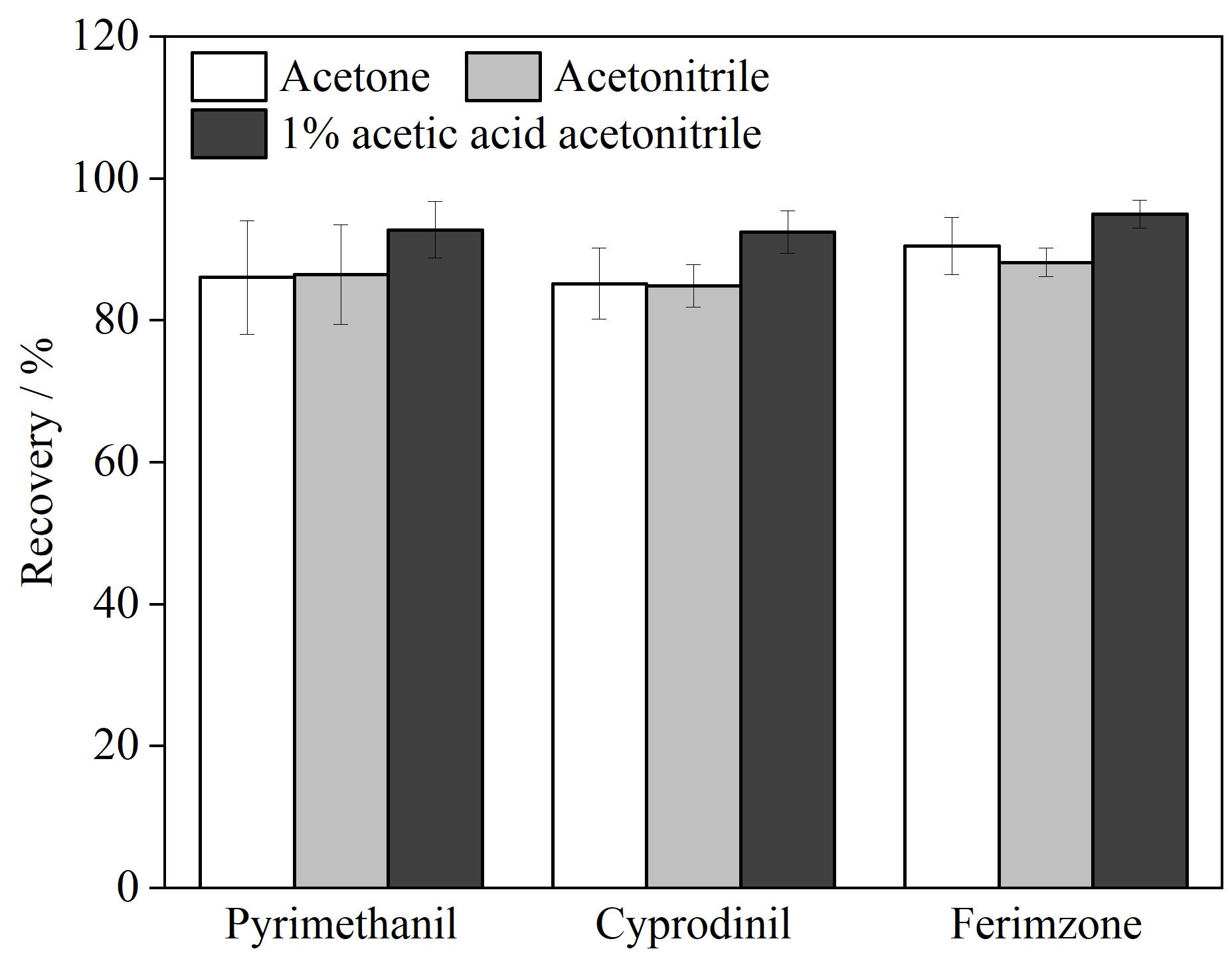
本科生实验课程是培养科研实践与创新能力的关键途径,传统实验教学“重流程、轻探究”的模式限制了学生科研思维与创新能力的发展,尤其在分析化学领域,GC-MS等技术教学多局限于验证性实验,难以满足需求。本文以“土壤中嘧啶类杀菌剂检测方法开发”为载体,构建了融合方法开发与问题探究的综合性实验教学方案,涵盖方法建立、技术优化、数据分析、拓展验证4个环节,采用小组合作与个人展示相结合的教学方式,引导学生优化QuEChERS-GC-MS相关参数,鼓励自主发现并解决问题。实验优化结果:1%乙酸乙腈溶液(20 mL)为最优提取溶剂;500 mg PSA+500 mg C18+500 mg GCB+1.2 g MgSO4为最佳净化组合;3种杀菌剂线性范围0.05~2.0 mg/L,相关系数≥0.995,检出限≤0.05 mg/kg,定量限≤0.167 mg/kg,适用于痕量检测。教学实践表明,该方案提升了学生的学习自主性与课堂互动,改善了实验报告质量,为后续科研实验奠定了基础,对高校相关专业实验教学改革具有重要推广价值。

关键词: 科研能力培养, 实验教学改革, 农药残留检测, QuEChERS, 气相色谱-质谱

Abstract:

Undergraduate experimental courses are a key way to cultivate students’ scientific research practice and innovation abilities. The traditional experimental teaching mode of “emphasizing process and neglecting inquiry” limits the development of students’ scientific research thinking and innovation ability. Especially in the field of analytical chemistry, technical teaching involving techniques such as GC-MS is limited to confirmatory experiments, which is difficult to meet practical needs. In this paper, a comprehensive experimental teaching scheme integrating method development and problem exploration is constructed based on the development of detection methods for pyrimidine fungicides in soil. It covers four links: method establishment, technology optimization, data analysis and extended verification. The teaching method of group cooperation and personal display is adopted to guide students to optimize the relevant parameters of QuEChERS-GC-MS method and encourage them to independently discover and solve problems independently. The results showed that 1% acetic acid acetonitrile (20 mL) was the optimal extraction solvent; 500 mg PSA+500 mg C18+500 mg GCB+1.2 g MgSO4 was the best purification combination; the linear range of the three fungicides was 0.05-2.0 mg/L, the correlation coefficient was ≥0.995, the LOD was≤0.05 mg/kg and the LOQ was ≤0.167 mg/kg, which was suitable for trace detection. Teaching practice shows that the scheme improves students’ learning initiative and classroom interaction, enhances the quality of experimental reports, lays a foundation for subsequent scientific research experiments, and has important promotion value for the experimental teaching reform of related majors in colleges and universities.

Key words: scientific research ability training, experimental teaching reform, detection of pesticide residues, QuEChERS, gas chromatography-mass spectrometry

中图分类号: