
Chinese Journal of Chromatography ›› 2026, Vol. 44 ›› Issue (7): 785-794.DOI: 10.3724/SP.J.1123.2025.10031
• Articles • Previous Articles Next Articles
WANG Xinyu1,2, WANG Ying1,2, XU Mengqian2,3, ZHOU Xia2,3, CHU Hongtao1,*( ), ZHANG Qinghe2,3, LI Xiuqin2,3,*()
Received:2025-12-14
Online:2026-07-08
Published:2026-07-09
Supported by:CLC Number:
WANG Xinyu, WANG Ying, XU Mengqian, ZHOU Xia, CHU Hongtao, ZHANG Qinghe, LI Xiuqin. Value assignment technology for 1,3-oleic-2-palmitic triglyceride purity reference material[J]. Chinese Journal of Chromatography, 2026, 44(7): 785-794.
Add to citation manager EndNote|Ris|BibTeX
URL: https://www.chrom-china.com/EN/10.3724/SP.J.1123.2025.10031
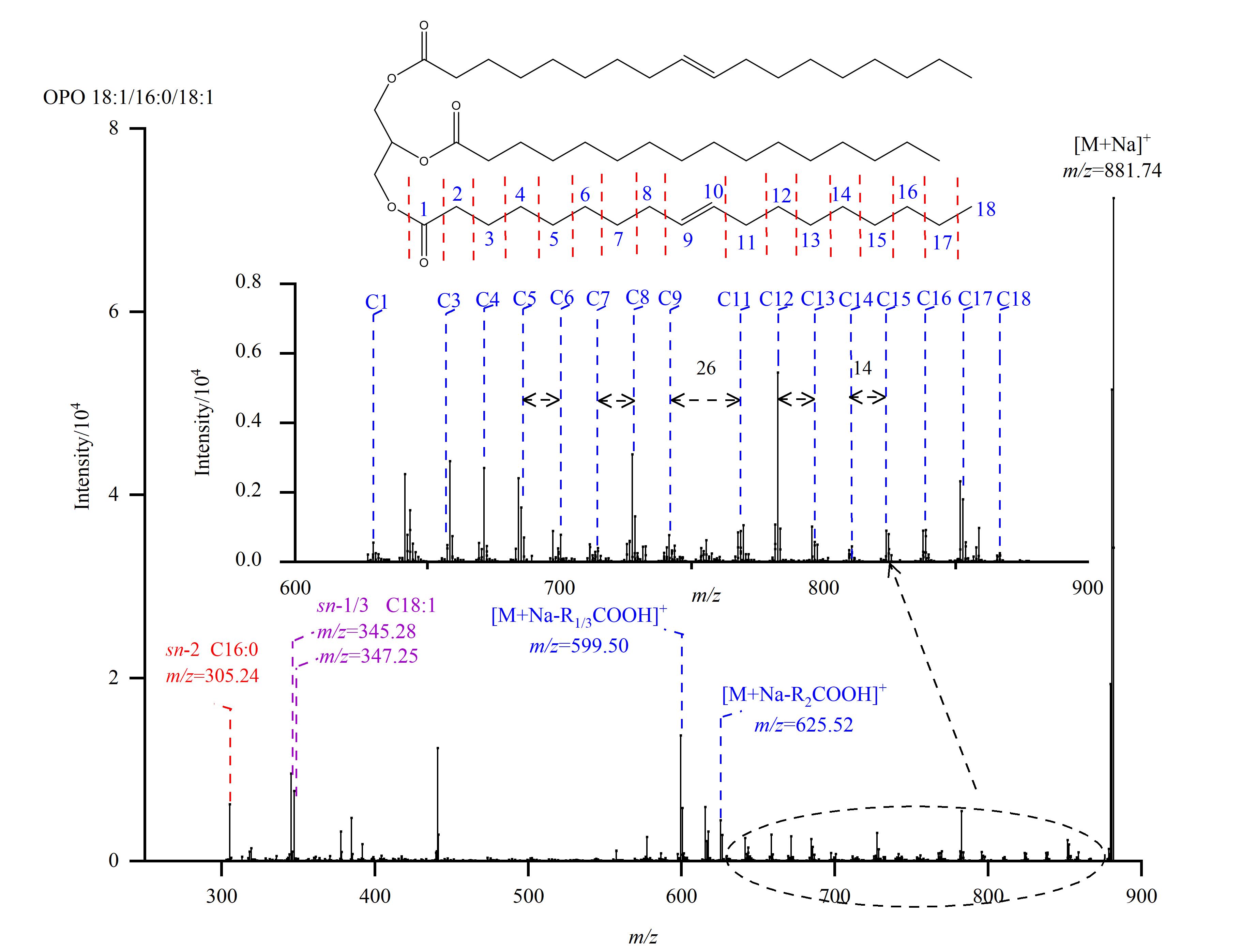
Fig. 1 Secondary mass spectrum of 1,3-dioleoyl-2-palmitoyl glycerol (OPO) standard substance candidate reference materials in electron-activated dissociation (EAD) cleavage mode
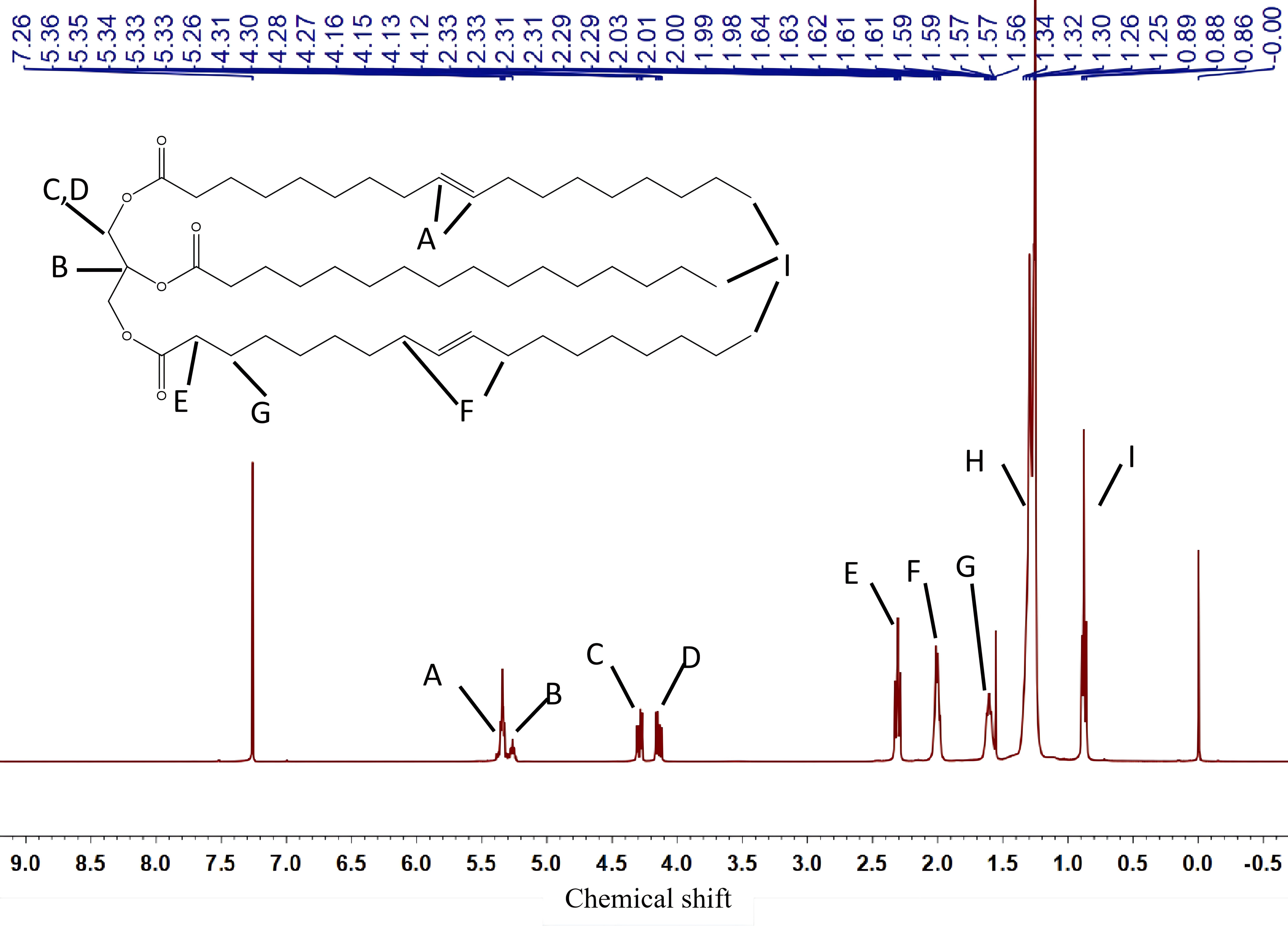
Fig. 2 NMR spectrum of OPO standard substance candidate reference materials in deuterated chloroform
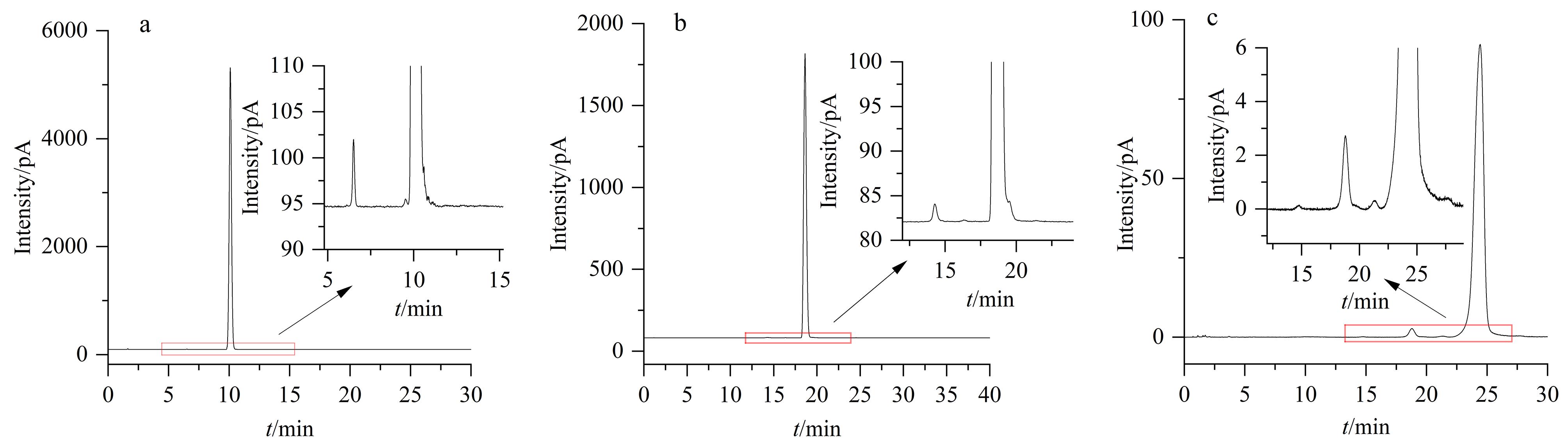
Fig. 3 Liquid chromatograms of OPO under different detectors and chromatographic columns with isocratic elutiona. HPLC-ELSD Ag+ column, 0.6% acetonitrile in n-hexane, 1.8 mL/min; b. HPLC-ELSD-BEH C18 column, acetonitrile-isopropanol-n-hexane (80∶10∶10, volume ratio), 0.3 mL/min; c. HPLC-CAD-Nova-Pak C8 column, H2O-acetonitrile-isopropanol (10∶45∶45, volume ratio), 1.0 mL/min.
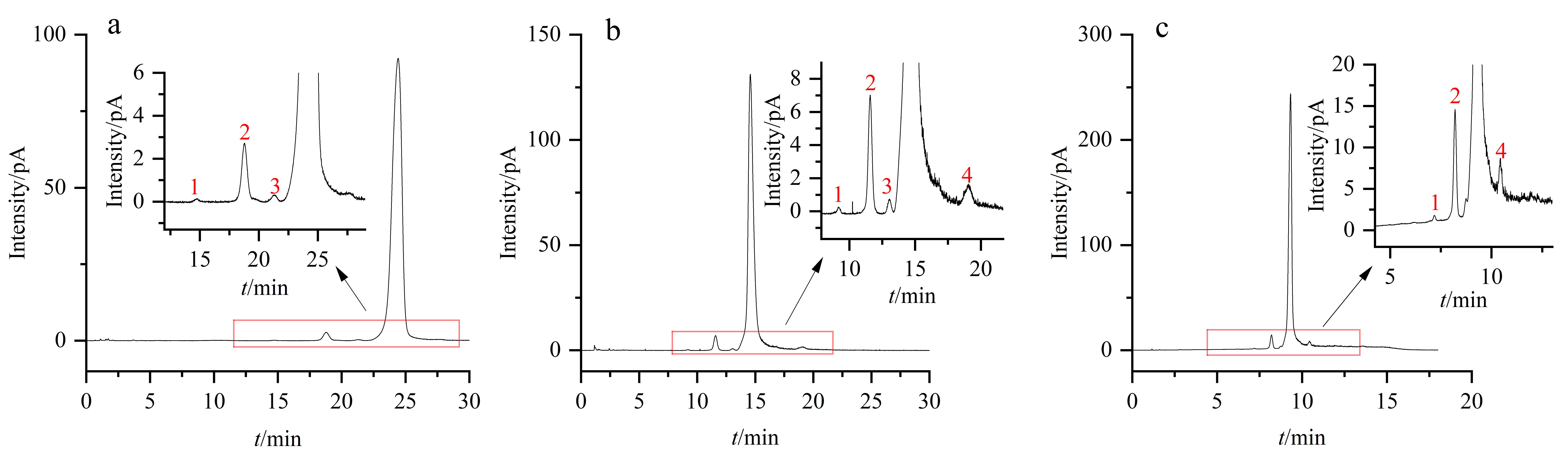
Fig. 4 Liquid chromatograms of OPO under different mobile phase conditionsCondition Ⅰ: isocratic elution, water-acetonitrile-isopropanol (10∶45∶45, volume ratio), 30 min; condition Ⅱ: isocratic elution, acetonitrile-isopropanol (90∶10, volume ratio), 30 min; condition Ⅲ: A=acetonitrile, B=isopropanol; 10%B initial, ramp to 30%B in 10 min (hold 3 min), drop to 10%B at 13-14 min, re-equilibrate 4 min.Peaks Nos. 1-4: impurities 1-4.
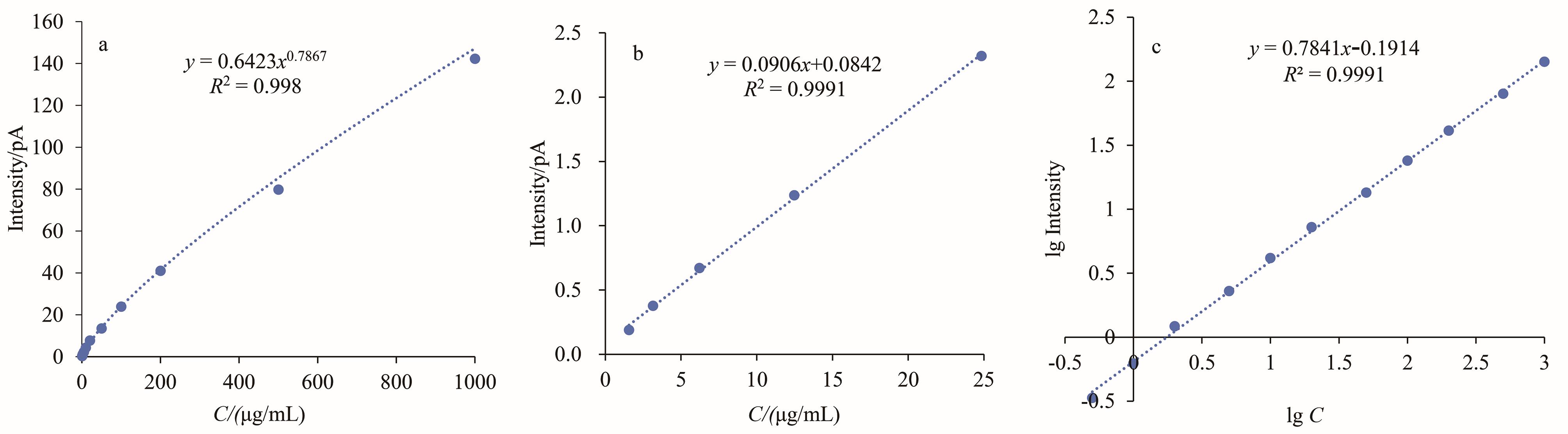
Fig. 5 Standard curves of OPOa. standard curve of OPO within the range of 0.001-1.0 mg/mL; b. standard curve of OPO within the range of 0.001-0.025 mg/mL; c. double logarithmic standard curve of OPO within the range of 0.001 0-1.0 mg/mL.
Sample No. | Sample content/(mg/mL) | Mass concentrations of impurities/(mg/mL) | Total impurity content/% | OPO content/% | ||||
|---|---|---|---|---|---|---|---|---|
| 1 | 2 | 3 | 4 | Total | ||||
| 1 | 1.9686 | 0.00034 | 0.0191 | 0.00035 | 0.0046 | 0.0244 | 1.24 | 98.76 |
| 2 | 2.0062 | 0.00034 | 0.0190 | 0.00039 | 0.0049 | 0.0246 | 1.23 | 98.77 |
| 3 | 2.0721 | 0.00038 | 0.0205 | 0.00046 | 0.0038 | 0.0251 | 1.21 | 98.79 |
| 4 | 1.9892 | 0.00040 | 0.0193 | 0.00043 | 0.0038 | 0.0239 | 1.20 | 98.80 |
| 5 | 2.0204 | 0.00033 | 0.0198 | 0.00043 | 0.0040 | 0.0246 | 1.22 | 98.78 |
| 6 | 1.9878 | 0.00043 | 0.0204 | 0.00045 | 0.0043 | 0.0256 | 1.29 | 98.71 |
Average Standard deviation (SD) | 0.0247 | 1.23 | 98.77 | |||||
| 0.0006 | 0.0003 | 0.0003 | ||||||
Table 1 Results of content determination of structurally related impurities in OPO samples
Sample No. | Sample content/(mg/mL) | Mass concentrations of impurities/(mg/mL) | Total impurity content/% | OPO content/% | ||||
|---|---|---|---|---|---|---|---|---|
| 1 | 2 | 3 | 4 | Total | ||||
| 1 | 1.9686 | 0.00034 | 0.0191 | 0.00035 | 0.0046 | 0.0244 | 1.24 | 98.76 |
| 2 | 2.0062 | 0.00034 | 0.0190 | 0.00039 | 0.0049 | 0.0246 | 1.23 | 98.77 |
| 3 | 2.0721 | 0.00038 | 0.0205 | 0.00046 | 0.0038 | 0.0251 | 1.21 | 98.79 |
| 4 | 1.9892 | 0.00040 | 0.0193 | 0.00043 | 0.0038 | 0.0239 | 1.20 | 98.80 |
| 5 | 2.0204 | 0.00033 | 0.0198 | 0.00043 | 0.0040 | 0.0246 | 1.22 | 98.78 |
| 6 | 1.9878 | 0.00043 | 0.0204 | 0.00045 | 0.0043 | 0.0256 | 1.29 | 98.71 |
Average Standard deviation (SD) | 0.0247 | 1.23 | 98.77 | |||||
| 0.0006 | 0.0003 | 0.0003 | ||||||
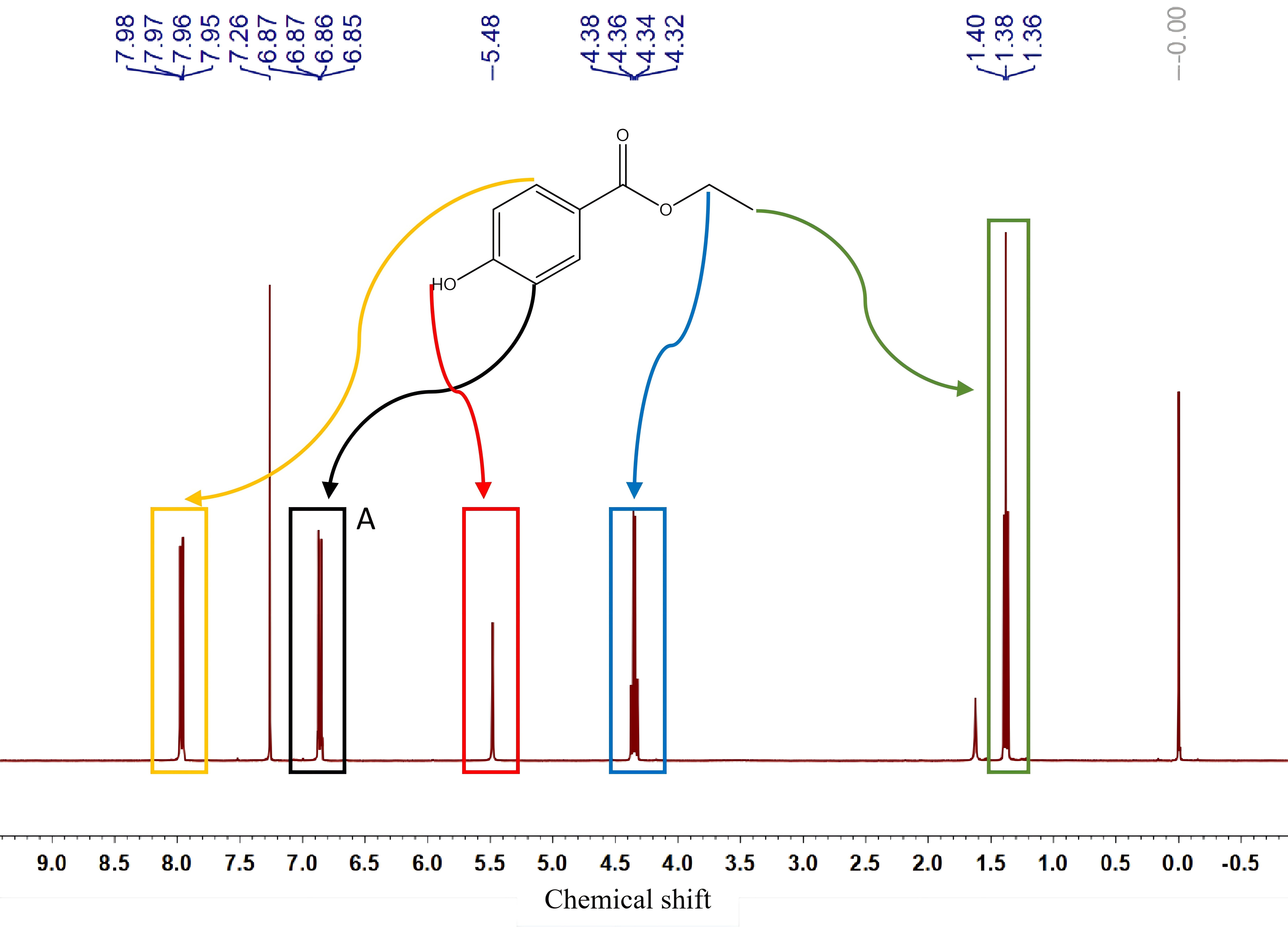
Fig. 6 NMR spectrum of ethyl nipagin in deuterated chloroform
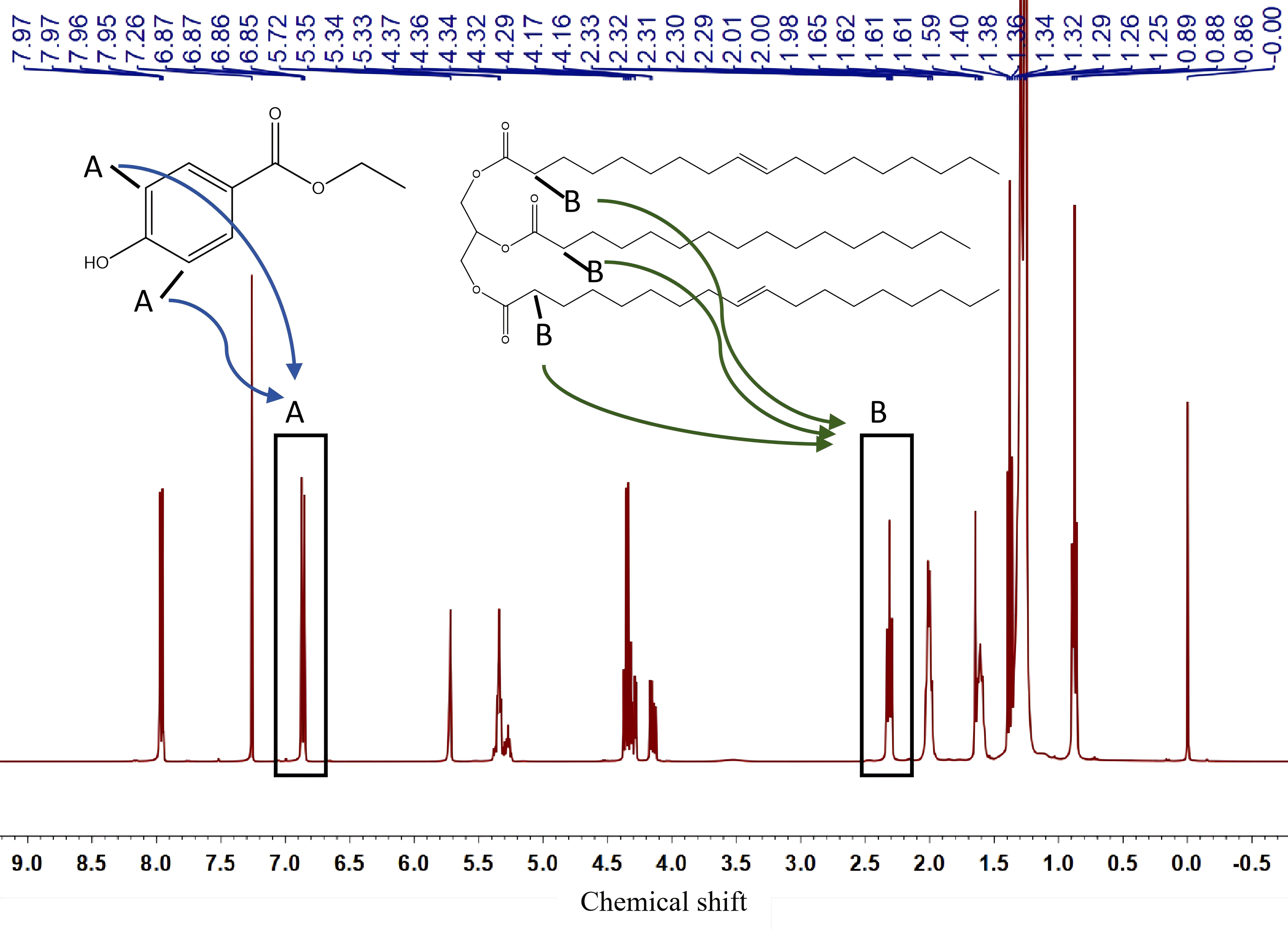
Fig. 7 NMR spectrum of the mixture of ethyl nipagin and OPO in deuterated chloroform
| Sample | ||||||
|---|---|---|---|---|---|---|
| 1 | 1.4587 | 0.3333 | 5.175 | 0.3956 | 99.02 | |
| 2 | 1.4367 | 0.3333 | 5.175 | 0.4004 | 98.71 | |
| 3 | 1.4266 | 0.3333 | 5.175 | 0.4027 | 98.58 | |
| 4 | 1.4327 | 0.3333 | 5.175 | 0.4021 | 98.86 | |
| 5 | 1.4079 | 0.3333 | 5.175 | 0.4083 | 98.64 | |
| 6 | 1.4313 | 0.3333 | 5.175 | 0.4035 | 99.10 | |
| Average | 98.82 | |||||
| SD | 0.21 | |||||
Table 2 Results of NMR determination of the mass fraction of the purity standards of OPO
| Sample | ||||||
|---|---|---|---|---|---|---|
| 1 | 1.4587 | 0.3333 | 5.175 | 0.3956 | 99.02 | |
| 2 | 1.4367 | 0.3333 | 5.175 | 0.4004 | 98.71 | |
| 3 | 1.4266 | 0.3333 | 5.175 | 0.4027 | 98.58 | |
| 4 | 1.4327 | 0.3333 | 5.175 | 0.4021 | 98.86 | |
| 5 | 1.4079 | 0.3333 | 5.175 | 0.4083 | 98.64 | |
| 6 | 1.4313 | 0.3333 | 5.175 | 0.4035 | 99.10 | |
| Average | 98.82 | |||||
| SD | 0.21 | |||||
|
| [1] | GU Yongsheng, ZUO Limin, GAO Xiaoli, SHAN Guangzhi, ZHAO Jun. Simultaneous determination of glycerol, acetic acid, and sodium bisulfite in compound amino acid injection (14AA) using ion exclusion chromatography [J]. Chinese Journal of Chromatography, 2026, 44(7): 806-811. |
| [2] | LU Zhuliangzi, DENG Fenfang, BAI Zhijun, PENG Rongfei, TAN Lei. Determination of N-(1,3-dimethylbutyl)-N′-phenyl-p-phenylenediamine-quinone in urine and dust by ultra performance liquid chromatography-tandem mass spectrometry [J]. Chinese Journal of Chromatography, 2025, 43(9): 1025-1033. |
| [3] | LIU Yu, XIE Jihui, ZHANG Pingping, ZHOU Di, ZHAO Weike, ZHANG Juzhou. Determination of vitamin D and 25-hydroxyvitamin D in animal-derived foods by derivatization-ultra performance liquid chromatography-tandem mass spectrometry [J]. Chinese Journal of Chromatography, 2025, 43(3): 228-236. |
| [4] | LUO Pan, XUE Jieying, LIU Zheyi, WANG Fangjun. Vacuum ultraviolet laser dissociation and proteomic analysis of halogenated peptides [J]. Chinese Journal of Chromatography, 2025, 43(2): 131-138. |
| [5] | LIU Sijia, ZHAO Furong, ZHANG Yalian, SUN Xiaoyu, ZHANG Mengmeng, HOU Kun, CAO Yunfeng. Determination of three metabolites of thromboxane A2 and 8-iso-prostaglandin F2α in urine by ultra performance liquid chromatography-tandem mass spectrometry [J]. Chinese Journal of Chromatography, 2025, 43(2): 148-154. |
| [6] | SUN Qian, CHEN Chunxiao. Simultaneous determination of vitamins K1 and K2 in cosmetics by QuEChERS-high performance liquid chromatography and verification by high performance liquid chromatography-tandem mass spectrometry [J]. Chinese Journal of Chromatography, 2025, 43(12): 1389-1396. |
| [7] | JIN Xinyu, CHEN Leyuan, LIU Yanna, XIE Wenjing, PENG Hanyong. Construction of a 17β-estradiol sensor based on a magnetic graphene oxide/aptamer separating material [J]. Chinese Journal of Chromatography, 2025, 43(1): 87-95. |
| [8] | ZHOU Ran, WANG Fei, LIN Jiarui, JIA Meng, WANG Yan. Determination of multiple residual solvents in ibandronate sodium using headspace-gas chromatography [J]. Chinese Journal of Chromatography, 2024, 42(5): 481-486. |
| [9] | LI Yanan, LIU Xiaoyan, WANG Yan, LIU Zhen, YE Mingliang, WANG Hailin. Deciphering cellular processes responding to lethality of 17β-estradiol by quantitative phosphoproteomics [J]. Chinese Journal of Chromatography, 2024, 42(4): 333-344. |
| [10] | CAI Cuiling, LI Ju, XI Jing, HOU Yingye, ZENG Guangfeng, XIE Jianjun, WU Shuyue, WANG Lu. Determination of three methylimidazole compounds in cosmetics by high performance liquid chromatography-tandem mass spectrometry [J]. Chinese Journal of Chromatography, 2024, 42(11): 1052-1058. |
| [11] | YUAN Xinyi, LI Liangxi, ZHAO Qin, ZHANG Xiaoying, LI Qian, ZHAO Xinfeng, JI Xu. Establishment and evaluation of haloalkane dehalogenase tagged α1A-adrenergic receptor chromatography [J]. Chinese Journal of Chromatography, 2024, 42(10): 935-942. |
| [12] | ZHANG Zhenyong. Chiral capillary gas chromatography for the separation of the enantiomers of 4-chloromethyl-2,2-dimethyl-1,3-dioxolane [J]. Chinese Journal of Chromatography, 2023, 41(12): 1135-1140. |
| [13] | LI Xiaohan, LU Yingying, DONG Yongzhen, JIANG Feng, FAN Zhiyong, PAN Hui, LIU Mingjun, CHEN Yiping. Separation and enrichment of trace aflatoxin B1 in grains by magnetic nanomaterials based on SiO2@Fe3O4 [J]. Chinese Journal of Chromatography, 2022, 40(8): 694-703. |
| [14] | MA Yao, HU Yangyang, ZHENG Liting, CHEN Li, ZHAO Xinying, QU Feng. Annual review of capillary electrophoresis technology in 2021 [J]. Chinese Journal of Chromatography, 2022, 40(7): 591-599. |
| [15] | GUO Zehua, LUO Fang, LI Si, FAN Liuyin, WU Yixin, CAO Chengxi. Speculation of hemoglobin A3 peak position in clinical cation exchange high performance liquid chromatogram of the diabetic blood sample with microarray isoelectric focusing [J]. Chinese Journal of Chromatography, 2021, 39(11): 1273-1278. |
| Viewed | ||||||
|
Full text |
|
|||||
|
Abstract |
|
|||||


