色谱 ›› 2026, Vol. 44 ›› Issue (8): 924-934.DOI: 10.3724/SP.J.1123.2025.12018

• 研究论文 • 上一篇    下一篇

肝微粒体代谢产物导向的前胡角型吡喃香豆素分离及代谢产物结构鉴定

杨阳1, 刘明昊1, 金慧1, 孙润泽1, 龚兴成1,*(), 刘文静2,*(), 宋月林1   

  1. 1.北京中医药大学,北京 102401
    2.河南中医药大学药学院,河南 郑州 450046
  • 收稿日期:2025-12-27 出版日期:2026-08-08 发布日期:2026-07-30
  • 通讯作者: *E-mail:kkgxc1996@163.com(龚兴成); E-mail:liuwj107@163.com(刘文静).
  • 基金资助:
    河南省自然科学基金(252300421619)

Isolation of angular-type pyranocoumarins from Peucedani Radix guided by liver microsomal metabolites and structural identification of the metabolites

YANG Yang1, LIU Minghao1, JIN Hui1, SUN Runze1, GONG Xingcheng1,*(), LIU Wenjing2,*(), SONG Yuelin1   

  1. 1.Beijing University of Chinese Medicine,Beijing 102401,China
    2.Henan University of Chinese Medicine,Zhengzhou 450046,China
  • Received:2025-12-27 Online:2026-08-08 Published:2026-07-30
  • Supported by:
    Henan Natural Science Foundation(252300421619)

摘要:

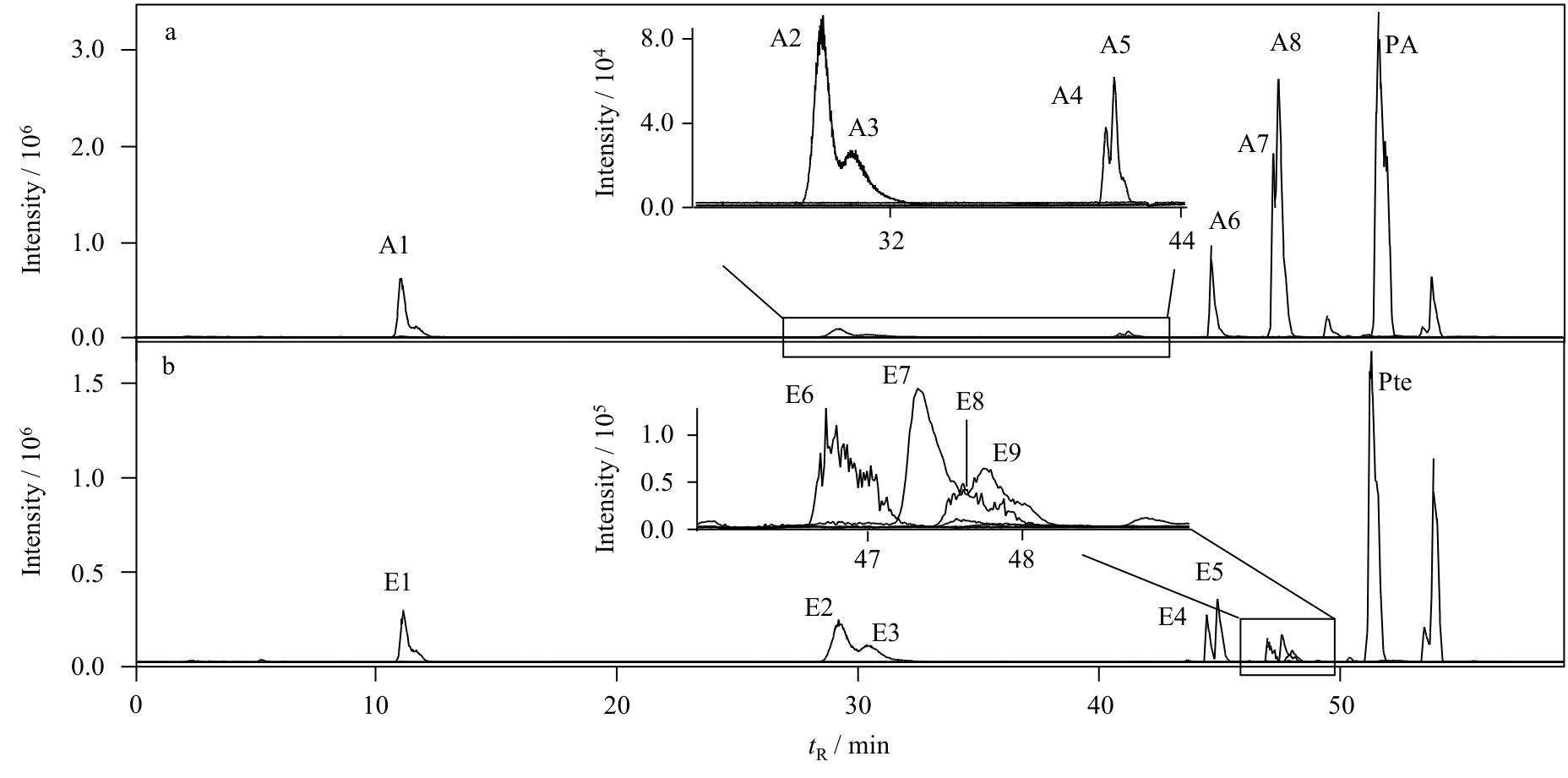
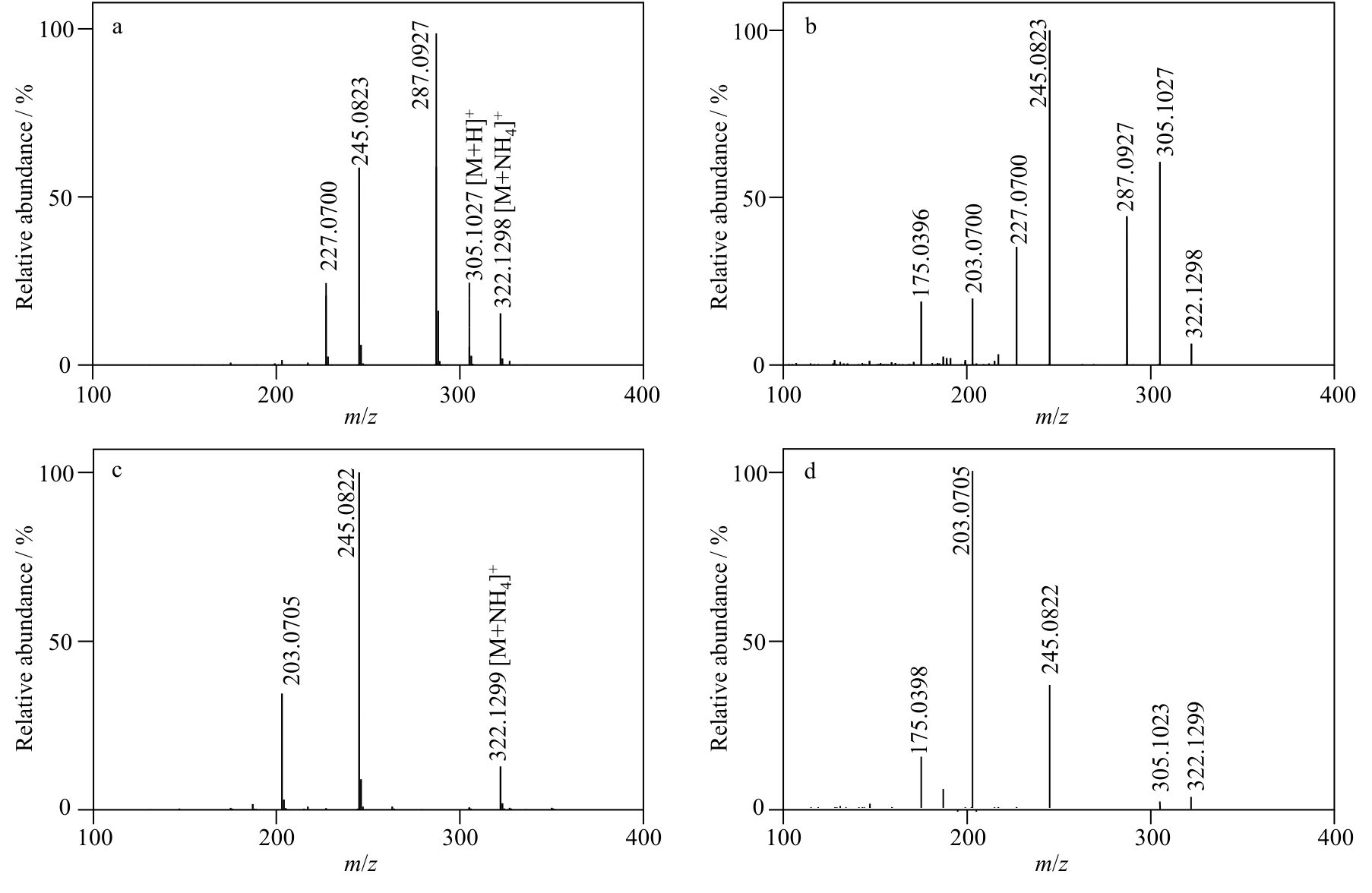
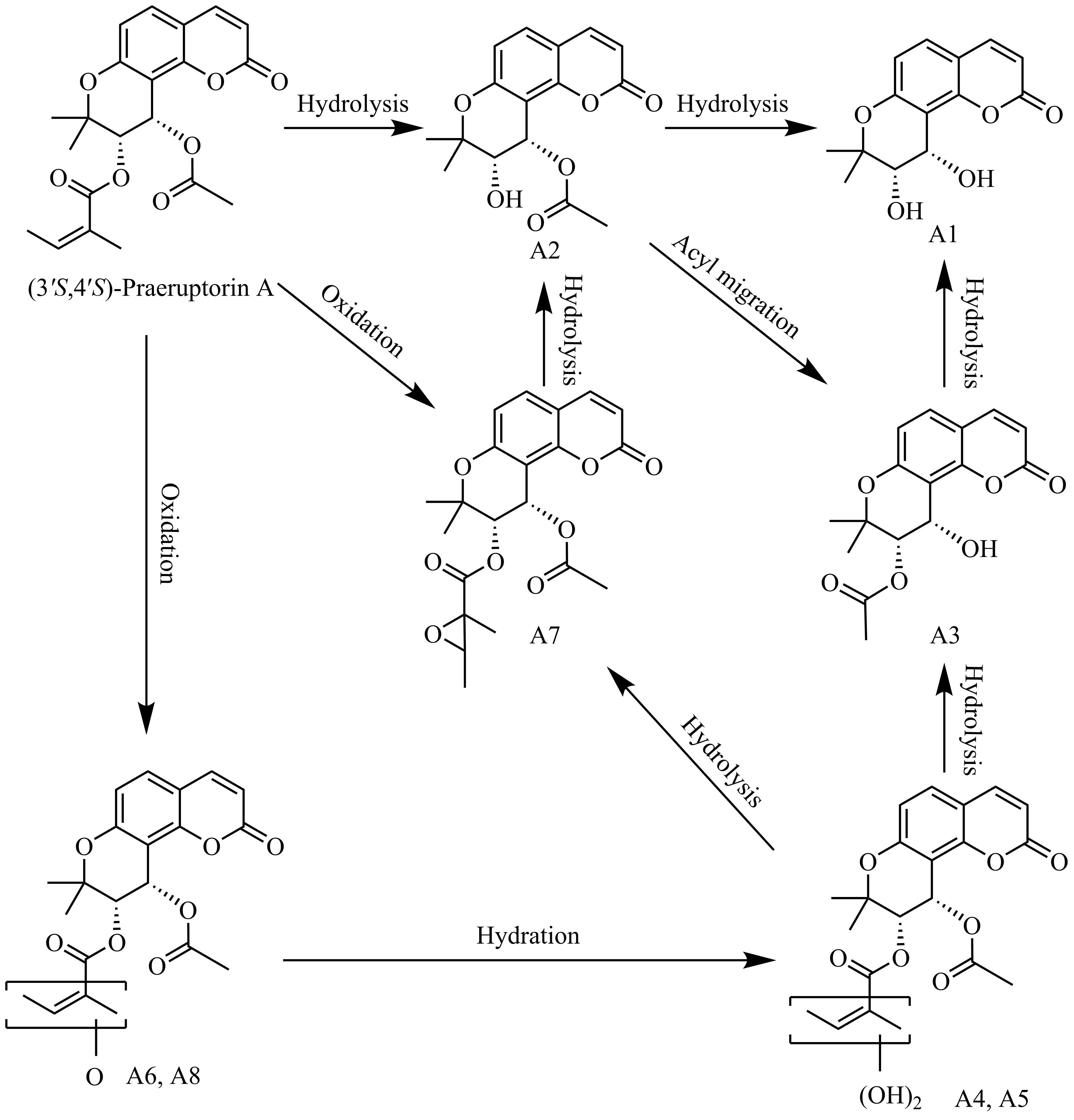
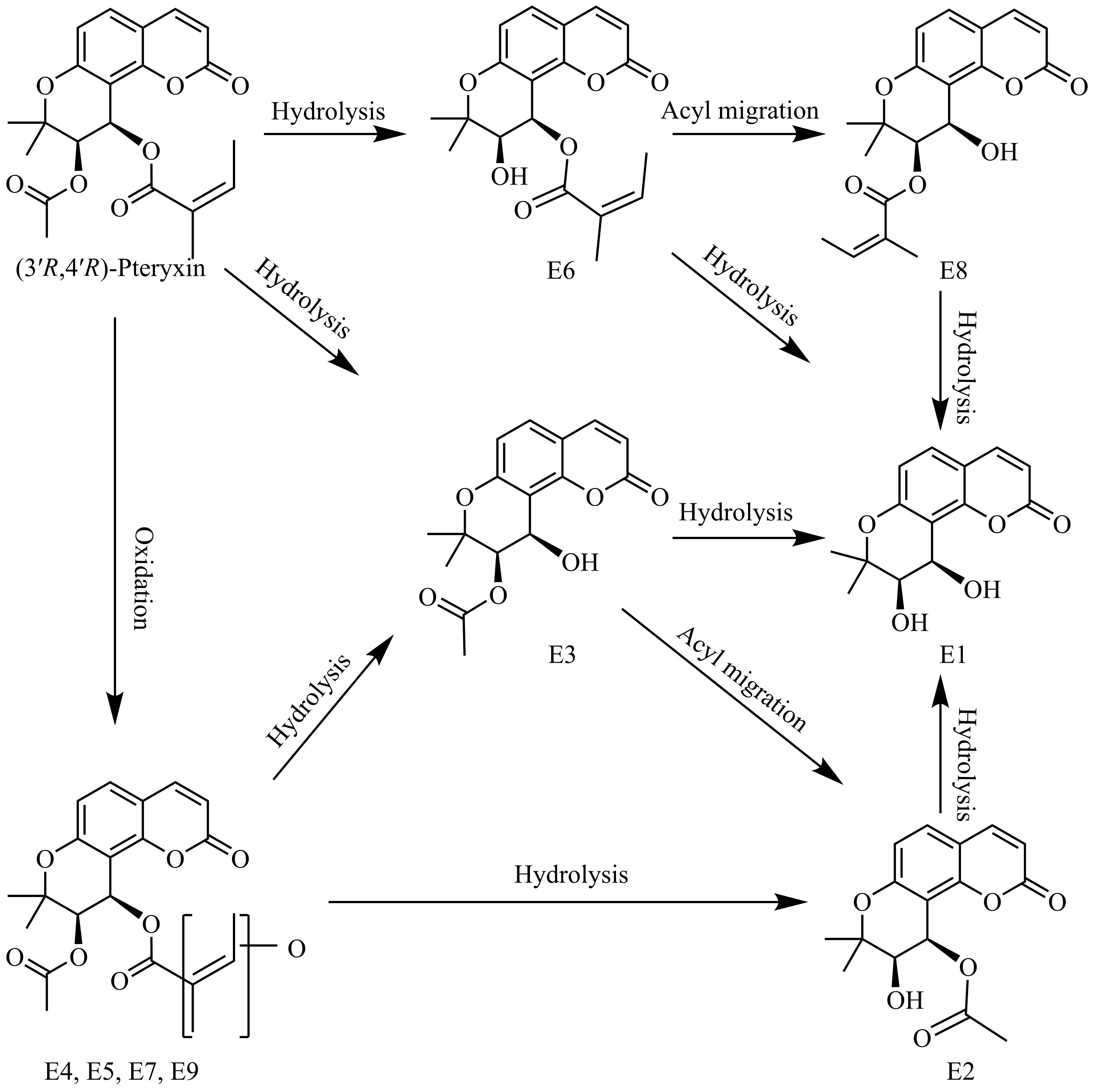
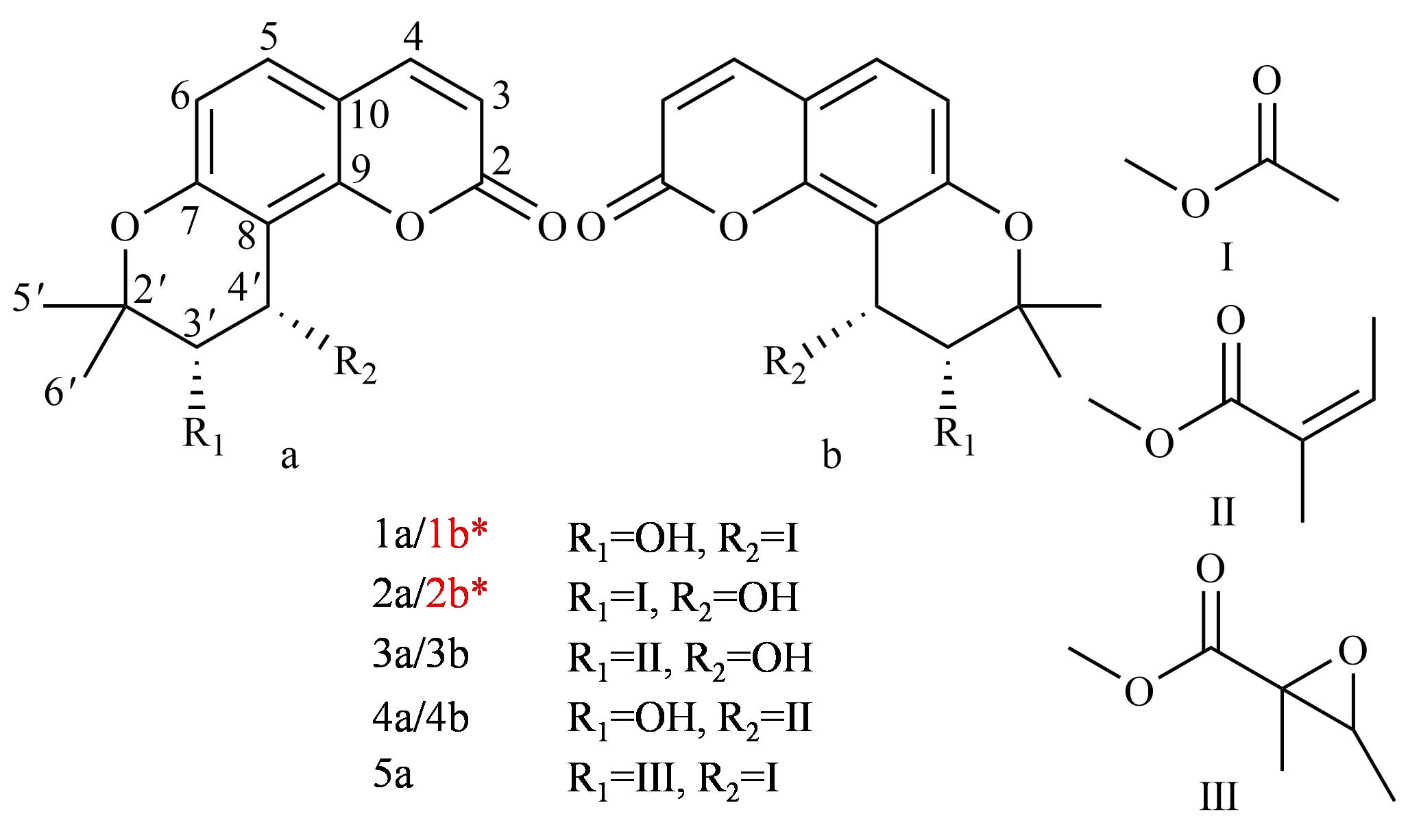
鉴定活性成分代谢产物的结构对于阐明中药体内药效物质至关重要。然而,代谢产物对照品难以获得,仅凭借常规手段难以实现代谢产物结构的准确鉴定。本研究建立了以活性成分肝微粒体代谢产物的保留时间和质谱信息为导向的分离策略,即通过液相色谱-质谱联用技术(LC-MS)追踪,从原药材中定向分离并鉴定目标化合物,将其作为对照品实现肝微粒体代谢产物结构的准确鉴定,进而解析代谢路径。前期研究表明前胡的主要活性成分角型吡喃香豆素(APs)在体内易发生水解反应,本研究选取一对APs同分异构体化合物(+)-白花前胡甲素((+)-PA)与(+)-北美芹素((+)-Pte)为底物,分别与人肝微粒体(HLMs)进行体外孵育,利用LC-MS分别检测到8个(包括3个水解产物和5个氧化产物)和9个(包括5个水解产物和4个氧化产物)代谢产物。基于上述策略,从前胡提取物中定向分离制备得到9个APs,包含4对对映体,分别为(3′S,4′S)-和(3′R,4′R)-前胡香豆素C(1a/b)、(3′S,4′S)-和(3′R,4′R)-前胡香豆素B(2a/b)、(3′S,4′S)-和(3′R,4′R)-3′-当归酰氧基-4′-羟基-3′,4′-二氢邪蒿内酯(3a/b)、(3′S,4′S)-和(3′R,4′R)-3′-羟基-4′-当归酰氧基-3′,4′-二氢邪蒿内酯(4a/b)和(3′S,4′S)-isoepoxypteryxin(5)。其中,化合物1b、2b为已知平面结构的新构型。通过与各化学单体进行比对,成功实现了(+)-PA(4个)和(+)-Pte(5个)主要代谢产物的准确鉴定,更揭示了水解、氧化反应及酰基迁移为APs的主要代谢途径。综上,该策略不仅实现了前胡APs的高效分离及(+)-PA和(+)-Pte系列代谢产物结构的准确鉴定,更阐明了APs的主要代谢途径,为中药代谢产物结构的准确鉴定和对照品的获取提供了有效方法。

关键词: 液相色谱-质谱联用技术, 导向分离, 角型吡喃香豆素, 代谢产物, 结构鉴定

Abstract:

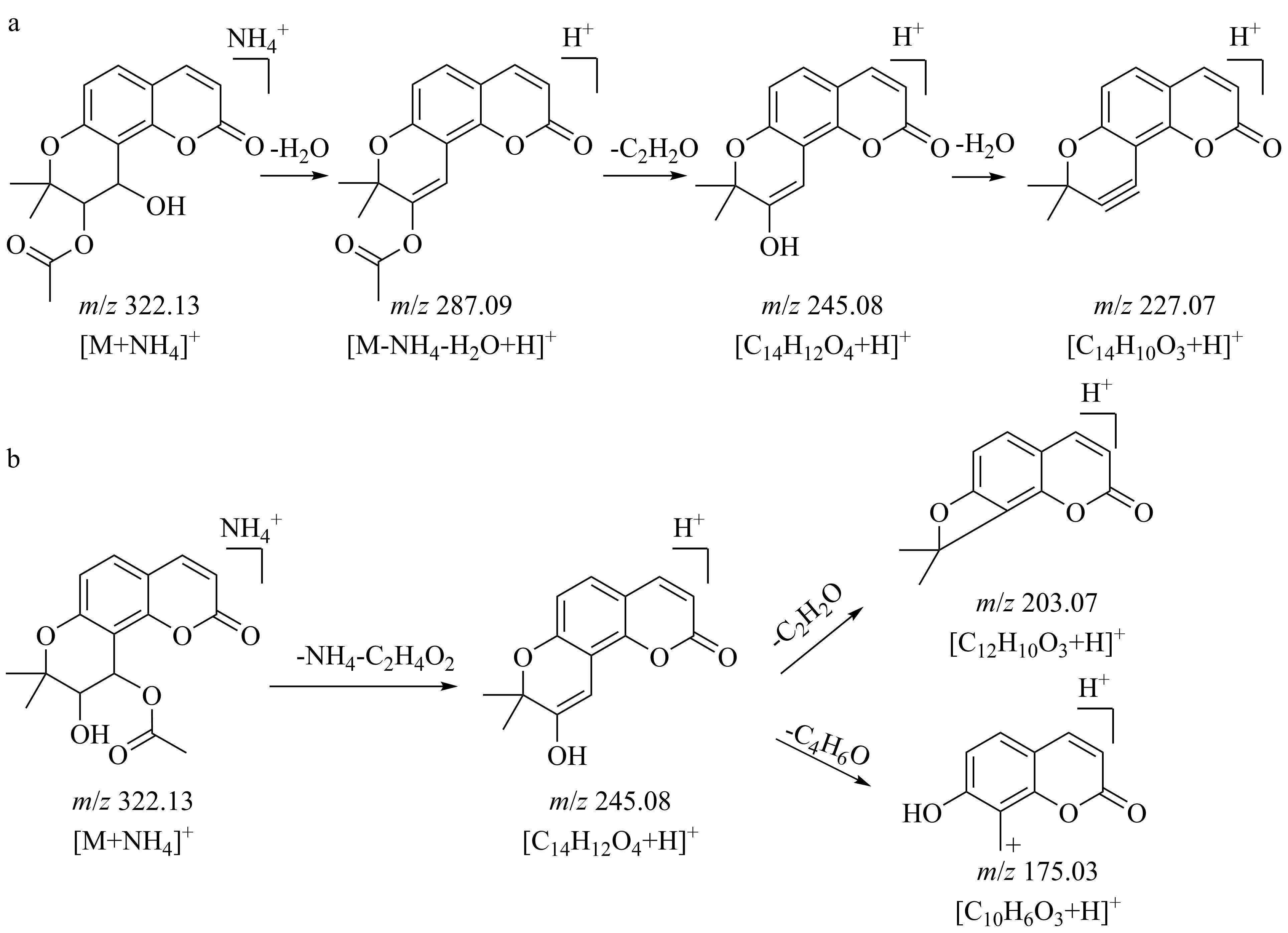
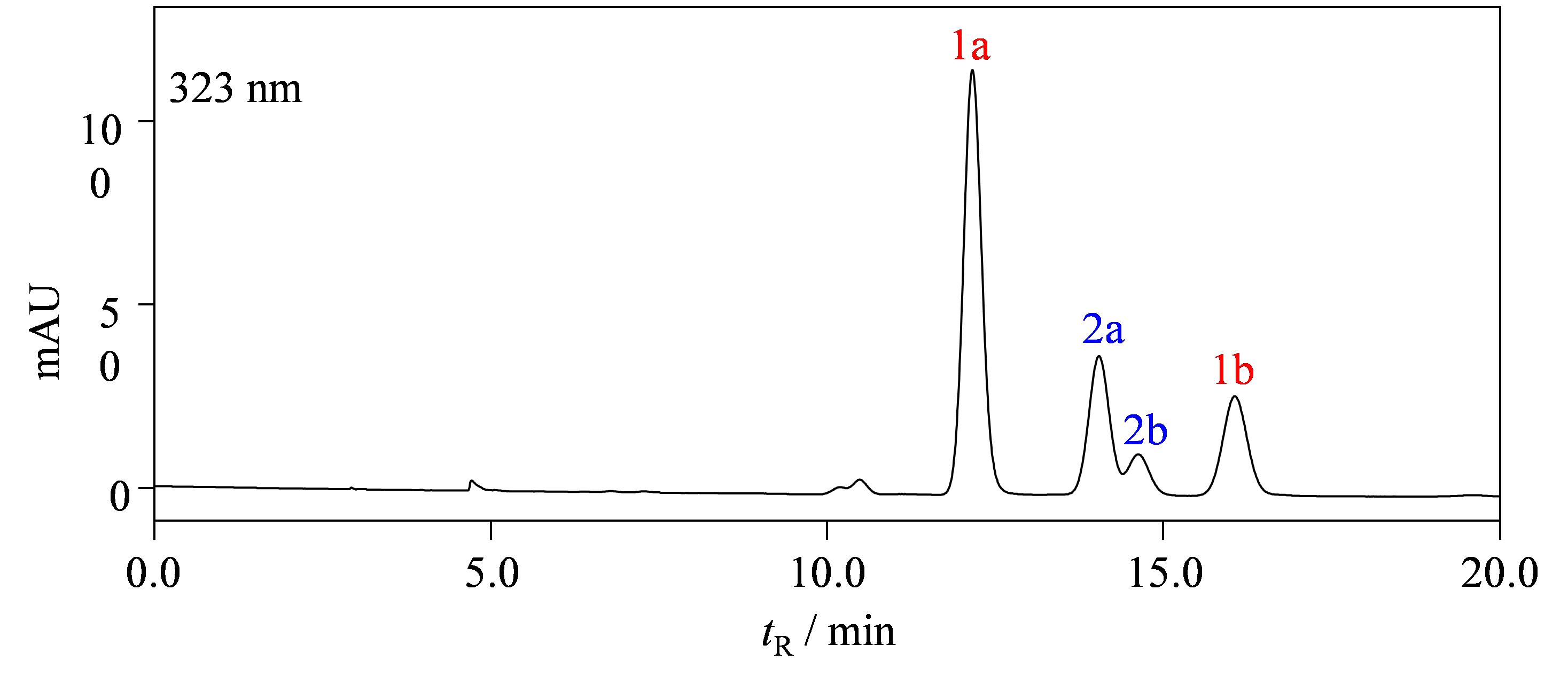
Identifying the structures of metabolites is of great importance towards elucidating the therapeutic material basis of traditional Chinese medicines (TCMs). However, current studies lack sufficient reference standards, hindering the structural identification of metabolites. This study establishes a strategy guided by the retention times and mass spectrometric information of microsomal metabolites. By coupling liquid chromatography-mass spectrometry (LC-MS) to trace and isolate target compounds from the raw materials, these compounds served as reference standards to confirm the structures of microsomal metabolites, thereby elucidating the metabolic pathways. Peucedani Radix (PR, Chinese name: Qianhu) consists of the dried roots of Peucedanum praeruptorum Dunn and contains abundant angular-type pyranocoumarins (APs), which serve as primary chemical constituents and effective compound clusters as well. From the structural standpoint, C-3′ and C-4′ sites of APs are frequently substituted by acetoxyl, angeloxyl, isovaleroxyl and some other moieties, leading to the extensive occurrences of regio-isomers, which not only possess comparable structures but also similar chemical properties. Previous studies have preliminarily unveiled that APs primarily undergo hydrolysis and acyl migration in vivo, and these hydrolytic metabolites can be observed in both in vitro metabolism and the raw materials. In this study, a pair of regio-isomers from PR, i.e., (+)-(3′S,4′S)-praeruptorin A ((+)-PA) and (+)-(3′R,4′R)-pteryxin ((+)-Pte), was incubated separately with human liver microsomes (HLMs) in the presence of necessary cofactors to simulate the metabolic pathways occurring in vivo. After carefully processing LC-MS datasets and applying the well-defined mass fragmentation rules of APs, eight metabolites were detected and putatively identified for (+)-PA, including three hydrolysis products together with five oxidation products, whereas nine metabolites were observed and putatively identified for (+)-Pte, encompassing five hydrolysis products and four oxidation products. Noteworthily, phase I metabolism of (+)-Pte in HLMs was profiled for the first time. Various column chromatographic tools, such as silica gel column chromatography, C18 reversed-phase chromatography (ODS), Sephadex LH-20 and semi-preparative high performance liquid chromatography equipped with achiral or chiral columns, were employed to isolate compounds-of-interest from PR extracts under the guidance of LC-MS through taking both retention time and MS/MS information into account. A total of nine AP compounds were successfully purified from PR extracts, and notably, four pairs of AP enantiomers were involved. By matching 1H- and 13C-NMR spectral information with the data archived in the literature, these compounds were identified as (3′S,4′S)-qianhucoumarin C (1a), (3′R,4′R)-qianhucoumarin C (1b), (3′S,4′S)-qianhucoumarin B (2a), (3′R,4′R)-qianhucoumarin B (2b), (3′S,4′S)-3′-angeloylkhellactone (3a), (3′R,4′R)-3′-angeloylkhellactone (3b), (3′S,4′S)-4′-angeloylkhellactone (4a), (3′R,4′R)-4′-angeloylkhellactone (4b) and (3′S,4′S)-isoepoxypteryxin (5). Thereof, compounds 1b and 2b represent new configurational structures of known planar structures. The study summarized mass fragmentation rules for APs and achieved accurate identification of two pairs of regio-isomers: qianhucoumarin B and C, and 3′- and 4′-angeloylkhellactone. Thereafter, in vitro metabolites of (+)-PA and (+)-Pte were successfully identified by comparing the retention times and MS/MS information with authentic compounds, including cis-khellactone, qianhucoumarin B, qianhucoumarin C, 3′-angeloylkhellactone, 4′-angeloylkhellactone and (3′S,4′S)-isoepoxypteryxin. Regarding the three hydrolytic metabolites, i.e.cis-khellactone, qianhucoumarin B and qianhucoumarin C, they were shared by (+)-PA and (+)-Pte. Hydrolysis and oxidation reactions, as well as acyl migration, served as the primary metabolic pathways for APs in HLMs. In this study, (+)-PA and (+)-Pte were selected as representatives to demonstrate that it is feasible to obtain their metabolites from PR extracts through LC-MS-guided isolation and purification. After structural identification through analyzing 1H- and 13C-NMR spectral information, these pure compounds were eligible authentic compounds enabling confirmative structural identification of metabolites, providing pronounced insights into the primary metabolic pathways of APs and offering an effective approach for the accurate identification of metabolite structures through isolating authentic compounds that are available in the original TCM. However, due to differences in metabolism between in vitro and in vivo, the study failed to construct a definitive structure-activity relationship for the metabolites. Future studies should be devoted to validating these findings through performing in vivo investigations.

Key words: liquid chromatography-mass spectrometry (LC-MS), guided separation, angular-type pyranocoumarins, metabolites, structural identification

中图分类号: