色谱 ›› 2026, Vol. 44 ›› Issue (10): 1203-1211.DOI: 10.3724/SP.J.1123.2026.01035

• 研究论文 • 上一篇    下一篇

异孔共价有机框架气相色谱固定相的制备与应用

李志泉, 饶梓睿, 钱海龙*(), 严秀平   

  1. 江南大学食品学院分析食品安全学研究所,江苏 无锡 214122
  • 收稿日期:2026-01-30 出版日期:2026-10-08 发布日期:2026-10-13
  • 通讯作者: *Tel:0510-85916732,E-mail:hlqian@jiangnan.edu.cn.
  • 基金资助:
    国家自然科学基金(22422406);国家自然科学基金(22376082);国家自然科学基金(22504045)

Preparation and application of heteroporous covalent organic frameworks as gas chromatography stationary phases

LI Zhiquan, RAO Zirui, QIAN Hailong*(), YAN Xiuping   

  1. Institute of Analytical Food Safety,School of Food Science and Technology,Jiangnan University,Wuxi 214122,China
  • Received:2026-01-30 Online:2026-10-08 Published:2026-10-13
  • Supported by:
    National Natural Science Foundation of China(22422406);National Natural Science Foundation of China(22376082);National Natural Science Foundation of China(22504045)

摘要:

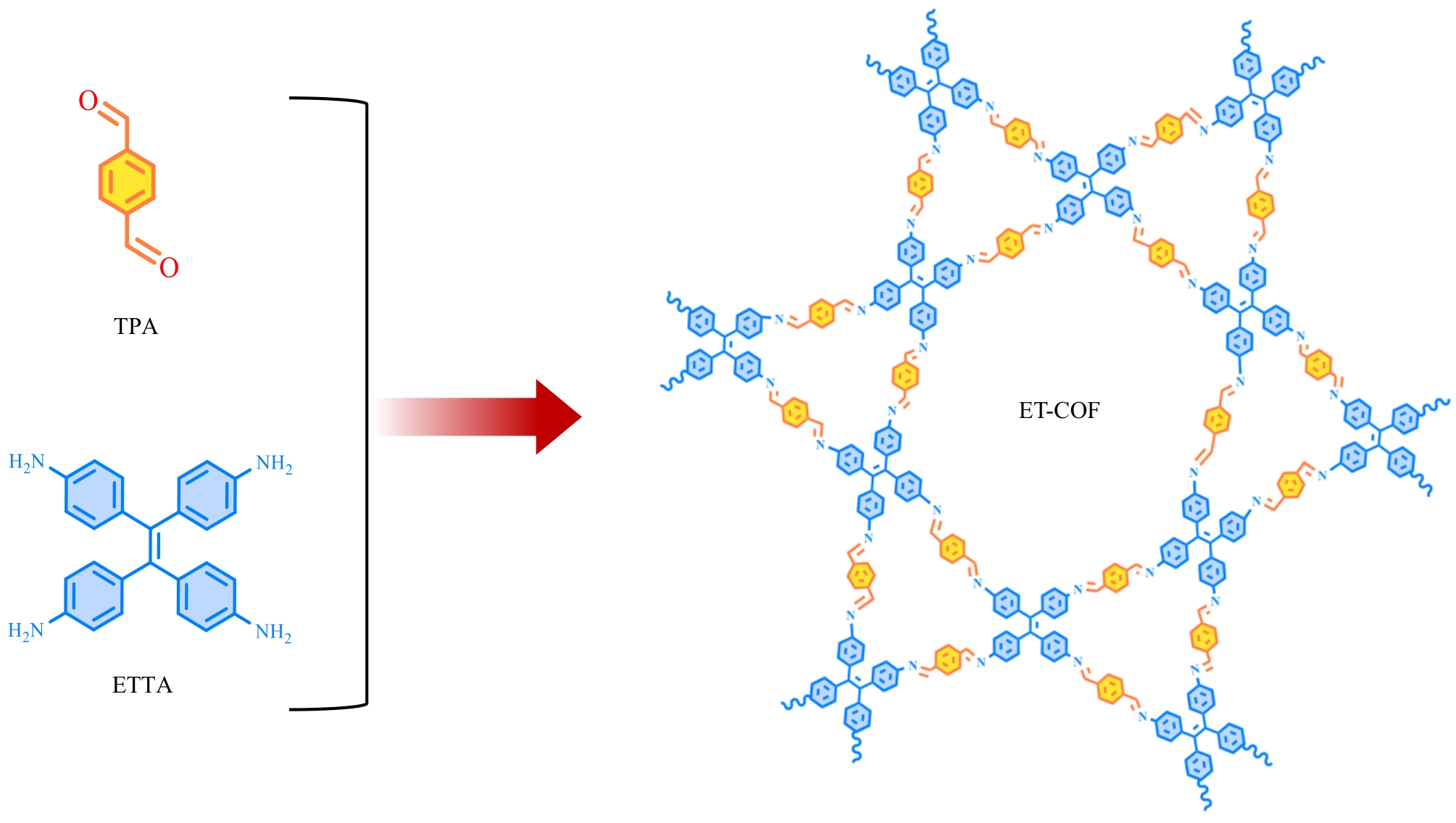
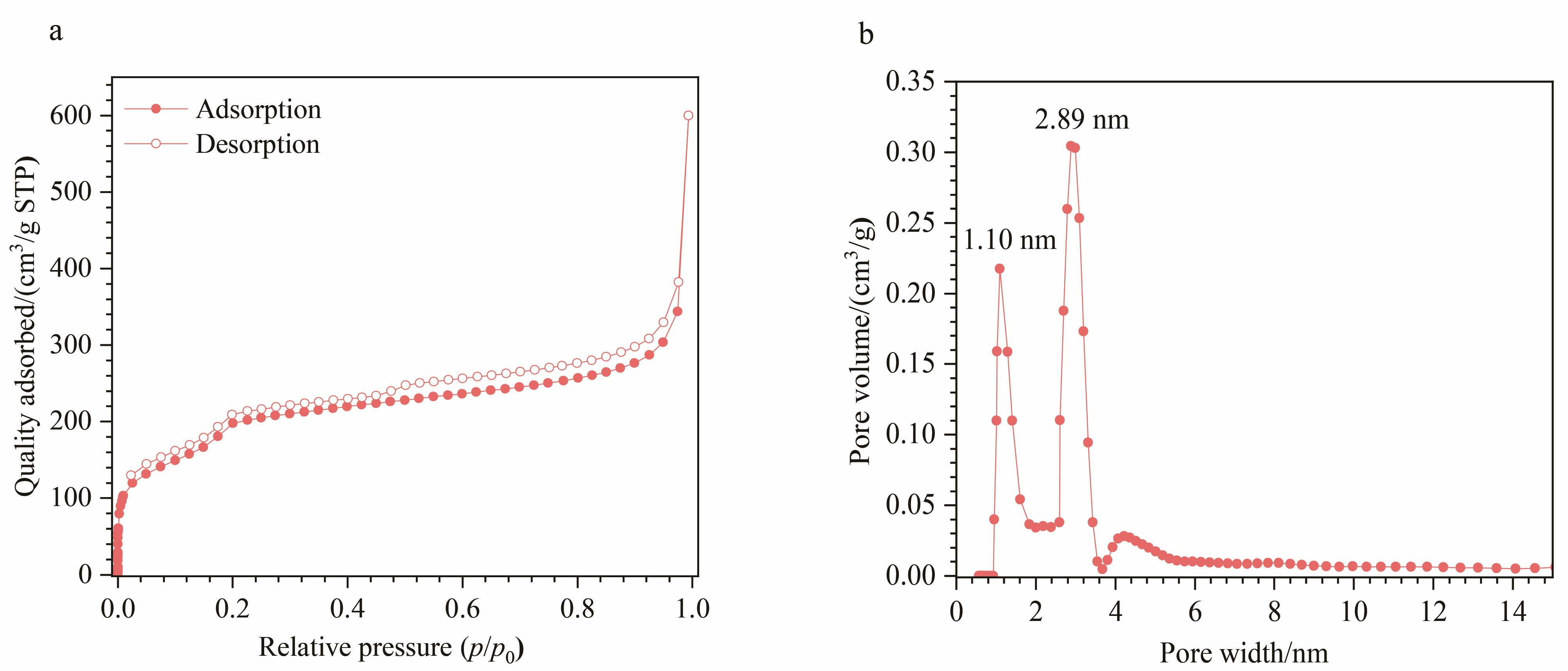
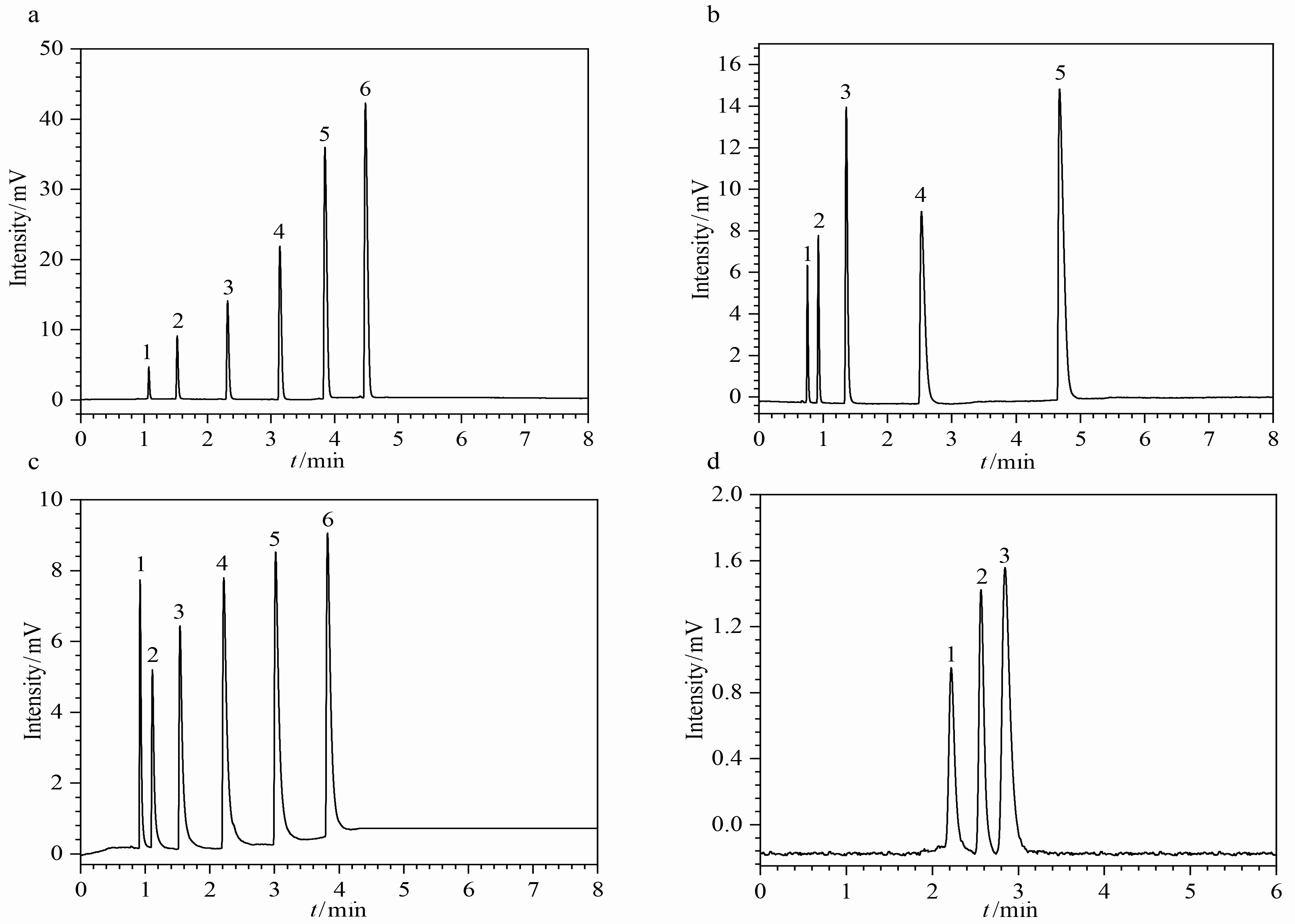
共价有机框架(COFs)因其结构可设计、功能基团易修饰和孔径尺寸可调等特点,在分离科学中展现出显著潜力,是一种良好的色谱分离介质。本研究提出一种基于拓扑结构调控COF孔径的策略,旨在构建具有不同孔径分布的异孔COF,提升其在气相色谱分离异构体中的性能。本工作选用具有D2h对称性的四胺单体4,4′,4″,4‴-(乙烯-1,1,2,2-四基)四苯胺(ETTA)与具有C2对称性的线性连接体对苯二甲醛(TPA),通过亚胺缩合反应构建了一种具有Kagome拓扑的异孔COF(命名为ET-COF)。氮气吸附-脱附实验证明ET-COF呈现出明显的双孔结构,包括孔径分布为1.1 nm的微孔和2.89 nm的介孔,且比表面积达724 m2/g,孔体积为1.26 cm3/g,丰富的孔结构与高比表面积赋予其多重尺寸排阻效应;通过原位生长法制备了ET-COF键合毛细管色谱柱,色谱性能评价结果表明,ET-COF丰富的孔结构赋予该柱较优的分离性能,对一系列同系物(正构烷烃、烷基苯、直链脂肪酸酯)以及3种C9芳烃异构体均实现了基线分离,分离度范围为2.0~15.3。本工作研究了异孔结构(微孔择形与介孔传质协同)对分离性能的影响,结果表明该结构显著提升了固定相分离异构体的能力,为异孔COFs在色谱固定相中的应用提供了新的设计思路,并进一步推动了COFs在分离分析领域的实用化进程。

关键词: 气相色谱, 固定相, Kagome拓扑结构, 异孔共价有机框架, 异构体分离

Abstract:

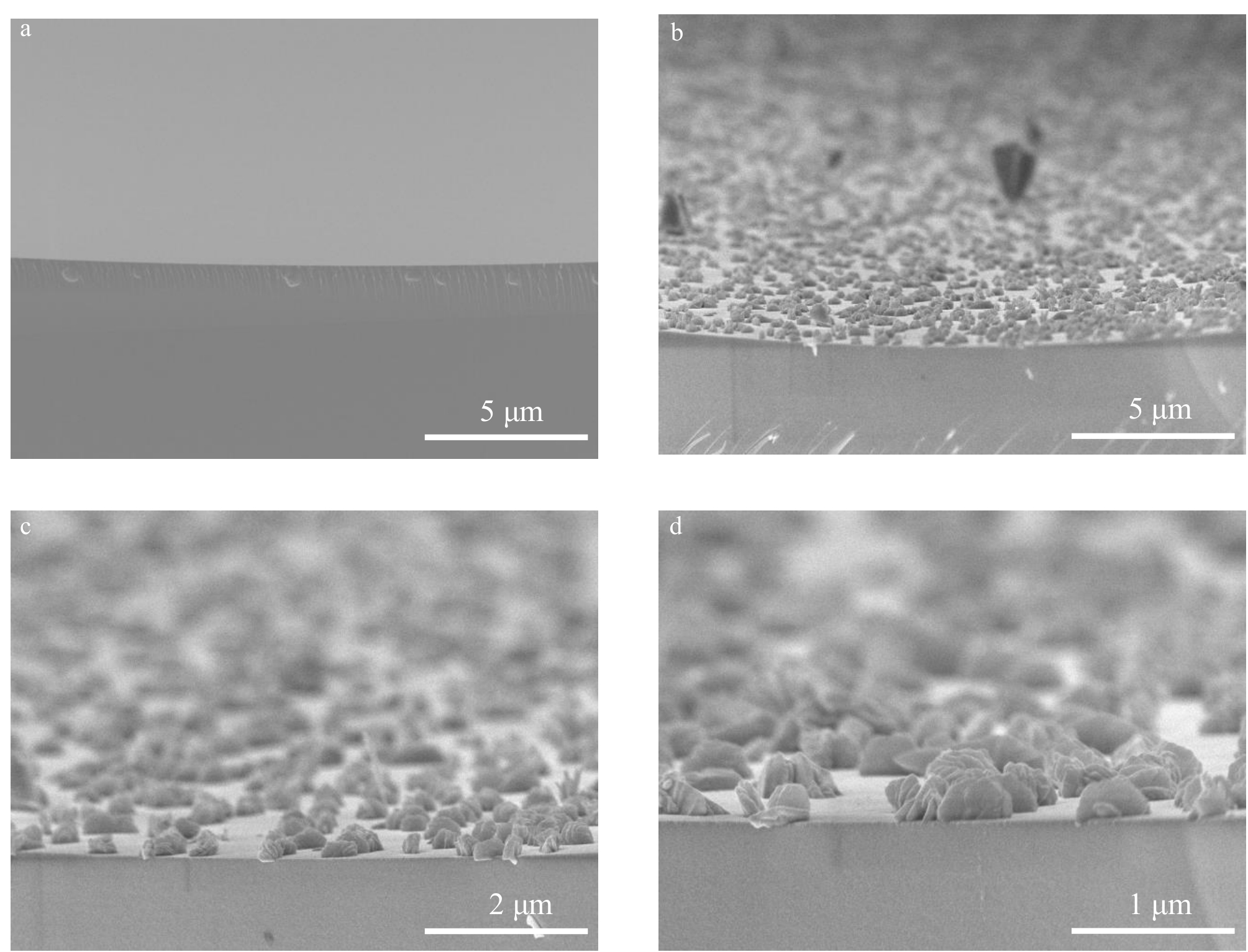
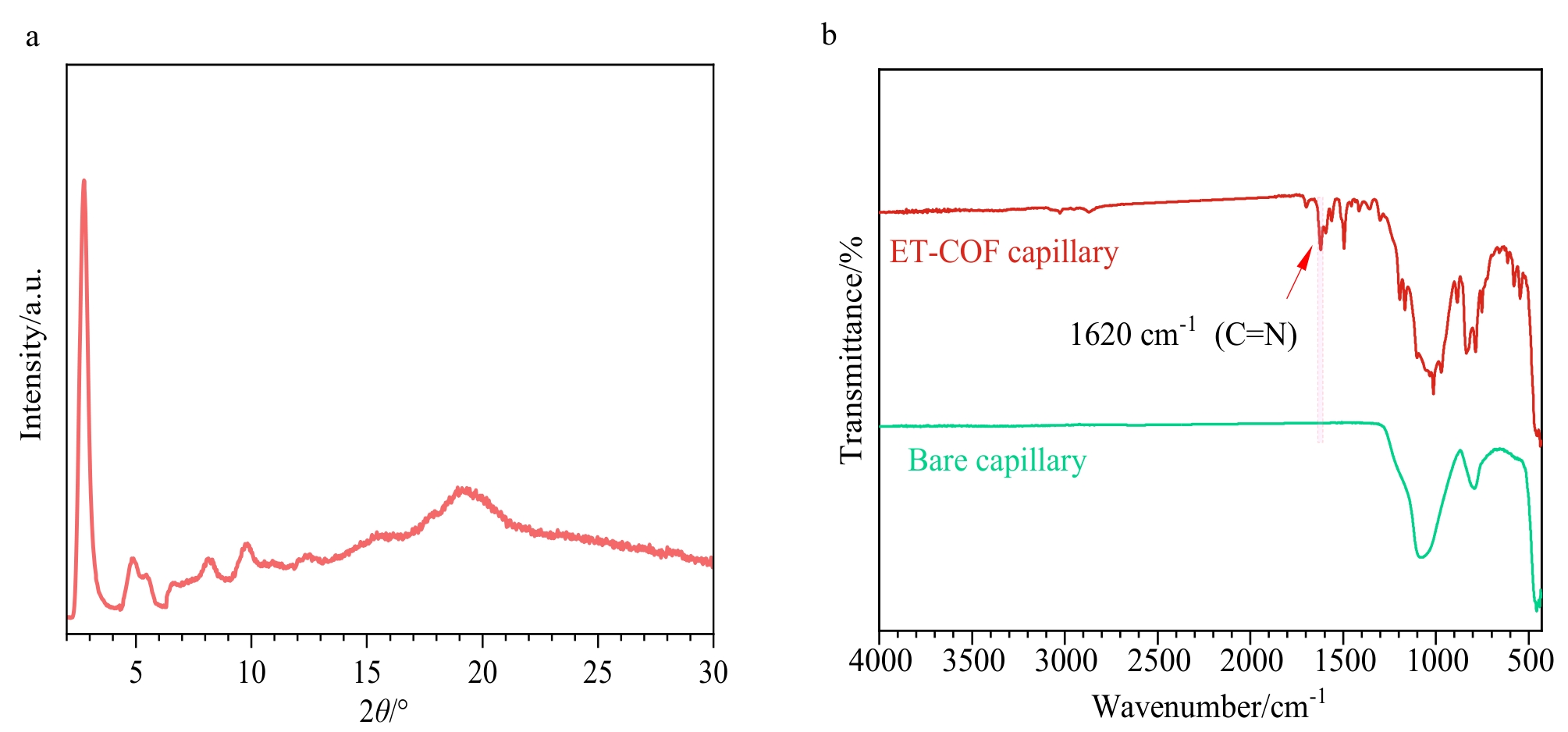
Chromatographic separation stands as a cornerstone technique in modern analytical chemistry, playing an indispensable role in critical areas such as chemical purification, environmental monitoring, and pharmaceutical analysis. With the increasing complexity of analytical samples, particularly regarding the efficient separation of structurally similar isomers, higher requirements have been imposed on chromatographic stationary phases. Traditional porous materials such as zeolites and silica show limited tunability in pore size distribution and surface chemistry, making it difficult to meet the urgent need for high-resolution and rapid separation of complex mixtures. Therefore, the exploration of novel ordered porous materials with precisely tunable pore structures and functionalities has become a frontier research direction in separation science. Covalent organic frameworks (COFs), as a category of crystalline porous polymers, possess great application potential in separation science. Their prominent advantages mainly include designable periodic frameworks, easily modified functional groups, and precisely tunable pore sizes. These intrinsic merits render COFs promising candidates for next-generation chromatographic separation media. In this work, a novel strategy is proposed to regulate the pore structure of COFs via rational topological design, aiming to improve their gas chromatographic performance toward challenging isomer separation. This is achieved by constructing heteroporous COFs that integrate distinct pore size distributions within a single, ordered framework. To realize this strategy, a heteroporous COF designated as ET-COF was successfully constructed. It was synthesized via a reversible imine condensation reaction between a D2h-symmetric tetraamine monomer, 4,4′,4″,4′′′ -(ethene-1,1,2,2-tetrayl)tetraaniline (ETTA), and a C2-symmetric linear dialdehyde linker, terephthalaldehyde (TPA). This assembly affords a two-dimensional framework with a Kagome topology. The porous structures of material were rigorously characterized. It has been demonstrated through nitrogen adsorption-desorption experiments that ET-COF exhibits a distinct dual-pore structure, including triangular micropores of approximately 1.1 nm and hexagonal mesopores of 2.89 nm, with a specific surface area of 724 m2/g and a pore volume of 1.26 cm3/g. The rich pore structure and high specific surface area confer multiple size-exclusion effects. By virtue of these structural merits, an ET-COF-bonded capillary chromatographic column was further prepared via a facile in-situ growth method, which enables stable and uniform strong chemical bonding of the COF layer to the inner wall of a fused-silica capillary. Finally, the chromatographic performance of this column was systematically evaluated. The heteroporous ET-COF column demonstrated excellent separation performance across a wide range of test analytes. Baseline separation was successfully achieved for diverse mixtures, including homologous n-alkanes (C5-C10), alkylbenzenes (from benzene to butylbenzene), n-straight-chain fatty acid esters, and critically a set of C9 aromatic hydrocarbon isomers (n-propylbenzene, isopropylbenzene, and mesitylene), with resolution values ranging from 2.0 to 15.3, suggesting outstanding separation efficiency. The improved chromatographic behavior can be rationalized by the uniquely hierarchical pore structure originating from rational topological design. The triangular micropores afford a confined microenvironment that imposes prominent size- and shape-selectivity, enabling discrimination of isomers with subtle differences in molecular configuration. Meanwhile, the hexagonal mesopores act as rapid transport pathways to promote fast mass transfer and avoid pore blocking. Such a synergistic effect of selective micropores and high-flux mesopores within one crystalline framework represents a distinct merit of the heteroporous topology. In summary, this work establishes a feasible topological strategy for constructing high-performance COF-based stationary phases and investigates the impact of hierarchical pore structures (synergistic effects of microporous shape selectivity and mesoporous mass transfer) on separation performance. By rational topological assembly, precise pore engineering and integration of hierarchical channels are readily realized, which greatly boost the separation selectivity toward challenging isomers. This study not only develops a promising heteroporous COF stationary phase for gas chromatography, but also provides a new design paradigm for extending the application of COFs in analytical separation science.

Key words: gas chromatography (GC), stationary phase, Kagome topological structure, heteropore covalent organic frameworks, isomer separation

中图分类号: