
Chinese Journal of Chromatography ›› 2026, Vol. 44 ›› Issue (11): 1380-1388.DOI: 10.3724/SP.J.1123.2026.01037
• Articles • Previous Articles Next Articles
ZHU Qingshan1, LIU Yuwei2, QIN Tongtong1, MA Li1,*( ), ZHAO Wenjie1,*()
Received:2026-03-16
Online:2026-11-08
Published:2026-11-03
Supported by:CLC Number:
ZHU Qingshan, LIU Yuwei, QIN Tongtong, MA Li, ZHAO Wenjie. Preparation of carbazole-based hypercrosslinked magnetic polymer via FeCl3-catalyzed/iron source dual strategy for enrichment and detection of trace tetracyclines in water[J]. Chinese Journal of Chromatography, 2026, 44(11): 1380-1388.
Add to citation manager EndNote|Ris|BibTeX
URL: https://www.chrom-china.com/EN/10.3724/SP.J.1123.2026.01037
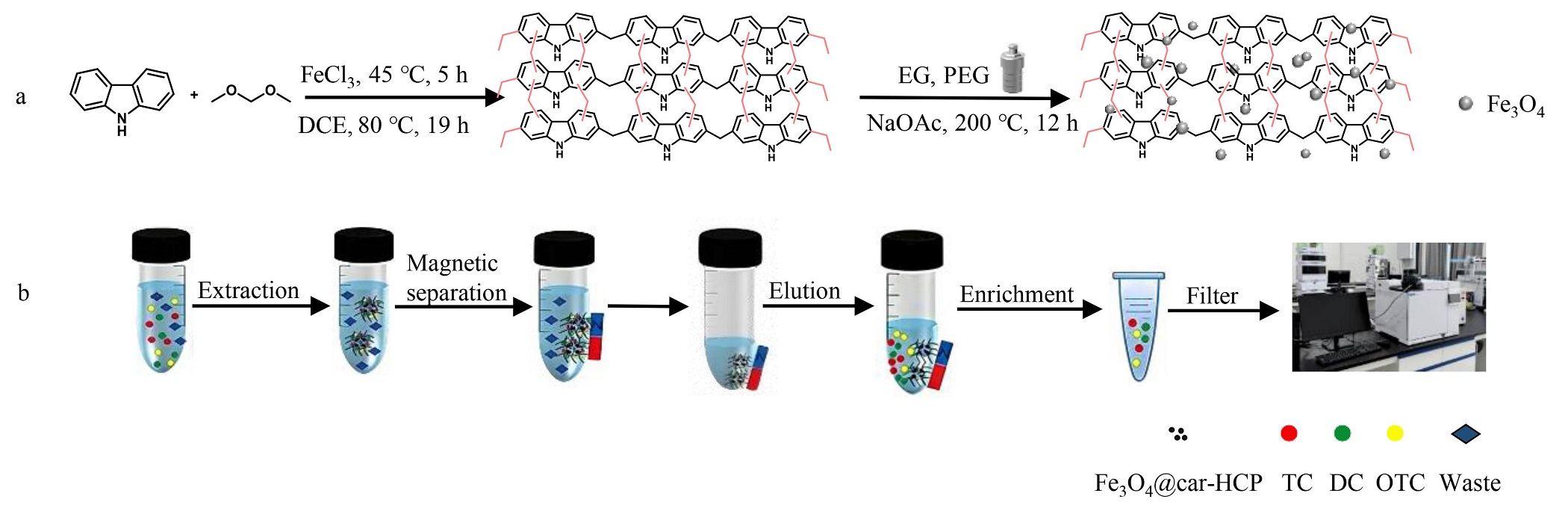
Fig. 1 (a) Schematic illustration of the synthesis process of Fe3O4/car-HCP and (b) MSPE procedure for the extraction of TC,DC,and OTC from water samples
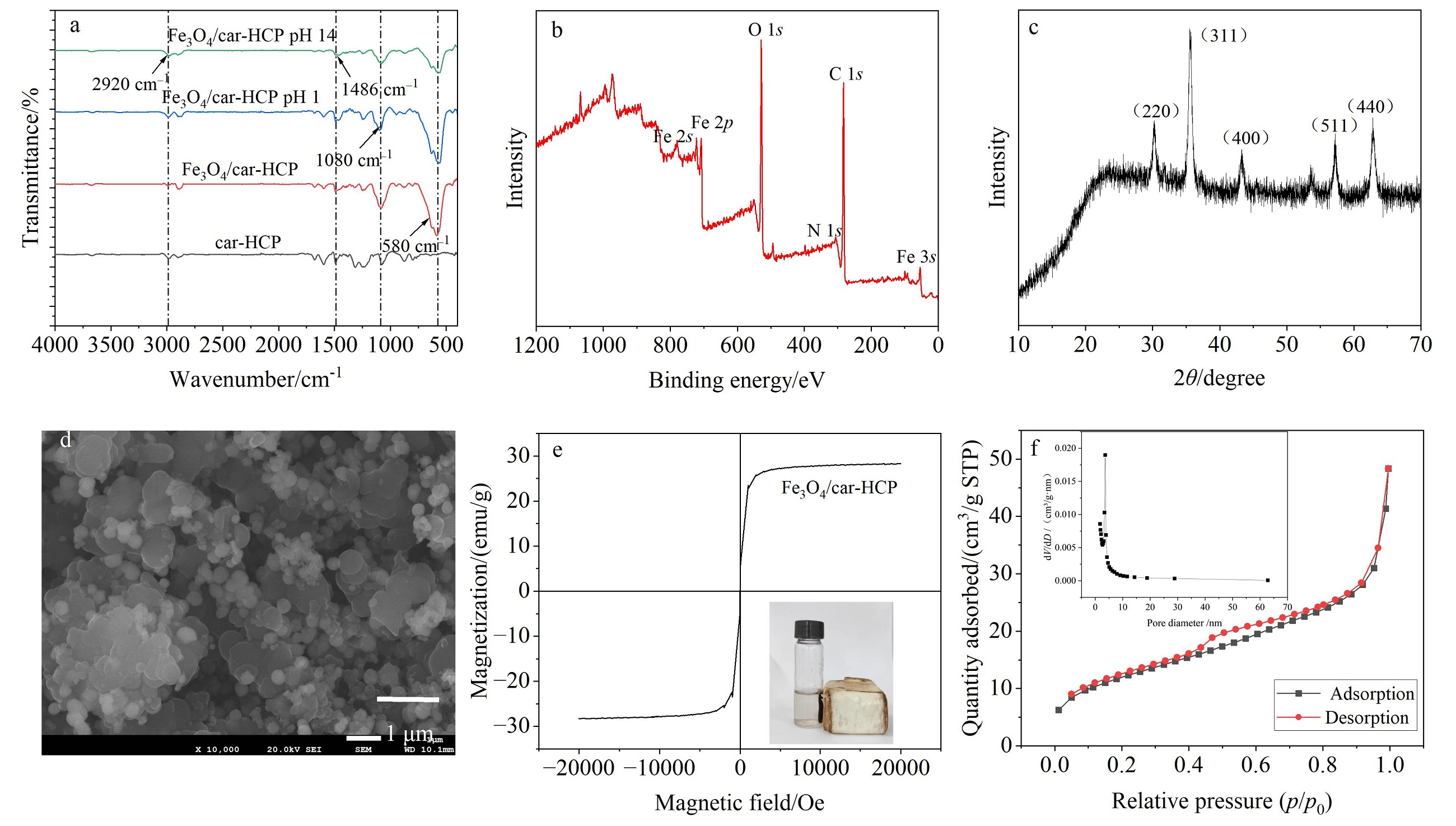
Fig. 2 (a) Infrared spectra of car-HCP and Fe3O4/car-HCP; (b) XPS survey analysis,(c) XRD patterns,(d) SEM images,(e) magnetization curves,and (f) nitrogen adsorption-desorption isotherms of Fe3O4/car-HCP
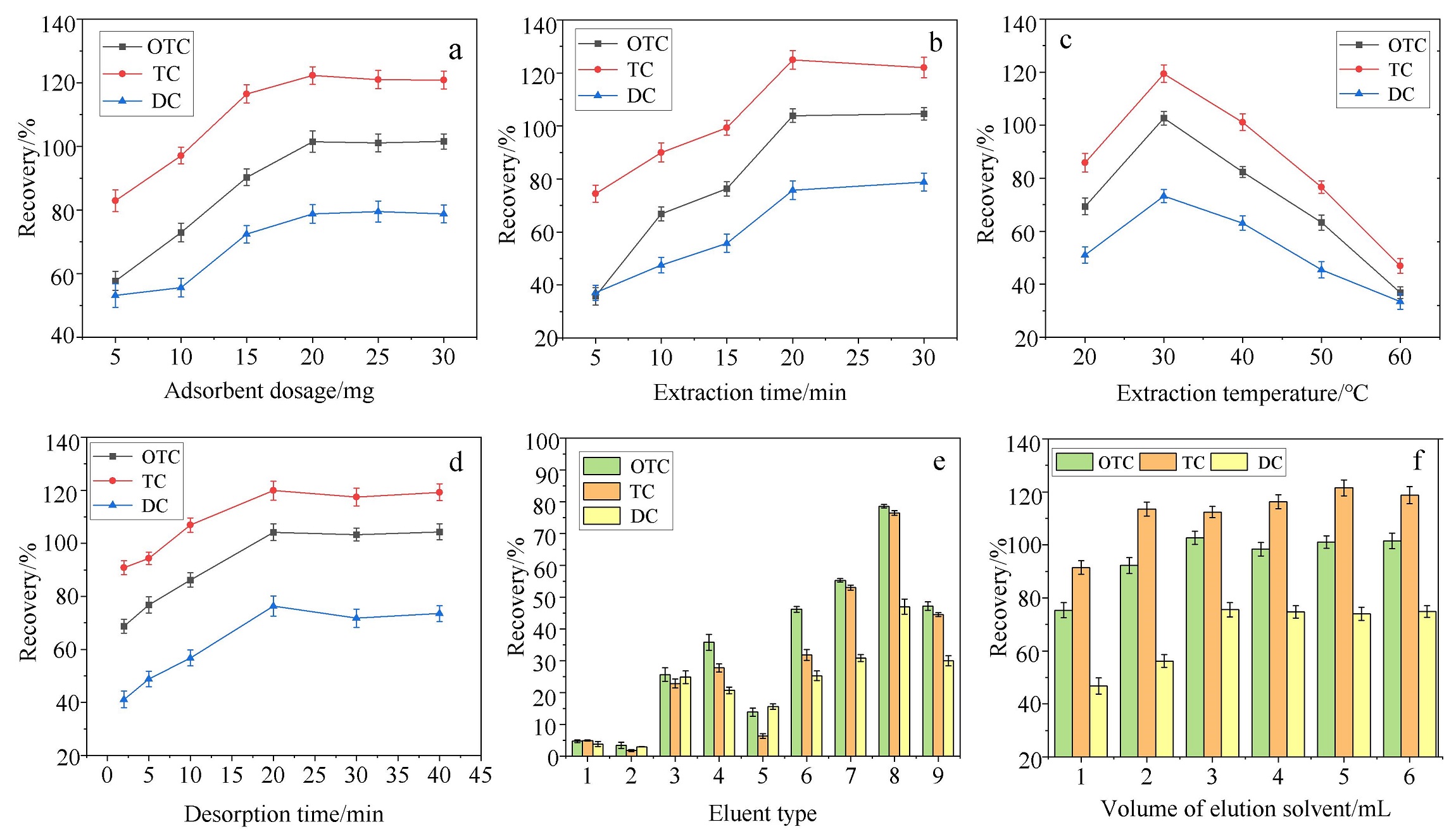
Fig. 3 Effects of (a) adsorbent dosage,(b) extraction time,(c) extraction temperature,(d) elution time,(e) type of eluent and (f) elution volume on the recoveries of TCs (n=3)
| TCs | Spiked/(μg/L) | Tap water | Rainwater | Liangyuan Lake | Beilong Lake | Xiliu Lake | ||||||||||
|---|---|---|---|---|---|---|---|---|---|---|---|---|---|---|---|---|
| Found/(μg/L) | Rec./% | RSD/% | Found/(μg/L) | Rec./% | RSD/% | Found/(μg/L) | Rec./% | RSD/% | Found/(μg/L) | Rec./% | RSD/% | Found/(μg/L) | Rec./% | RSD/% | ||
| OTC | 10 | 8.65 | 86.5 | 5.1 | 8.88 | 88.8 | 9.4 | 9.85 | 98.5 | 8.9 | 12.7 | 127.0 | 3.2 | 9.2 | 92.2 | 3.9 |
| 100 | 110.8 | 110.8 | 4.2 | 108.2 | 108.2 | 6.2 | 117.8 | 117.8 | 3.1 | 86.1 | 86.1 | 5.6 | 96.4 | 96.4 | 3.2 | |
| TC | 10 | 8.75 | 87.5 | 4.7 | 8.25 | 82.5 | 8.7 | 12.9 | 128.5 | 7.3 | 12.1 | 121.0 | 3.2 | 9.3 | 93.0 | 8.1 |
| 100 | 107.3 | 107.3 | 1.3 | 121.3 | 121.3 | 5.4 | 108.9 | 108.9 | 5.5 | 86.7 | 86.7 | 5.6 | 110.9 | 110.9 | 7.6 | |
| DC | 10 | 7.76 | 77.6 | 3.6 | 7.65 | 76.5 | 6.3 | 8.3 | 83.0 | 2.9 | 8.15 | 81.5 | 7.7 | 7.86 | 78.6 | 2.3 |
| 100 | 80.1 | 80.1 | 5.9 | 80.4 | 80.4 | 4.3 | 81.5 | 81.5 | 4.6 | 75.6 | 75.6 | 7.3 | 76.9 | 76.9 | 6.5 | |
Table 1 Spiked recoveries and precisions of TCs in tap water,rainwater,and three types of lake water (n=3)
| TCs | Spiked/(μg/L) | Tap water | Rainwater | Liangyuan Lake | Beilong Lake | Xiliu Lake | ||||||||||
|---|---|---|---|---|---|---|---|---|---|---|---|---|---|---|---|---|
| Found/(μg/L) | Rec./% | RSD/% | Found/(μg/L) | Rec./% | RSD/% | Found/(μg/L) | Rec./% | RSD/% | Found/(μg/L) | Rec./% | RSD/% | Found/(μg/L) | Rec./% | RSD/% | ||
| OTC | 10 | 8.65 | 86.5 | 5.1 | 8.88 | 88.8 | 9.4 | 9.85 | 98.5 | 8.9 | 12.7 | 127.0 | 3.2 | 9.2 | 92.2 | 3.9 |
| 100 | 110.8 | 110.8 | 4.2 | 108.2 | 108.2 | 6.2 | 117.8 | 117.8 | 3.1 | 86.1 | 86.1 | 5.6 | 96.4 | 96.4 | 3.2 | |
| TC | 10 | 8.75 | 87.5 | 4.7 | 8.25 | 82.5 | 8.7 | 12.9 | 128.5 | 7.3 | 12.1 | 121.0 | 3.2 | 9.3 | 93.0 | 8.1 |
| 100 | 107.3 | 107.3 | 1.3 | 121.3 | 121.3 | 5.4 | 108.9 | 108.9 | 5.5 | 86.7 | 86.7 | 5.6 | 110.9 | 110.9 | 7.6 | |
| DC | 10 | 7.76 | 77.6 | 3.6 | 7.65 | 76.5 | 6.3 | 8.3 | 83.0 | 2.9 | 8.15 | 81.5 | 7.7 | 7.86 | 78.6 | 2.3 |
| 100 | 80.1 | 80.1 | 5.9 | 80.4 | 80.4 | 4.3 | 81.5 | 81.5 | 4.6 | 75.6 | 75.6 | 7.3 | 76.9 | 76.9 | 6.5 | |
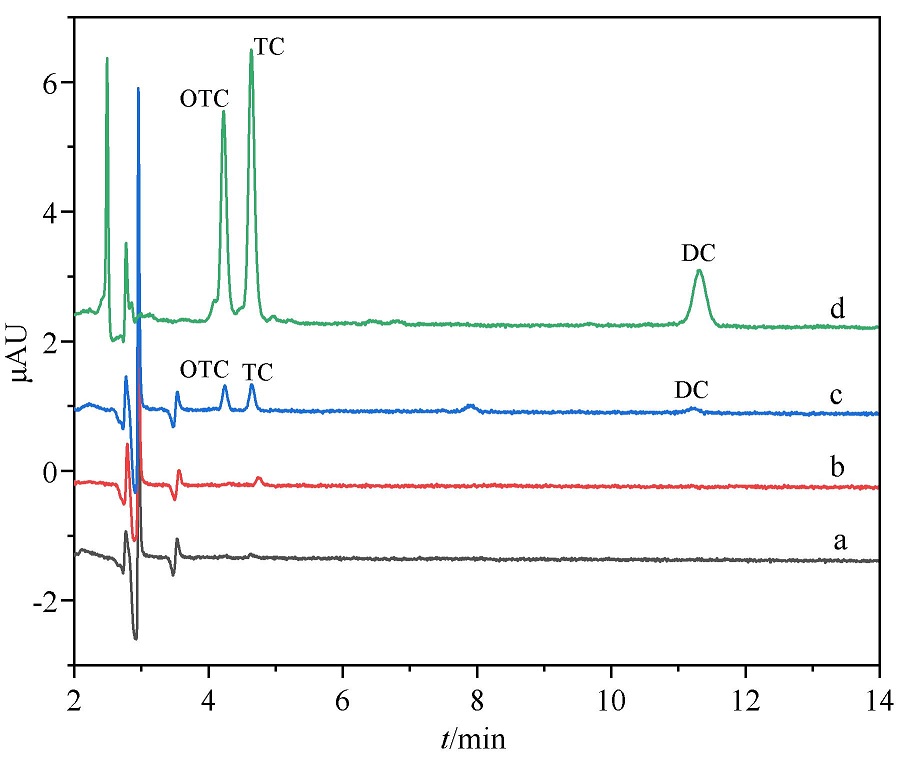
Fig. 4 Chromatograms of Xiliu Lake water sample
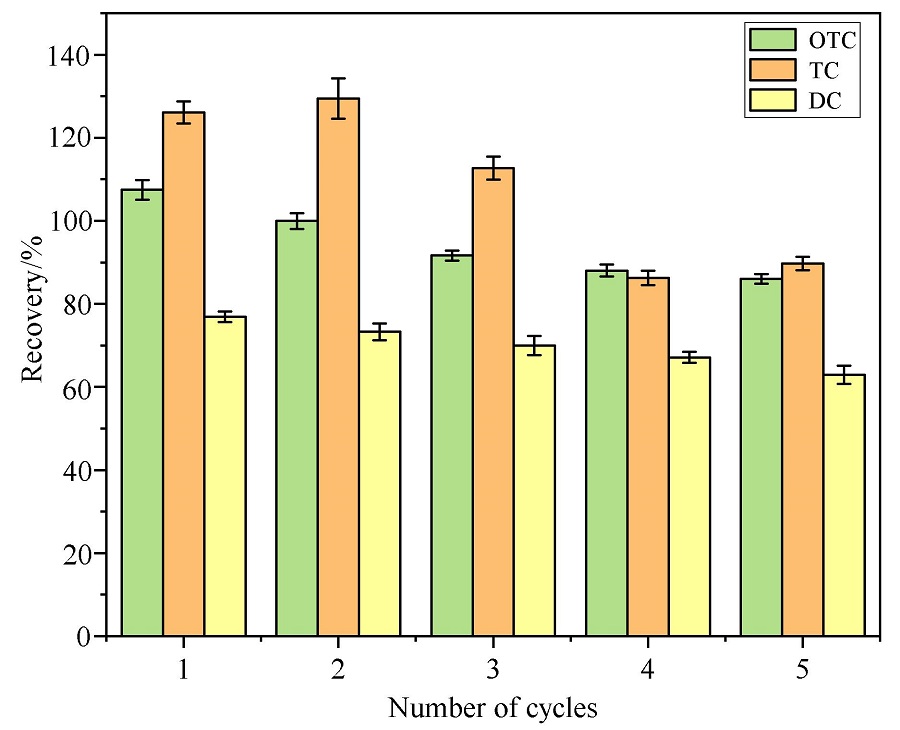
Fig. 5 Effect of Fe3O4/car-HCP reused five times on the recoveries of TCs (n=3)
| Sorbent | Method | Mass of sorbent/mg | Analysis time/min | Linear range*/ (μg/L) | LOD/(μg/L) | Recovery/% | Ref. |
|---|---|---|---|---|---|---|---|
| ZIF-8 | SPE/HPLC-PAD | 390 | ~55 | 5-1000 | 1.50-8.00 | 70.3-107.4 | [ |
| MIPs | SPE/HPLC-UV | 400 | ~75 | 1-200 | 0.08-1.02 | 83.2-111.0 | [ |
| SCAU-1 and SNW-1 | SPE/UPLC-MS/MS | 60 | ~35 | 1-500 | 0.30-0.60 | 88.4-93.4 | [ |
| PVP/SWCNT-polyHIPE | SPE/HPLC-FLD | 60 | ~80 | 20-800 | 1.00–2.50 | 85.0-101.7 | [ |
| Oasis HLB | SPE/UPLC-MS/MS | 500 | ~170 | 0-50 | 3.18×10⁻⁶-1.0×10⁻⁴ | 80.4-104.2 | [ |
| Fe3O4@ZIF-8 | SPE/UHPLC-MS/MS | 120 | ~50 | 0.005-0.05 | (1.2-1.4)×10-4 | 78.3-96.7 | [ |
| M-G/CNTs | MDSPE/HPLC-FLD | 20 | ~30 | 20-800 | 3.60 | 95.5-112.5 | [ |
| mag-AC | MSPE/HPLC-MS/MS | 20 | ~40 | 0.5-100 | 0.10-0.95 | 91.0-102.0 | [ |
| Oasis PRiME HLB | SPE/UPLC-MS/MS | 200 | ~65 | 1-500 | (1.0-1.5)×10-4 | 62.6-119.0 | [ |
| Fe3O4/car-HCP | MSPE/HPLC-UV | 20 | ~65 | 2.77-200 | 0.80-2.98 | 75.6-128.5 | this work |
Table 2 Comparison of this study with other studies in terms of methods,adsorbent dosage,linear range,LOD,and recovery
| Sorbent | Method | Mass of sorbent/mg | Analysis time/min | Linear range*/ (μg/L) | LOD/(μg/L) | Recovery/% | Ref. |
|---|---|---|---|---|---|---|---|
| ZIF-8 | SPE/HPLC-PAD | 390 | ~55 | 5-1000 | 1.50-8.00 | 70.3-107.4 | [ |
| MIPs | SPE/HPLC-UV | 400 | ~75 | 1-200 | 0.08-1.02 | 83.2-111.0 | [ |
| SCAU-1 and SNW-1 | SPE/UPLC-MS/MS | 60 | ~35 | 1-500 | 0.30-0.60 | 88.4-93.4 | [ |
| PVP/SWCNT-polyHIPE | SPE/HPLC-FLD | 60 | ~80 | 20-800 | 1.00–2.50 | 85.0-101.7 | [ |
| Oasis HLB | SPE/UPLC-MS/MS | 500 | ~170 | 0-50 | 3.18×10⁻⁶-1.0×10⁻⁴ | 80.4-104.2 | [ |
| Fe3O4@ZIF-8 | SPE/UHPLC-MS/MS | 120 | ~50 | 0.005-0.05 | (1.2-1.4)×10-4 | 78.3-96.7 | [ |
| M-G/CNTs | MDSPE/HPLC-FLD | 20 | ~30 | 20-800 | 3.60 | 95.5-112.5 | [ |
| mag-AC | MSPE/HPLC-MS/MS | 20 | ~40 | 0.5-100 | 0.10-0.95 | 91.0-102.0 | [ |
| Oasis PRiME HLB | SPE/UPLC-MS/MS | 200 | ~65 | 1-500 | (1.0-1.5)×10-4 | 62.6-119.0 | [ |
| Fe3O4/car-HCP | MSPE/HPLC-UV | 20 | ~65 | 2.77-200 | 0.80-2.98 | 75.6-128.5 | this work |
|
| Viewed | ||||||
|
Full text |
|
|||||
|
Abstract |
|
|||||


