
Chinese Journal of Chromatography ›› 2026, Vol. 44 ›› Issue (6): 721-728.DOI: 10.3724/SP.J.1123.2025.06006
• Teaching Research • Previous Articles
GU Chunxiu*( )
)
Received:2025-06-10
Online:2026-06-08
Published:2026-06-03
CLC Number:
GU Chunxiu. Experimental teaching design of instrument analysis for undergraduate study: detection of bifenthrin pesticide residues in tea by response surface methodology-optimized QuEChERS combined with gas chromatography-mass spectrometry[J]. Chinese Journal of Chromatography, 2026, 44(6): 721-728.
Add to citation manager EndNote|Ris|BibTeX
URL: https://www.chrom-china.com/EN/10.3724/SP.J.1123.2025.06006
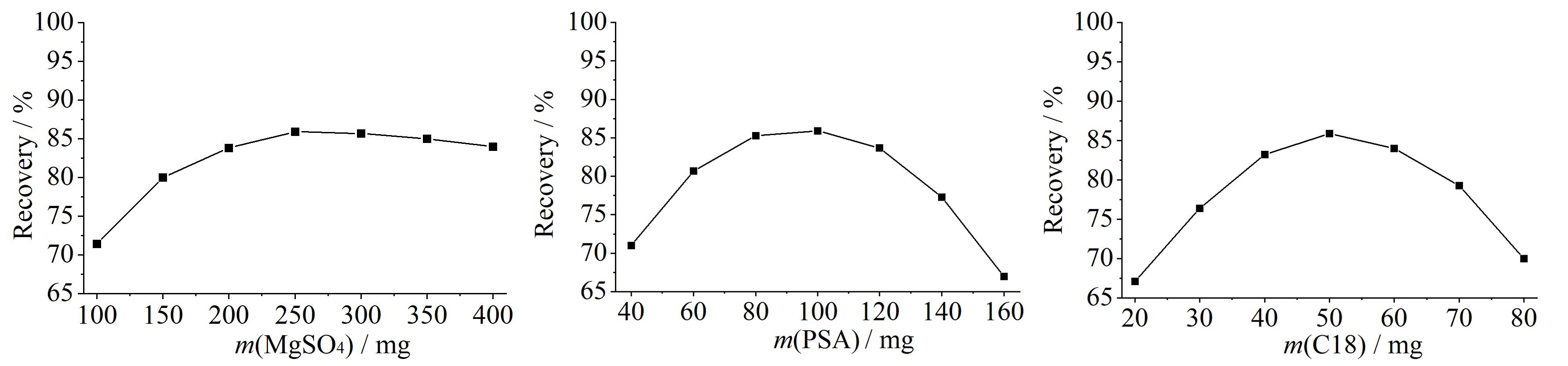
Fig. 1 Effects of the dosages of anhydrous MgSO4, PSA and C18 on the recovery of bifenthrin
| Level | A(m(MgSO4))/mg | B(m(PSA))/mg | C(m(C18))/mg |
|---|---|---|---|
| ‒1 | 200 | 80 | 40 |
| 0 | 250 | 100 | 50 |
| 1 | 300 | 120 | 60 |
Table 1 Factors and levels of the Box-Behnken test design
| Level | A(m(MgSO4))/mg | B(m(PSA))/mg | C(m(C18))/mg |
|---|---|---|---|
| ‒1 | 200 | 80 | 40 |
| 0 | 250 | 100 | 50 |
| 1 | 300 | 120 | 60 |
| Trial | A | B | C | Recovery/% |
|---|---|---|---|---|
| 1 | 300 | 80 | 50 | 85.2 |
| 2 | 250 | 100 | 50 | 85.9 |
| 3 | 200 | 100 | 60 | 75.9 |
| 4 | 200 | 100 | 40 | 72.3 |
| 5 | 300 | 100 | 40 | 82.5 |
| 6 | 250 | 100 | 50 | 85.9 |
| 7 | 250 | 120 | 40 | 65.3 |
| 8 | 250 | 100 | 50 | 85.9 |
| 9 | 200 | 120 | 50 | 80.5 |
| 10 | 300 | 100 | 60 | 83.5 |
| 11 | 250 | 100 | 50 | 85.9 |
| 12 | 250 | 120 | 60 | 71.7 |
| 13 | 200 | 80 | 50 | 78.3 |
| 14 | 300 | 120 | 50 | 81.4 |
| 15 | 250 | 100 | 50 | 85.8 |
| 16 | 250 | 80 | 40 | 75.3 |
| 17 | 250 | 80 | 60 | 82.1 |
Table 2 Response surface design and test results
| Trial | A | B | C | Recovery/% |
|---|---|---|---|---|
| 1 | 300 | 80 | 50 | 85.2 |
| 2 | 250 | 100 | 50 | 85.9 |
| 3 | 200 | 100 | 60 | 75.9 |
| 4 | 200 | 100 | 40 | 72.3 |
| 5 | 300 | 100 | 40 | 82.5 |
| 6 | 250 | 100 | 50 | 85.9 |
| 7 | 250 | 120 | 40 | 65.3 |
| 8 | 250 | 100 | 50 | 85.9 |
| 9 | 200 | 120 | 50 | 80.5 |
| 10 | 300 | 100 | 60 | 83.5 |
| 11 | 250 | 100 | 50 | 85.9 |
| 12 | 250 | 120 | 60 | 71.7 |
| 13 | 200 | 80 | 50 | 78.3 |
| 14 | 300 | 120 | 50 | 81.4 |
| 15 | 250 | 100 | 50 | 85.8 |
| 16 | 250 | 80 | 40 | 75.3 |
| 17 | 250 | 80 | 60 | 82.1 |
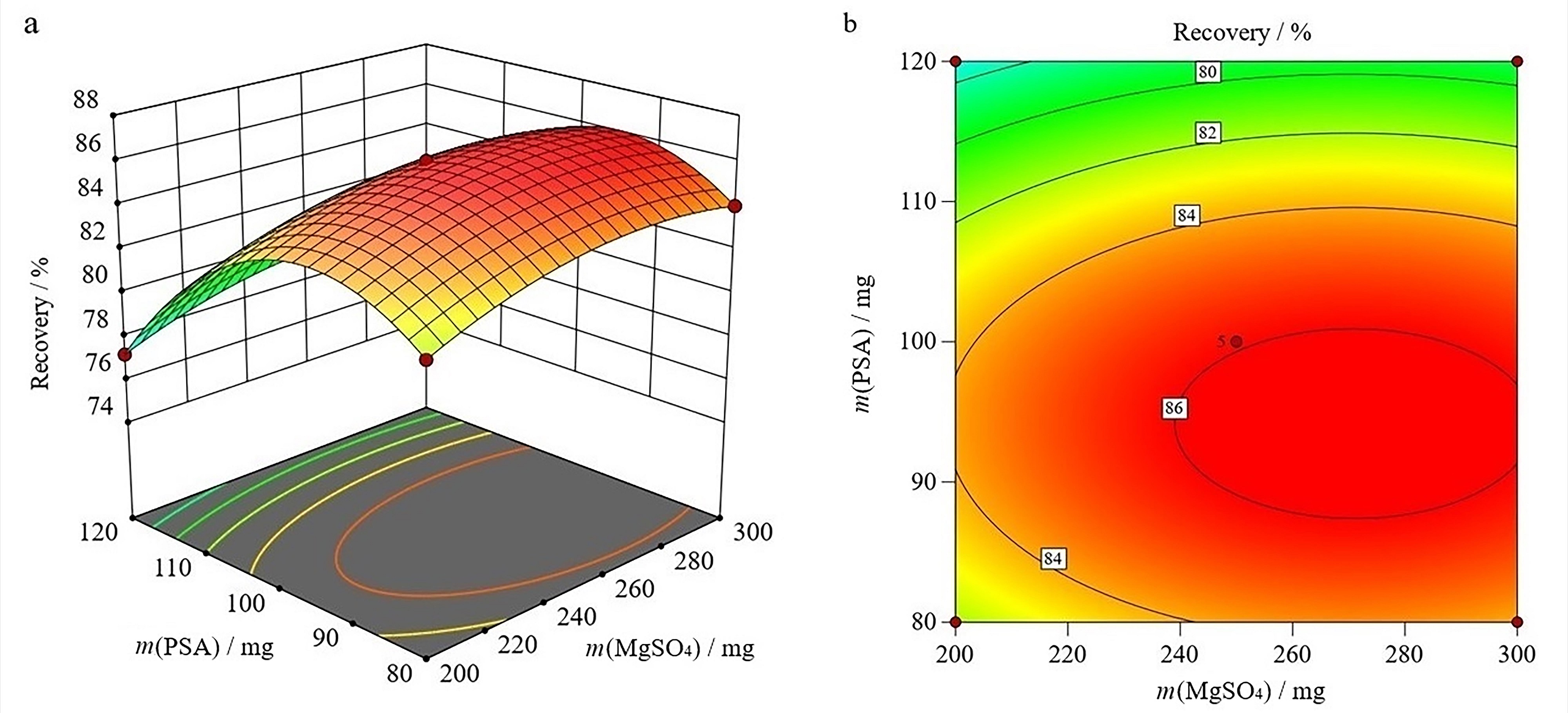
Fig. 2 (a) 3D surface plot and (b) contour plot of the effect of the interaction between anhydrous MgSO4 dosage and PSA dosage on the recovery of permethrin
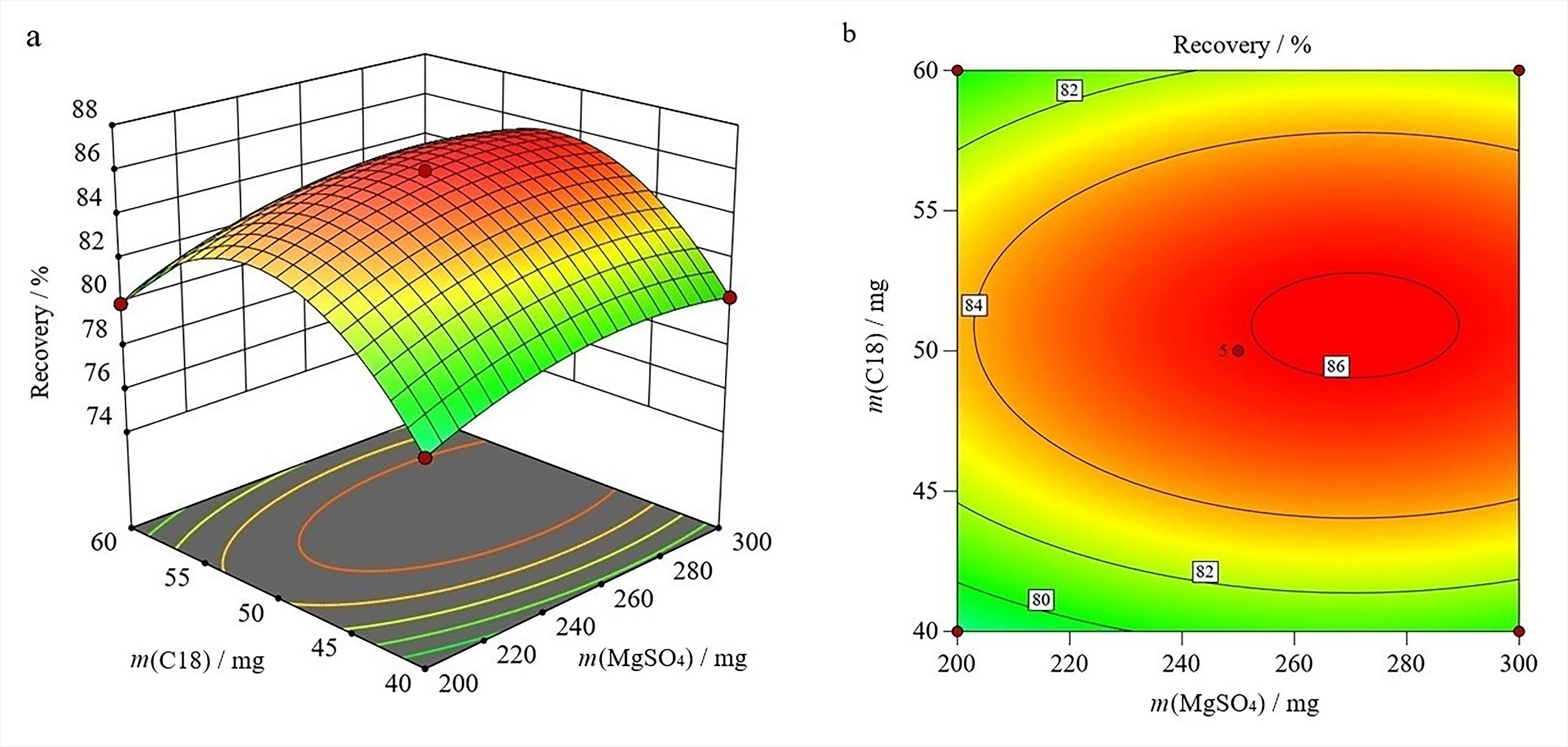
Fig. 3 (a) 3D surface plot and (b) contour plot of the effect of the interaction between anhydrous MgSO4 dosage and C18 dosage on the recovery of permethrin
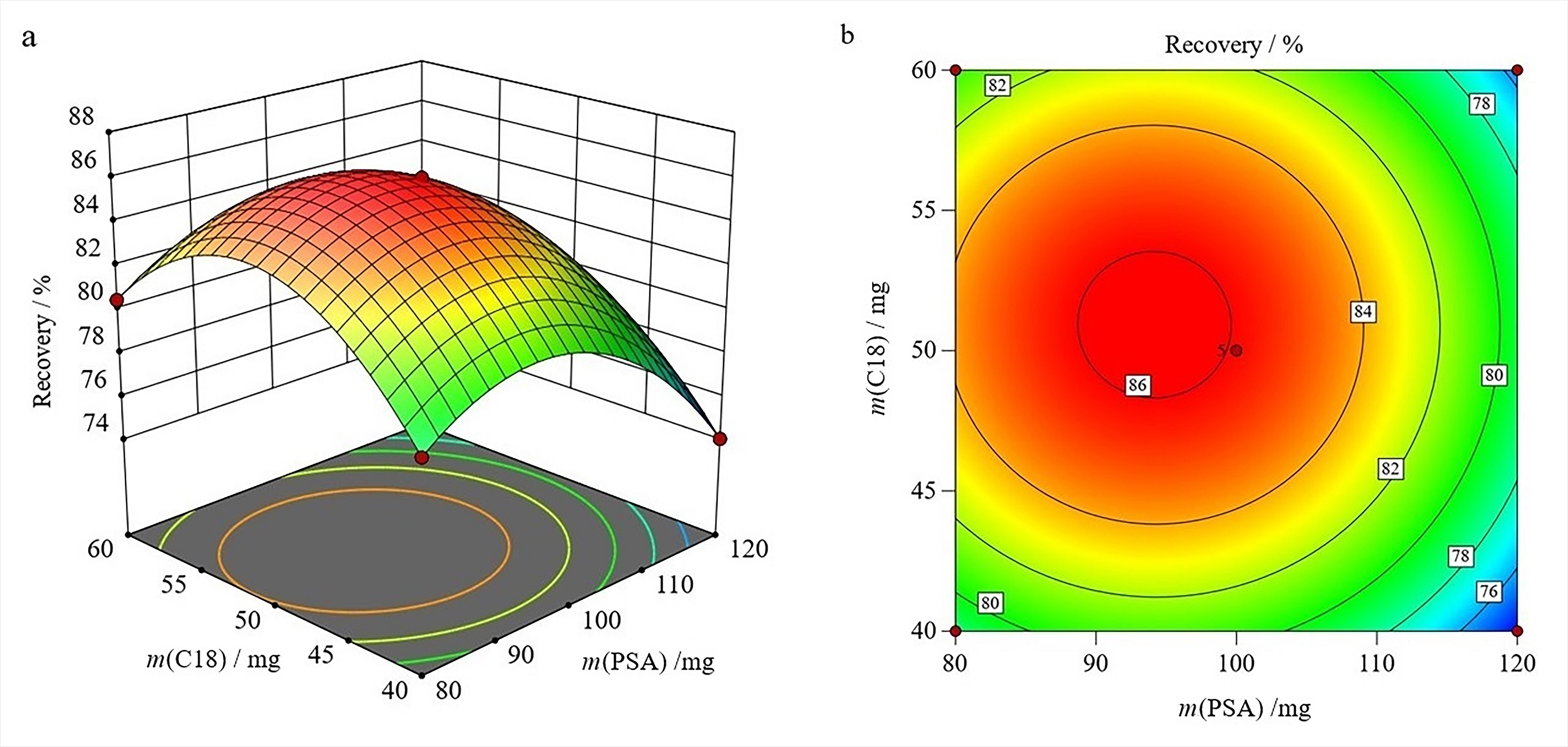
Fig. 4 (a) 3D surface plot and (b) contour plot of the effect of the interaction between PSA dosage and C18 dosage on the recovery of permethrin
| Sample | Detection value/(mg/kg) |
|---|---|
| Sample 3 | 0.085 |
| Sample 7 | 0.267 |
| Sample 9 | 0.173 |
| Sample 11 | 0.059 |
| Sample 12 | 0.019 |
| Sample 15 | 0.022 |
| Sample 18 | 0.487 |
| Sample 21 | 0.911 |
| Sample 25 | 0.386 |
| Sample 28 | 0.008 |
| Sample 29 | 0.635 |
| Sample 34 | 0.195 |
Table 3 Test results of commercial tea samples
| Sample | Detection value/(mg/kg) |
|---|---|
| Sample 3 | 0.085 |
| Sample 7 | 0.267 |
| Sample 9 | 0.173 |
| Sample 11 | 0.059 |
| Sample 12 | 0.019 |
| Sample 15 | 0.022 |
| Sample 18 | 0.487 |
| Sample 21 | 0.911 |
| Sample 25 | 0.386 |
| Sample 28 | 0.008 |
| Sample 29 | 0.635 |
| Sample 34 | 0.195 |
| Stage | Content | Class hour/h |
|---|---|---|
| Study relevant theories and literature | residual pesticides in medicinal and food materials | 8 |
| separation and analysis methods for residual pesticides | 8 | |
| sample pretreatment techniques and principles | 12 | |
| optimization method of experimental conditions | 4 | |
| learn the Design Expert software | 8 | |
| GC separation theory and MS analysis theory | 8 | |
| GC-MS operation practice | 16 | |
| experimental scheme design | 16 | |
| Master operational skills | prepare various solutions | 8 |
| preparation of tea samples and blank samples | 16 | |
| single-factor experiment of QuEChERS extraction | 8 | |
| response surface optimization series tests | 16 | |
| experimental conditions for GC and MS | 8 | |
| method for the determination of bifenthrin by GC-MS | 8 | |
| determination of real samples | 16 | |
| Sort out the data and write the experimental report | analysis of single-factor extraction conditions | 4 |
| optimization of the response surface of extraction conditions | 12 | |
| establishment of the GC-MS method | 4 | |
| analysis of tea samples | 8 | |
| write a comprehensive experimental report | 12 |
Table 4 Arrangement of teaching content for the instrumental analysis experiment
| Stage | Content | Class hour/h |
|---|---|---|
| Study relevant theories and literature | residual pesticides in medicinal and food materials | 8 |
| separation and analysis methods for residual pesticides | 8 | |
| sample pretreatment techniques and principles | 12 | |
| optimization method of experimental conditions | 4 | |
| learn the Design Expert software | 8 | |
| GC separation theory and MS analysis theory | 8 | |
| GC-MS operation practice | 16 | |
| experimental scheme design | 16 | |
| Master operational skills | prepare various solutions | 8 |
| preparation of tea samples and blank samples | 16 | |
| single-factor experiment of QuEChERS extraction | 8 | |
| response surface optimization series tests | 16 | |
| experimental conditions for GC and MS | 8 | |
| method for the determination of bifenthrin by GC-MS | 8 | |
| determination of real samples | 16 | |
| Sort out the data and write the experimental report | analysis of single-factor extraction conditions | 4 |
| optimization of the response surface of extraction conditions | 12 | |
| establishment of the GC-MS method | 4 | |
| analysis of tea samples | 8 | |
| write a comprehensive experimental report | 12 |
|
| Viewed | ||||||
|
Full text |
|
|||||
|
Abstract |
|
|||||


